Now Reading: The Mandela Catalogue: Spielberg Brings YouTube Analog Horror to the Big Screen
-
01
The Mandela Catalogue: Spielberg Brings YouTube Analog Horror to the Big Screen
The Mandela Catalogue: Spielberg Brings YouTube Analog Horror to the Big Screen

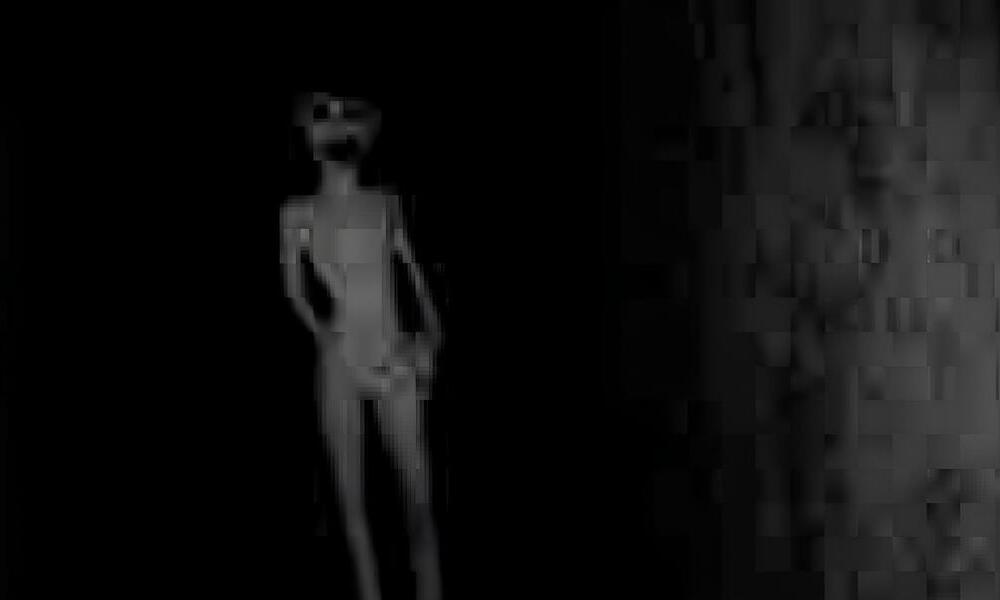
From online phenomenon to Hollywood’s new object of desire: Amazon MGM Studios, United Artists and Amblin will bring Alex Kister’s horror project to the big screen.
That The Mandela Catalogue has ended up on the radar of Steven Spielberg, Amazon MGM Studios and United Artists is not just a curious piece of news about Hollywood’s renewed appetite for intellectual properties born online. It is, rather, a small symptom of something the film industry still struggles to admit without disguising it as foresight: a significant part of the contemporary imagination no longer originates where it is supposed to originate.
Not in studios, not in development departments, not in meetings where executives decide which brand to resurrect for a global audience, but in poor, unstable, lateral formats, often built by very young authors with minimal means and an intuition far sharper than that behind many billion-dollar productions.
The series created by Alex Kister, now set to become a film with Kister himself directing, belongs to that family of analog horror that uses the aesthetics of degraded documents, institutional messages, damaged tapes and distorted faces not as simple VHS nostalgia, but as a form of distrust. What terrifies is the idea that even the tools entrusted with recording, archiving and explaining reality may themselves be compromised.
The Mandela Catalogue and the Paranoia of Replacement
The Mandela Catalogue tells of an invasion by shapeshifting entities called Alternates, capable of assuming the identity of their victims and turning every image into something suspect. An almost human face, a voice of authority slightly out of alignment, an emergency message that produces unease instead of reassurance: the old fear of the double is updated for a present in which identity constantly passes through copies, profiles, recordings and digital archives.
This is why analog horror is not merely an aesthetic trend made of dirty filters and audio distortions. Its strength lies in the sensation that what we are watching was not meant for us: a residue, a piece of evidence, a fragment that has escaped a larger system of control. Fear remains trapped inside incompleteness.
On a narrative level, the film seems destined to move the mythology of The Mandela Catalogue into a more recognizable framework, at least if the narrative setup already suggested by Kister remains in place: a group of kids just out of high school, a local disappearance, the growing difficulty of distinguishing what happens from what is recorded, remembered, distorted. A minimal premise, and precisely for that reason suited to avoiding the immediate crushing of the material under the weight of explanation.
Spielberg, Amazon MGM and Adaptation as Deepfake
Studios are no longer looking at YouTube merely as a reservoir of notoriety, but as a place where autonomous narrative grammars take shape. Yet the machine that buys these grammars is often the same one that later renders them harmless, turning the uncanny into lore, the crack into explanation, the mystery into an expanded universe.
In the case of The Mandela Catalogue, the short circuit is especially clear, because the risk of adaptation resembles the very mechanism of the work itself. Kister’s direct involvement as director may be the decisive variable, or at least the only sensible guarantee before seeing the final result.
After comics, video games, toys, podcasts and creepypasta, Hollywood is now trying to import the native nightmares of the web as well. The Mandela Catalogue was born before the full normalization of visual AI, but it already speaks its emotional language: the suspicion that the image is no longer testimony, but something credible enough to be accepted; that a work can no longer remain itself, but must prove its identity through its own replicability.