Now Reading: Gillian Anderson Returns to Camp Miasma in Jane Schoenbrun’s Queer Slasher
-
01
Gillian Anderson Returns to Camp Miasma in Jane Schoenbrun’s Queer Slasher

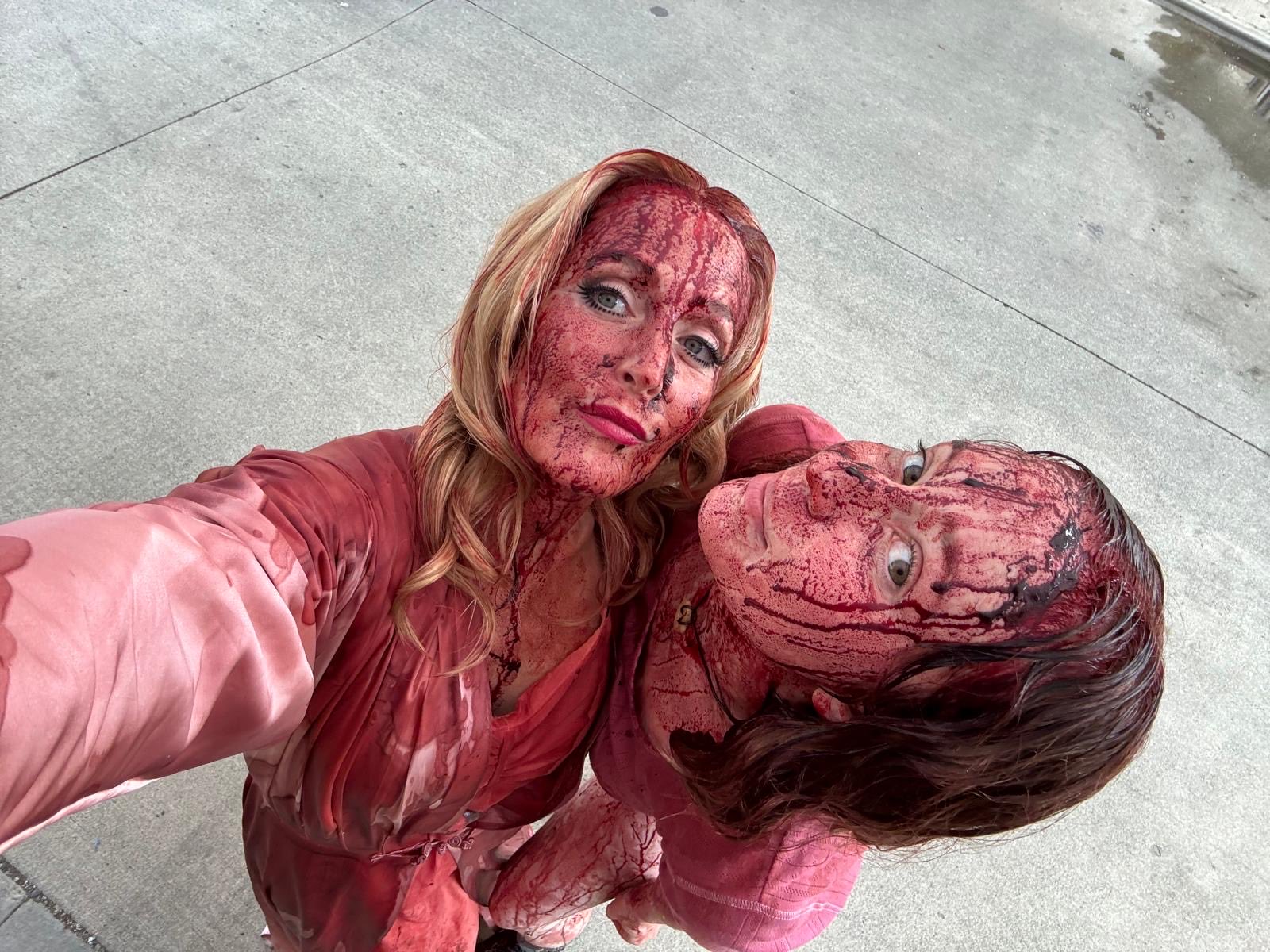
Gillian Anderson and Hannah Einbinder star in Jane Schoenbrun’s Teenage Sex and Death at Camp Miasma, a queer meta-slasher that reclaims horror, desire, identity, and the myth of the final girl.
In Teenage Sex and Death at Camp Miasma, Jane Schoenbrun takes the familiar grammar of the summer-camp slasher and turns it into something stranger, more intimate, and more self-aware. The film stars Hannah Einbinder as Kris, a young queer filmmaker hired to reboot the fictional Camp Miasma horror franchise, and Gillian Anderson as Billie, the reclusive original “final girl” whose return becomes the emotional and psychological center of the story.
On the surface, this looks like a horror film about a reboot, a lost icon, and the ghosts of an old franchise. Underneath, it seems to be about something much sharper: the way horror can trap people inside old images of themselves — and also give them the tools to escape.
Gillian Anderson and the haunted myth of the final girl
The “final girl” has always been one of horror’s most powerful and ambiguous figures. She survives, but survival is rarely simple. She becomes a symbol, a marketing image, a wound, a legend. In Camp Miasma, Gillian Anderson’s Billie appears to embody that contradiction: a woman remembered by fans as an icon, but privately marked by the mythology that made her famous.
That is where Schoenbrun’s film becomes more than a slasher exercise. The story does not simply revive an imaginary 1980s horror franchise. It asks what happens when the people who were once consumed by genre cinema try to reclaim it for themselves.
After We’re All Going to the World’s Fair and I Saw the TV Glow, Schoenbrun has become one of the most distinctive voices in contemporary horror because their work treats pop culture as something dangerous and sacred at the same time. Movies, television, fandom, VHS memory, online identity: these are not just references. They are emotional environments. They are places where people hide, mutate, suffer, and sometimes recognize themselves for the first time.
A slasher about desire, identity, and cinema itself
Teenage Sex and Death at Camp Miasma seems designed to work on two levels at once. It is a camp slasher, with all the pleasure that implies: woods, blood, bodies, obsession, franchise mythology, and a killer figure lurking inside a haunted pop-cultural machine. But it also appears to be a film about authorship — who gets to rewrite the stories that shaped them, and who gets trapped inside those stories forever.
That makes the pairing of Anderson and Einbinder especially interesting. Anderson brings with her decades of genre history, cult status, mystery, and authority. Einbinder, coming from Hacks, brings a different kind of sharpness: comic intelligence, vulnerability, and a contemporary sensibility that fits the figure of a filmmaker trying to remake an old myth from the inside.
The result could be one of the year’s most fascinating horror objects: not just a tribute to slashers, but a confrontation with them.
Schoenbrun’s project seems to understand that horror has always been a place where society stores its anxieties about bodies, gender, sexuality, youth, and transformation. The difference here is that the film does not simply repeat those fears. It appears to turn back toward them, stare them down, and ask who benefits when certain bodies are treated as monstrous.