
Now Reading: Bodies of Summer: The Film About a Generation That Refuses to Die
-
01
Bodies of Summer: The Film About a Generation That Refuses to Die

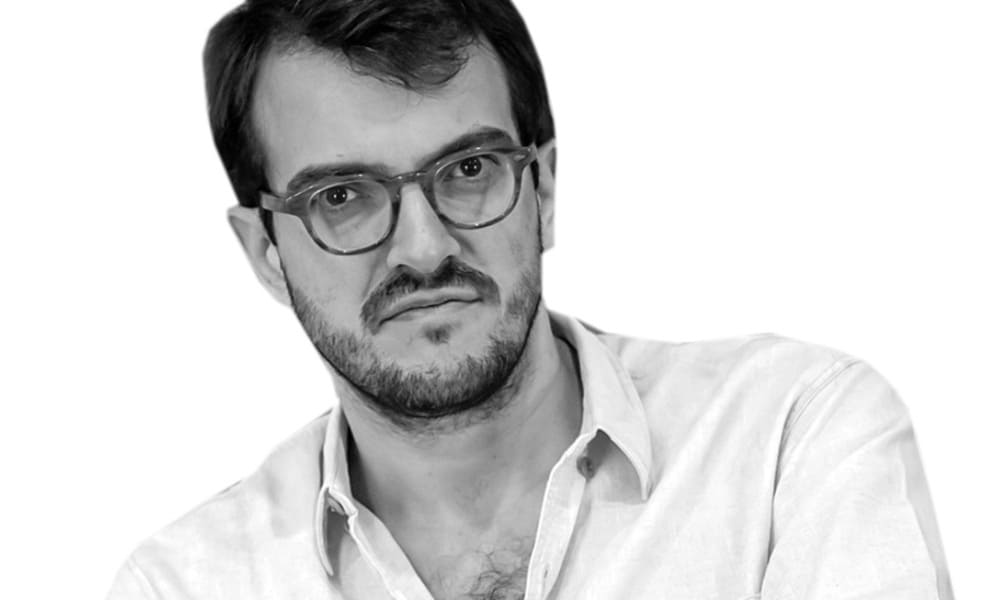
Rodrigo Teixeira will produce Bodies of Summer, Iván Fund’s new film based on Martín Felipe Castagnet’s novel: science fiction, death and digital consciousness.
Rodrigo Teixeira will produce and finance Bodies of Summer / Los cuerpos del verano through RT Features. The new film by Argentinian director Iván Fund is based on the sci-fi novel of the same name by Martín Felipe Castagnet. The announcement follows the international success of Fund’s The Message, which won the Silver Bear at the 2025 Berlin Film Festival.
The project brings together Argentinian cinema, Brazilian production and literary science fiction. São Paulo-based RT Features will fully finance the film. Castagnet, whose novel was published in 2016, co-wrote the screenplay with Fund. It is their third collaboration after Night Shot and The Message.
The story is set in a near future in which death is no longer final. When a body wears out, its consciousness can be stored in a digital limbo and later transferred into another body. Rana, the protagonist, returns to the world after spending a hundred years as data, and the body he receives depends on how much money is available.
Rodrigo Teixeira Strengthens the Bridge Between Latin American Cinema and the International Market
Over the years, RT Features has built a strong international profile, working with filmmakers such as James Gray, Robert Eggers, Luca Guadagnino, Olivier Assayas, Noah Baumbach and Walter Salles. Films associated with the company include The Witch, The Lighthouse, Call Me by Your Name, Ad Astra, Armageddon Time and I’m Still Here.
Its support for Bodies of Summer confirms a clear strategy: auteur films with international ambitions, often built around strong identities and immediately recognisable themes. In Fund’s case, the project also arrives at a difficult moment for independent Argentinian cinema, marked by funding problems and an increasing reliance on foreign co-productions.
Bodies of Summer does not yet have an announced release date, but the package is already clear: an Argentinian director honoured in Berlin, a Brazilian producer with strong access to the global market, a literary science-fiction novel and a premise capable of speaking directly to the present.
Bodies of Summer Turns Immortality into an Economic Question
Bodies of Summer explores highly contemporary themes: identity, memory, the body, social class, personal data and digital survival. At a time already shaped by avatars, voice replicas, artificial intelligence trained on the dead and biometric archives, Fund’s film appears to occupy a precise territory: the point at which technological promise encounters the fear of erasure.
This is the film’s strongest idea: immortality is not presented as a technological miracle, but as a system. Consciousness survives, the body changes, and life continues only for those who can afford the price of returning. That price is not merely financial. It concerns access to time, space and the ability to continue exerting weight upon the world even after one’s own cycle appeared to have ended.
Rana returns to find his son already elderly and approaching a natural death. Rana belongs to a generation that has discovered how to re-enter the world even after its own ending, while his son lives in a present already occupied by those who refuse to make room.
Rana’s return therefore becomes the ultimate image of a generation that refuses to leave the stage: one that continues to occupy power, resources and the collective imagination, mortgaging the future of those still trying to give meaning to their own time on Earth, until it even attempts to appropriate the purpose of someone else’s death.