Now Reading: Physical media matter, but rights matter more
-
01
Physical media matter, but rights matter more

IndieWire talks about security and nostalgia. But mergers, streaming and AI reveal a much larger problem: audiences are losing their cultural rights.
I follow IndieWire’s monthly selections of new Blu-ray, DVD and 4K releases with interest. It is one of the few spaces in mainstream film journalism where physical media, restorations and private archives are still treated as part of culture rather than as cumbersome remnants of a less efficient age. That is precisely why Physical Media Matters, Now More Than Ever leaves the impression of a missed opportunity.
The article begins with Sony’s decision to remove hundreds of StudioCanal films from the digital libraries of users who had already purchased them, effective September 1, 2026. It connects the case to television series removed from streaming platforms, withdrawn films and works rescued by labels such as Criterion, Arrow Video and Vinegar Syndrome.
These are valid examples, but they are placed within an argument that risks reducing an enormous industrial transformation to the resistance of a handful of specialist labels and the survival of a few particularly beloved titles.
The Shelves Have Already Been Emptied — and Not by Digital Technology
“No one expects a company to enter their living room and start removing objects from the shelves.”
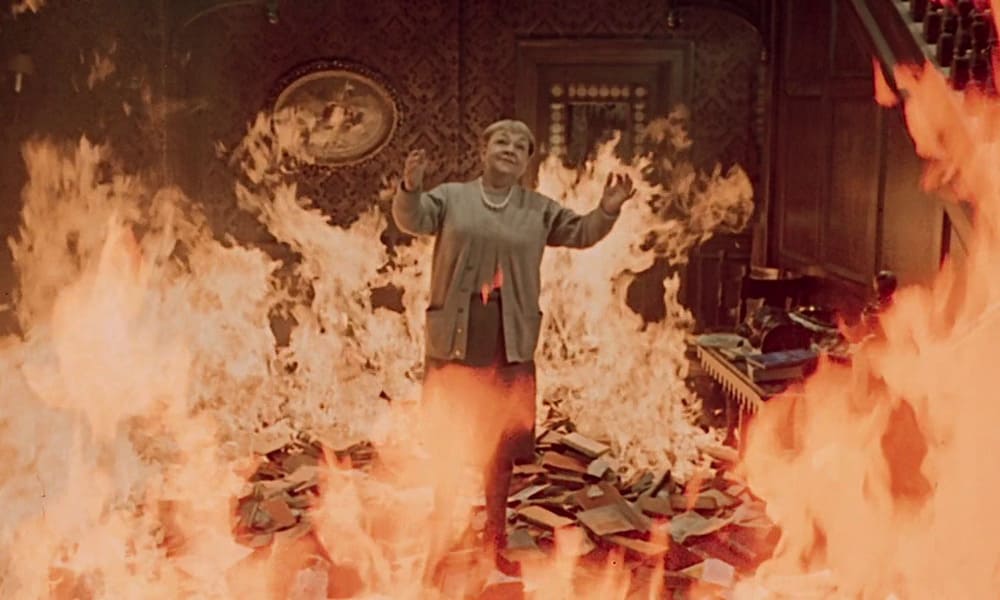
The article’s opening image rests, perhaps innocently, on a historically inaccurate premise. There is no need to invoke Fahrenheit 451-style dystopias: governments and political authorities have genuinely emptied shelves, confiscating books, archives and private collections.
In 1933, Nazi students and members of the SA looted Magnus Hirschfeld’s Institute for Sexual Science in Berlin, destroying books, clinical records and archival materials in public burnings. During the war, the confiscation and destruction of Jewish libraries, both public and private, became systematic.
Francoist Spain carried out a similar form of cultural “cleansing”, seizing and burning books taken from libraries, publishing houses and political organisations. During China’s Cultural Revolution, meanwhile, Red Guards entered people’s homes directly to destroy the “Four Olds”: books, photographs, letters, works of art and family mementos considered bourgeois or counter-revolutionary.
This is obviously not an attempt to equate the revocation of a contractual licence with the violence of a regime. The comparison concerns the underlying principle: a physical copy remains on the shelf because a legal system recognises ownership, restricts the power of companies and the state, and considers it illegitimate to enter someone’s home and take back what has already been sold. The shelf is not inherently safe. It is protected by a framework of rights, institutions and social conventions.
Digital technology merely makes it possible to dismantle this achievement without showing men carrying boxes out of a house or flames rising in a public square.
Ownership Does Not Require Reassurance: It Requires Rights
“A purchasing system that asks people to continue paying for access while denying them the comfort of certainty.”
The article defines owning physical media as “an act of consumer self-defence” and later describes it as “emotional insurance”, comparing collectors to people who buy a generator because they do not trust the power grid during a hurricane. These images already accept the language of the system they are supposed to criticise.
When the problem is presented as insecurity, the solution becomes reassurance. When it is presented as personal risk, the answer becomes accumulating copies, buying discs, building backups and preparing one’s own small cultural bunker: the market removes a collective guarantee and invites everyone to protect themselves individually. In this way, a political transformation is disguised as a psychological problem.
People are not asking for the “comfort of certainty”. They are asking for a completed transaction to retain its value after payment, so that they can preserve, lend, resell, donate and pass on what they have purchased.
The Button Says “Buy”, but the Contract Describes a Revocable Licence
“Whether it was buying the house of your dreams or a special collector’s-edition DVD of House, the point was not the objects themselves. It was the reassuring feeling that promises had been kept.”
From September 1, 2026, affected Sony users will no longer be able to access previously purchased StudioCanal content. Sony’s official notice states explicitly that the titles will be removed from their libraries because of licensing agreements. The company has also announced that from January 2028 it will stop producing physical discs for all new games released on PlayStation consoles, with new titles becoming available exclusively in digital form, even when sold through third-party retailers.
These decisions eliminate specific economic and social functions. A disc can pass through several owners without generating a new payment to its producer every time. It can remain in storage, reappear at a flea market and begin circulating again when the publisher is no longer interested in selling it. For new titles, the end of physical media will eliminate the second-hand market, lending and resale, as well as the ability to preserve a copy independently of the store. Sony will now control prices, promotions, geographical availability and future access.
The PlayStation Store terms also explain that the customer does not actually purchase the digital product, but receives a personal, non-transferable licence. Access may depend on the account, servers, hardware and agreements made with other rights holders. The customer pays money as though entering into a sale, but receives a position closer to that of a subscriber. The button continues to say “Buy” because “Obtain a personal licence subject to future conditions over which you will have no control” would take up too much space.
The StudioCanal case offers an advance demonstration of the concrete result: a customer pays Sony, but the duration of their “purchase” is subsequently determined by Sony and StudioCanal, without the customer having any say in the matter. Exclusively digital distribution therefore allows companies to sell millions of licences while retaining control over access, transferability and the future availability of works.
“How David Zaslav Made Discs Essential Again”
Beginning with its title, the entire section advances the idea that Zaslav’s decisions “woke up” executives and audiences, making them realise that platforms were not permanent archives: removing series from Max, turning completed works into tax write-offs and treating entire catalogues through a basic cost-benefit analysis.
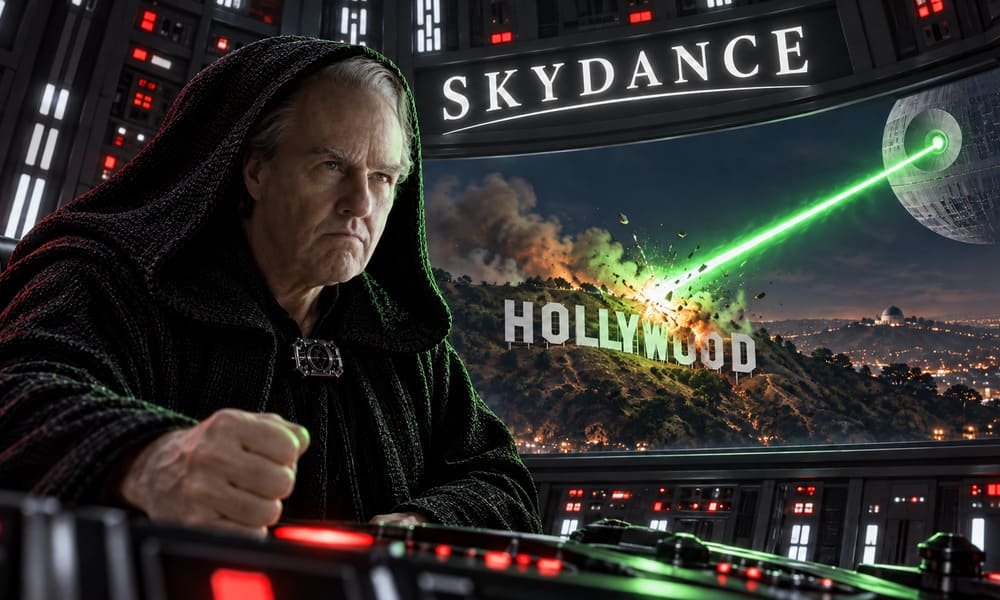
By July 2026, however, Warner Bros. Discovery is at the centre of something far larger than the decisions of a single chief executive. Paramount Skydance has signed a definitive agreement to acquire the entire group, with an equity value of $81 billion and an enterprise value of approximately $110 billion. Under a single corporate structure, the resulting group would control Warner Bros., Paramount Pictures, HBO, HBO Max, Paramount+, CBS, CNN, DC Studios, Nickelodeon, MTV and Comedy Central.
It is within this context that the future of the Warner catalogues will be decided. The problem is not that platforms have become “temporary inventories capable of concealing painful decisions”. It is that they have always been commercial inventories: they retain whatever attracts subscribers, generates advertising revenue, produces licensing income or justifies the cost of remaining available.
Consolidation also places control of not only films and television series, but news broadcasts, documentaries, television programmes, sporting events and cultural events, in the hands of an ever-smaller number of companies. Materials that have shaped public memory may therefore become subject to the same logic applied to an unprofitable or politically inconvenient title.
Within this framework, Zaslav loses almost all the centrality attributed to him by the article. He may have made the brutality of the system more visible, but he remains a temporary administrator within a process that extends far beyond him.
The Problem Is Not Trust: Rights Exist So That We Do Not Have to Trust
“What happens when people stop trusting the institutions responsible for preserving the art they have already helped to finance?”
Property rights, copyright, consumer protection and competition rules do not exist to reward companies that deserve our trust. They exist precisely because a society should not depend on the personal virtue of whoever controls an infrastructure.
We do not need to trust that a platform will preserve a film. There should be obligations that make its goodwill irrelevant: the deposit of works with qualified archives, access to historical versions, the ability to create local copies, the transferability of permanent licences and end-of-life plans for products that depend on servers or remote authentication.
Private ownership can contribute to preservation, but it cannot replace a public policy of cultural memory. Owning a copy, making it accessible and guaranteeing its survival are three different functions that the article tends to conflate. Its reference to the slogan “If buying isn’t owning, then piracy isn’t stealing” perfectly illustrates this confusion.
Many digital works remain available precisely because of unauthorised copies, but piracy is not a public preservation policy. It merely occupies the vacuum left by a market that insists on controlling works without accepting an obligation to keep them accessible, and by institutions that have not been given adequate tools to preserve them and make them available for consultation.
Entrusting memory to trust means accepting that its survival is a concession. Turning the public into a community of rights holders means establishing what a company cannot revoke even when it considers doing so commercially convenient. It is the difference between hoping that “no one will enter and empty a library” and possessing institutions capable of preventing it.
The Unwarranted Centrality of Second-Order Industrial Nostalgia
“Perhaps no story illustrates this transformation better than Grease: Rise of the Pink Ladies.”
The extensive space devoted to Grease: Rise of the Pink Ladies ultimately reveals something grotesque. The cancellation of the series is certainly an example of streaming precarity, but it is assigned disproportionate importance because it allows the article to describe an “artistic betrayal” inflicted on young performers and marginalised groups.
The paradox is that Grease had already transformed the 1950s into a theme park of hair grease, jukeboxes and harmless rebellion. Paramount updated that distortion by inserting the identities excluded from the original myth, without genuinely questioning the myth itself. It sold inclusion as a nostalgic redesign and, when the product ceased to be profitable, discarded both.
A preservation policy cannot depend on the existence of a fandom, the affection of a critic or the ability to turn a reissue into an editorial event.
Storage Innovation Has Found a New Customer
“VHS tapes and other independent copies of older content increasingly express the same instinct.”
The argument then shifts towards nostalgia for VHS, video rental shops and old packaging, but VHS has itself become an aesthetic sold even to generations that never used it. Its image survives while the right it represented disappears: the ability to preserve and lend a copy without requiring subsequent authorisation.
The real industrial fact, however, lies elsewhere. BDXL, the principal evolution of recordable Blu-ray, had already reached a maximum capacity of 128 gigabytes in 2010. Sixteen years later, no universal consumer successor has arrived, nor has an affordable and durable format intended for personal preservation been developed.
The enterprise market, by contrast, has access to LTO tapes holding tens of terabytes, data-centre SSDs with capacities in the hundreds of terabytes and experimental systems capable of storing data in glass for thousands of years. The growth of AI has made investment in memory and storage for data centres even more profitable, directing research and manufacturing capacity towards high-density corporate infrastructure.
Demand for data-centre memory is growing rapidly, while the public can realistically choose only between ageing optical discs, hard drives that must be periodically replaced and subscription-based cloud storage. Innovation has not stopped. It has simply found a new customer. For everything else, there is the nostalgia market.
When Memory Becomes Raw Material
“Every new release of an older title represents an opportunity to make a specific editorial case that the story deserves to remain part of the conversation.”
The sentence reveals a surprisingly self-referential conception of preservation. A work appears to regain its right to exist only when a label, curator or critic succeeds in constructing a new argument around it. But an archive should not remain subordinate to the same hierarchies of taste, prestige and commerce that have already determined which works deserve visibility.
Artificial intelligence now adds an even more radical dimension. Major-studio archives are no longer merely collections of works to be distributed or rediscovered. They can become proprietary datasets, materials for training models and resources through which parts of production can be automated. The same film that may be considered too expensive to keep accessible to the public may retain value as material for internal computational processing.
In September 2024, Lionsgate and Runway announced the creation and training of a customised AI model based on the studio’s proprietary catalogue of films and television productions. In June 2026, the two companies expanded their partnership to include the use of Runway tools in previsualisation, storyboarding and the production of final images.
The work disappears from public view, but the catalogue remains useful to the company as computational capital. Cultural memory therefore becomes selective towards the public and omnivorous towards machines. What is preserved is no longer what a community has the right to remember, but only what an owner can still convert into value.