Now Reading: Christopher Nolan, the Union Advocate Hollywood Can’t Ignore
-
01
Christopher Nolan, the Union Advocate Hollywood Can’t Ignore

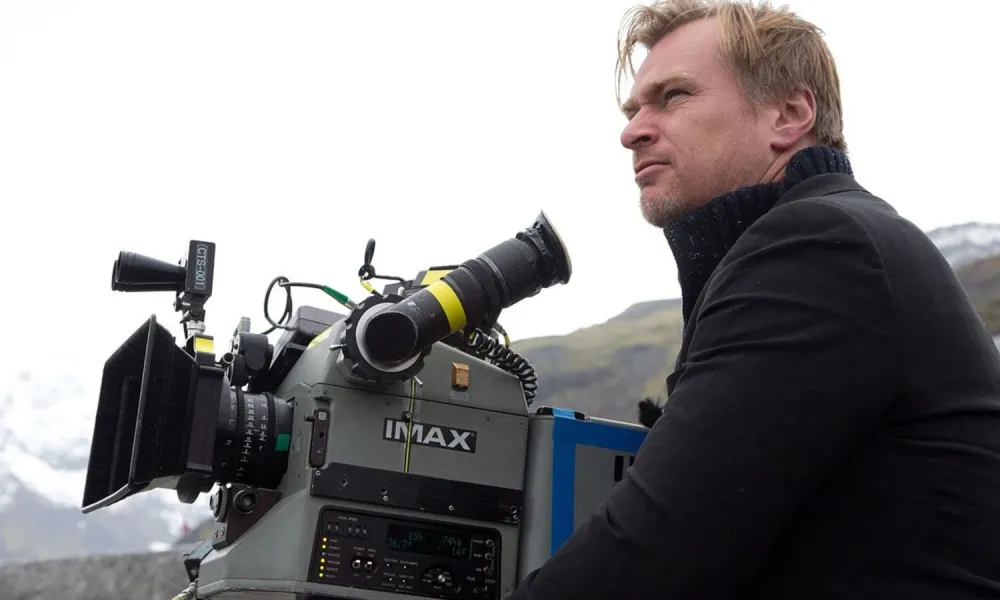
The DGA has reached a four-year agreement with studios and streaming platforms: with Nolan at the helm, Hollywood’s truce is about AI, cinemas and creative power.
Christopher Nolan is undoubtedly one of the few contemporary filmmakers capable of speaking simultaneously to audiences, exhibitors, the Academy, major-studio balance sheets and film crews. As president of the Directors Guild of America, the new tentative agreement with the AMPTP therefore carries significance beyond ordinary labour reporting: it becomes the first test of his industrial policy, suspended between the defence of theatrical exhibition, creative rights, human labour and artificial intelligence.
The DGA has reached a four-year agreement with studios and streaming platforms after four weeks of negotiations. The details have not yet been made public: they must first be reviewed by the union’s National Board and then ratified by its members. The political meaning of the deal, however, is already clear.
AI, Streaming and Consolidation: The Real Contract Is About Who Controls Cinema
The DGA agreement arrives as industrial power in Hollywood continues to become more concentrated. The prolonged struggle over Warner Bros. Discovery, first courted by Netflix and later absorbed into the proposed Paramount Skydance acquisition, has shown just how unstable the industry’s geography has become.
Nolan also chairs the guild’s AI committee. For an actor, the risk posed by AI appears in a synthetic face; for a screenwriter, in generated text or material used to train models. For a director, the threat is quieter: automated storyboards, generated previsualisations, alternative edits, corrected images, reworked scenes and versions optimised for a particular market, platform, audience or budget.
Power today lies not only in producing a film, but in controlling its circulation: catalogues, platforms, data, distribution windows, bargaining power and access to audiences. This is why the directors’ contract concerns more than wages, benefits or working conditions. It concerns the survival of the director as a decision-making figure within an increasingly integrated production chain.
Nolan’s policy, at least as it has taken shape so far, brings together two forms of protection: the defence of human labour performed by assistants, crews, technical departments and professionals who make directing possible before the director’s name reaches the poster; and the defence of the premium theatrical experience, a space in which a film is not merely available content, but a public experience, shared time, enforced attention and a physical relationship with the image.
The Exception That Speaks as Though It Could Still Represent the Rule
Nolan’s position, however, also has an obvious limitation: he speaks from a place that almost no other director can still occupy. Oppenheimer grossed almost $976 million worldwide and transformed a three-hour adult historical drama into a global theatrical event. It is powerful evidence, but also exceptional.
According to FilmLA, on-location filming in Los Angeles, Hollywood’s historic centre of gravity, fell by 22.4% in the first quarter of 2025, with television production down 30.5% and feature films down 28.9%. The decline continued in the second quarter, although at a slower rate, with a 6.2% decrease; the third quarter brought another fall of 13.2%. By the end of the year, the 2025 total stood at 19,694 shoot days, 16.1% fewer than in 2024. The industry’s physical spaces tell the same story of contraction: occupancy of Hollywood soundstages fell to 62% in the first half of 2025, while IATSE reported that its members worked approximately 36% fewer hours than in 2022.
In this context, Nolan’s success risks becoming an alibi: the shining proof that the system is still capable of protecting artistic authorship, even as it narrows the available space for everyone else. If theatrical cinema remains possible only for major events such as Odyssey, the battle for cinemas preserves the top of the pyramid while leaving mid-budget films and independent directors exposed — filmmakers who cannot reach audiences with the support of IMAX, the Oscars and global marketing.
Nolan’s Truce: Four Years to Avoid Surrendering the Future to the Studios
After the strikes, the production chaos and the instability of streaming, Hollywood needed to know that at least one part of the labour front would not erupt again. Nolan had warned against contracts that were too long, noting that signing a five-year agreement in March 2020 would have meant remaining trapped by rules written before the pandemic, the explosion of streaming and the rise of generative AI.
The DGA agreement therefore provides four years of relative industrial peace, in continuity with the new contracts also reached by writers and actors. The closest precedent is the agreement negotiated by SAG-AFTRA, which has just ratified a four-year deal with studios and streaming platforms. It was approved by more than 90% of voters and includes new protections concerning artificial intelligence and digital identity.
Hollywood gains the time it needs to restore order to its production machinery, while directors avoid committing themselves for too long to a system in which creative power continues to shift towards platforms, algorithms and financial capital.
In this industry, the future grows old quickly.