Now Reading: Nicolas Cage and the Unbearable Weight of Hollywood
-
01
Nicolas Cage and the Unbearable Weight of Hollywood

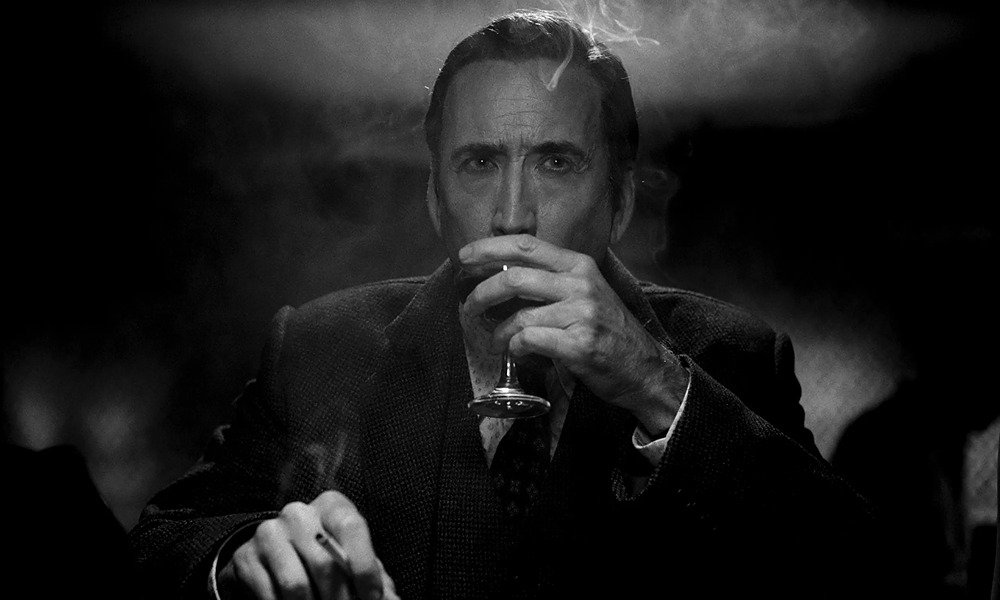
Nicolas Cage says the Marvel Cinematic Universe is becoming a glorified, heavily financed version of professional wrestling. At the same time, he is preparing another thriller and remains attached to superhero IP. The contradiction is less embarrassing than it looks.
Nicolas Cage compares Marvel to wrestling and prepares a new thriller. Between old contracts and overlooked statements, the controversy takes a less comfortable turn.
For Nicolas Cage, the Marvel Cinematic Universe is becoming a glorified and well-financed WWE. At Fan Expo in Dallas he described intelligent, gifted actors over fifty being put into ridiculous costumes only to end up, inevitably, in a fight.
While the remark circulates, he announces his next role in C.L.A.Y., a cyber thriller with Michael Sheen, directed by first-time feature filmmaker Simon Afram and due to begin shooting in London in November.
It is the kind of statement that invites us to divide Hollywood between defenders of art and employees of the box office, provided we do not inspect the résumés too closely. Cage made two Ghost Rider films and has continued to frequent superhero culture with Spider-Noir; above all, he has had excellent reasons to want the next contract to arrive quickly.
When characters still had something to do
In 2022, Cage defended Marvel from the criticism of Martin Scorsese and his uncle Francis Ford Coppola, praising its ability to connect stories and characters. He saw no conflict with films such as Pig and Joe, nor did he believe superheroes were responsible for the disappearance of mid-budget productions. Even in Dallas, before invoking wrestling, he recalled the MCU’s early stories with admiration.
His irritation with the way studios functioned, on the other hand, was already explicit.
In 2021, while discussing Pig, he described the pressures of large sets: lines to be delivered in the prescribed way while he asked to try another interpretation as well. In independent productions he found “more oxygen in the room.” A fairly concrete issue for someone hired for his talent and then required to negotiate permission to use it.
The conveyor belt takes independent films too
That margin of freedom had, however, coexisted with a less negotiable necessity: paying off his debts. The studios had suddenly stopped calling him: the star had become a risk at exactly the moment when he most needed to work. In 2023 he said he had needed to repay six million dollars after the collapse of his real-estate investments. He made no fewer than 46 films during the period in which he was clearing his debts; Cage described it as a “conveyor belt.” One could leave the blockbuster and find the factory a few floors lower, with fewer visual effects and the same urgency to deliver.
In 2022, however, he told another part of the story: his financial problems had lasted thirteen years, but he had turned down many roles and accepted those in which he thought he could bring something of his own. Among the most gratifying results were Mandy and Pig, difficult to dismiss as illustrated tax receipts. He even argued that continuing to act had taught him to access his emotions more effectively, pointing to Pig as a result of that practice.
“I never had a career. I only had work.” Nicolas Cage
His anti-industrial impatience seems to come precisely from this
By March 2022 the debts had been paid off. The final payment had been made possible by The Unbearable Weight of Massive Talent, in which he played an exaggerated version of himself. To redeem the actor, the brand had been needed: the industry could still pay him for the eccentricities that, elsewhere, made him difficult to categorize.
Even that brand, however, still had to be performed. Cage told MovieMaker that he had explained to director Tom Gormican that the neurotic, perpetually anxious Cage in the script did not correspond to him, while still agreeing to serve that vision. The man paid his bills by lending his face to a version of himself imagined by somebody else. The payment restored some freedom to choose the next job; it did not remove him from the market.
Needing the paycheck while wanting to retain a voice in the work that produces it. When he returns to superheroes with Spider-Noir, Cage describes the precise mixture required for the performance: 70 percent Bogart and 30 percent Bugs Bunny.
For C.L.A.Y., meanwhile, Simon Afram promises a deeply human story about people searching for purpose: a socially invisible computer prodigy finds belonging in a collective of hackers. Cage has often lent his face to men trying to find a way out by assembling a crew or preparing a job: as in Gone in 60 Seconds, Matchstick Men and The Trust, at least on screen he can still be an outsider, find complicity among irregulars and search for a form of freedom in talent.