Now Reading: Del Toro’s Frankenstein: The Philosophy of Sound Design
-
01
Del Toro’s Frankenstein: The Philosophy of Sound Design

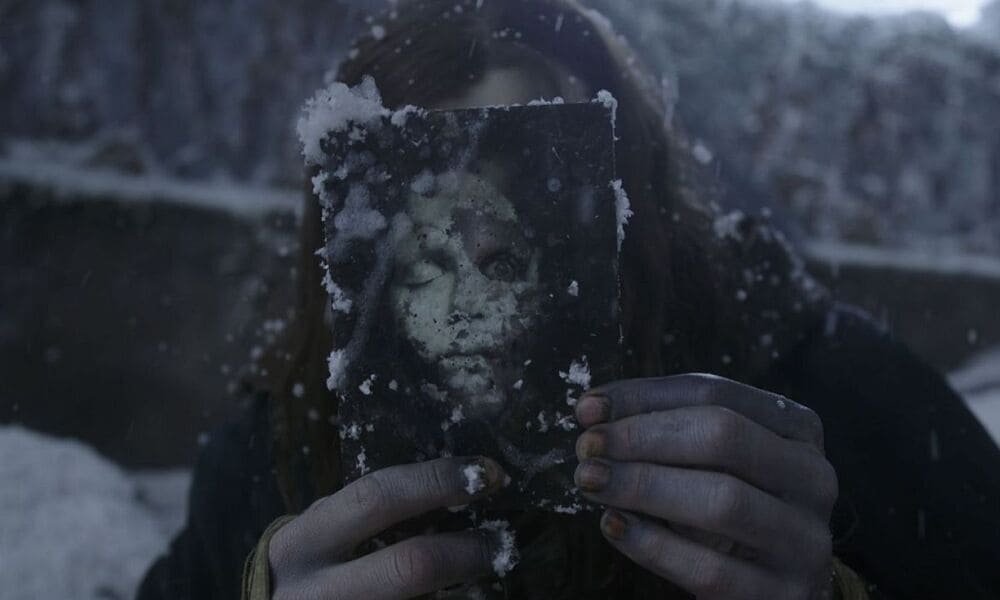
Supervising sound editor Nathan Robitaille and mixer Christian Cooke discuss their Oscar-nominated work on Guillermo del Toro’s Frankenstein.
Supervising sound editor Nathan Robitaille and mixer Christian Cooke discuss their Oscar-nominated work on Guillermo del Toro’s Frankenstein.
In his new Frankenstein, Guillermo del Toro reaffirms his vision of sound as an emotional extension of storytelling. The film treats the creature not as a “monster” but as a being undergoing a transformation, and the sound department is tasked with making that evolution perceptible.
Supervising sound editor Nathan Robitaille explains: “We mapped out a dramatic journey across the film, in which he goes from being something at the beginning to becoming someone at the end,” exactly what the creature (Jacob Elordi) tells his creator, Victor Frankenstein (Oscar Isaac), at a pivotal moment in the story.
ADR at 96 kHz: vocal identity and a convincing sonic presence
The starting point was the voice of the creature played by Jacob Elordi. The team chose to preserve the richness of the actor’s vocal timbre, avoiding an excessively transformative approach: “We were reluctant to change Jacob’s voice too much, because it’s so full and natural,” Robitaille says.
To allow targeted adjustments without degrading the signal, the ADR was recorded at 96 kHz. This technical decision by production sound mixer Greg Chapman made it possible to push the voice, distort it and reinforce its low frequencies without introducing digital artefacts.
“We wanted to stay as hands-off as possible, allowing the performance to remain the expressive heart of the character. And Jacob was a real trooper throughout the process, bringing his prosthetic teeth along to every recording session.”
Animal layering and subsonics: “We EQ’d a zoo”
One of the most distinctive aspects of Frankenstein’s sound design is the extensive use of animal effects as an extension of the human voice. “Surprisingly, horses worked very well,” Robitaille explains, noting how naturally equine vocalisations blended with Elordi’s speech.
Alongside these, the team used a wide range of animal “sweeteners”: growls at the end of a rolled “r,” moans, breaths and even more extreme roars. “We threw the whole zoo at him,” Robitaille jokes, since the range of species used was broad enough to include everything from raccoons to rhinoceroses.
On the technical side, two subsonic reinforcement tracks were created: one based on a pitch shift of the original voice down by one octave, the other made up of animal roars synchronised with the performance, both used to add “warmth” and emotional weight.
Narrative mixing in a Frankenstein of automation and fading
The mix in Frankenstein does more than balance elements: it becomes a narrative arc in its own right. Re-recording mixer Christian Cooke’s work was crucial to this gradual transformation: “At the beginning of the story, we had more freedom to be aggressive. But as we came to understand who the creature really was, those sounds were gradually faded down to make room for his identity.”
Like instruments in a virtual orchestra, each animal component was controlled through precise automation, ready to emerge without ever taking over. The result is a mix that never erases the animal nature, but incorporates it as a permanent emotional resonance: “It would have been inelegant if he were human all the time and then suddenly monstrous.”
In Frankenstein, sound design becomes an invisible guide for the viewer, a silent force equally capable of subliminally suggesting empathy before the narrative even dares to ask for it, constantly reminding us, as Mary Shelley would, that no monstrosity has ever arisen except from an act of creation that failed to listen.