
Now Reading: Robert Downey Jr. Becomes the Face of SPECS: The Former Iron Man Will Work on Content, Augmented Reality and New Experiences with AR Glasses
-
01
Robert Downey Jr. Becomes the Face of SPECS: The Former Iron Man Will Work on Content, Augmented Reality and New Experiences with AR Glasses
Robert Downey Jr. Becomes the Face of SPECS: The Former Iron Man Will Work on Content, Augmented Reality and New Experiences with AR Glasses

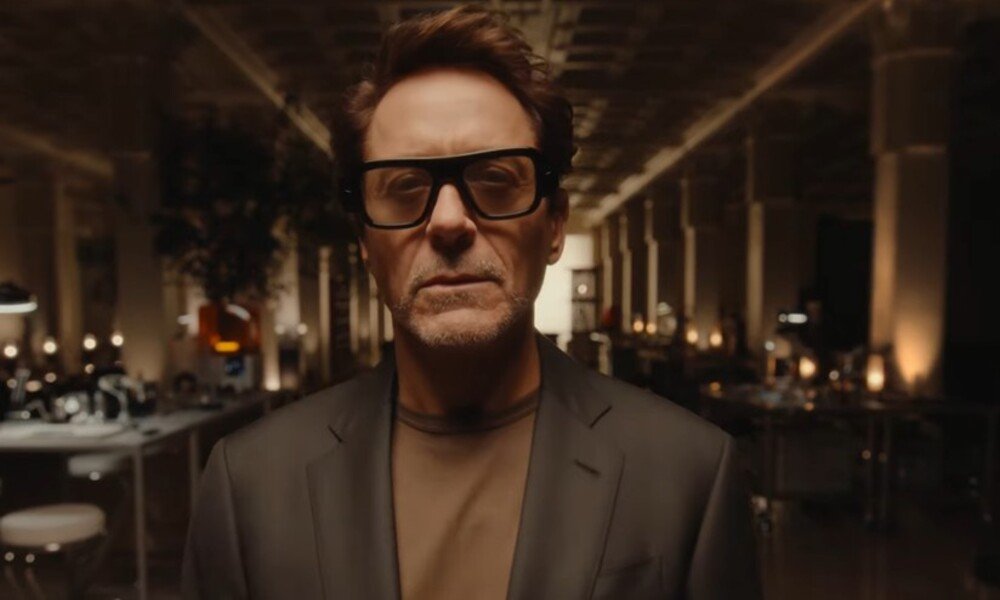
Robert Downey Jr. becomes SPECS' honorary CCEO. Between augmented reality, anticipatory AI and promises of presence, Snap stages its future.
Robert Downey Jr. becomes SPECS’ honorary CCEO. Between augmented reality, anticipatory AI and promises of presence, Snap stages its future.
Robert Downey Jr. has a new role in the technology industry, although the résumé that makes him particularly well suited to it is still Tony Stark’s. Snap has named him honorary Chief Customer Experience Officer of SPECS, the subsidiary developing its augmented reality glasses, with the task of helping the public understand — and above all imagine — what can be done with a transparent computer perched on your nose.
He will not simply be an endorser. According to Snap’s official announcement, Downey Jr. will contribute to the development of Lens experiences, original content, hardware collaborations and live initiatives. He said SPECS won him over in less than a minute of trying them, after what he described as twenty years of testing wearables that almost always disappointed him.
The most successful detail, however, comes from Evan Spiegel. According to Snap’s CEO, Downey Jr. has been imagining the possibilities of this technology for nearly twenty years. It is an elegant way to turn a movie role into professional experience in AR. But given the product Snap needs to sell, perhaps it is not even a stretch: before the technology comes the task of shaping how the public will learn to see it.
Robert Downey Jr. has to do more than wear SPECS
The new CCEO’s first work is already available: a series of original episodes in which SPECS are put to the test at work, on the golf course, in entertainment and in artistic activities. That is Snap’s description of the videos, which it presents as a way to demonstrate the glasses’ practical usefulness. Part of the series will also air during major US television events, from NBA games to the World Series.
It is a kind of advertising in which a celebrity takes on an executive title, helps create the experiences and then shows consumers why they should want them.
The SPECS unveiled by Snap are technically far more ambitious than ordinary smart glasses. They are standalone, require no external unit, use two Snapdragon processors and project digital content through transparent lenses with a stated field of view of 51 degrees. They weigh between 132 and 136 grams depending on the size, and their launch price is $2,195.
Snap has been working on AR glasses for more than a decade, and more than $3.5 billion has been invested in the project. Activist investor Irenic Capital even called on the company to separate SPECS from the rest of the group or shut down the project; Snap instead chose to establish a dedicated subsidiary, and Spiegel continues to defend it as a long-term bet.
The technology, moreover, is real and impressive. But it is not yet indistinguishable from its representation. In a hands-on test after the September unveiling, UploadVR observed that footage recorded by SPECS shows a larger portion of augmented reality than the wearer actually sees through the 51-degree display. In real-world use, the digital content appears within a more limited visual window.
This is not a trick invented for SPECS: it is one of the hardest technical problems in see-through AR. But it creates a neat little short circuit for a technology that must first be shown and then worn: even augmented reality, seen on video, can look slightly more augmented.
Snap wants to free us from screens. By taking them everywhere
For months, the company has insisted on one idea: computers have forced us to look down, into phones and displays, drawing our attention away from the people and places in front of us. SPECS are supposed to correct that mistake, bringing the digital into the world instead of forcing us to leave the world to consult it.
Then there is what Snap is building around the glasses.
SPECS Intelligence, the company’s new artificial intelligence service, is designed to build a gradually deepening understanding of users’ goals, priorities, relationships and routines from connected applications. The idea is that it does not necessarily have to wait for a question: it can anticipate when information might be useful and display it at what it considers the right moment.
Before a meeting, it can bring up decisions and issues to address. During a trip, it can gather flights, hotels, bookings and deadlines. With SPECS, this personal context can finally enter the field of view directly. Snap specifies that users choose which services to connect, that personal content is not used to train its models or for personalized advertising, and that processing combines the device with protected cloud infrastructure.
The proposed solution to our excessive immersion in the digital, then, is not to reduce the digital: it is to remove its edges. A smartphone interrupts the world because we have to pick it up, unlock it and look at it. SPECS promise to eliminate that very interruption: directions, messages, videos, AI assistants, reminders and virtual objects can remain superimposed on things while we apparently continue looking at the things themselves.
Tony Stark was the perfect choice.
All that remains is to find out whether SPECS will truly free us from the old habit of spending the day in front of a display, or turn presence itself into a computing surface.
The phone, at least, had the courtesy of needing to be taken out of your pocket.
“Wait until you see what we create for your enjoyment.” Robert Downey Jr.