Now Reading: Sylvester Stallone Defends AI in Cinema: ‘Accept It or Be Swept Away’
-
01
Sylvester Stallone Defends AI in Cinema: ‘Accept It or Be Swept Away’

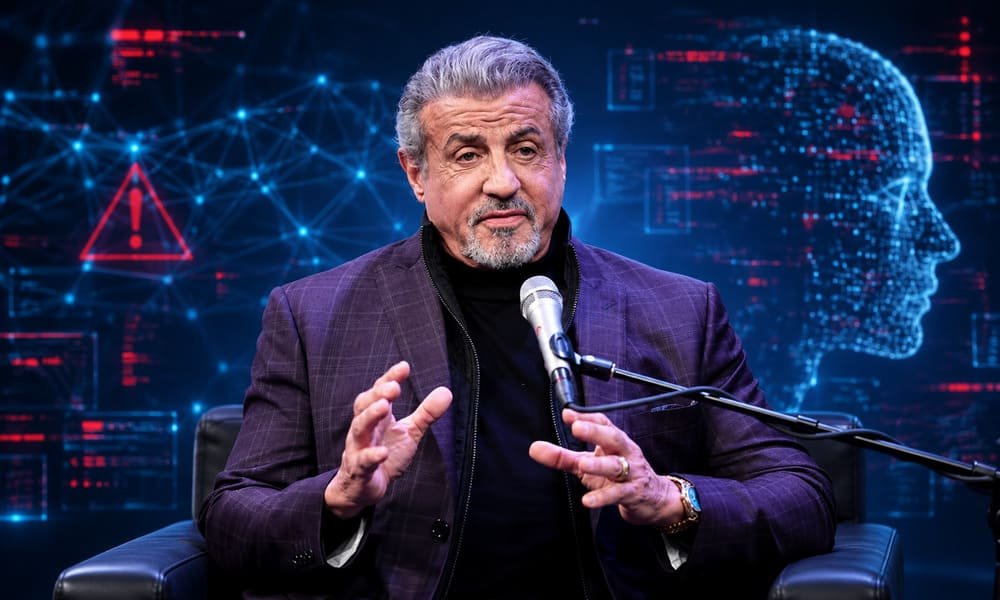
Sylvester Stallone politely invites Hollywood to accept AI. If that is not enough, Rocky and Rambo still have something to say.
Sylvester Stallone politely invites Hollywood to accept AI. If that is not enough, Rocky and Rambo still have something to say.
Sylvester Stallone has a solution to Hollywood’s artificial intelligence problem: stop treating it as a problem.
AI, he explained in a conversation with The Hollywood Reporter, “is coming,” and the choice is simple: follow it or be swept away. From Rocky to Rambo, after all, Stallone has always had a certain familiarity with formulas that involve taking the hit and staying on your feet.
The example that interests him is John Rambo. Stallone has long imagined a prequel in which artificial intelligence could make his face eighteen again and show the smiling, popular boy before Vietnam turns him into the man in First Blood.
The idea did not emerge yesterday: back in 2025, he was already saying that he had proposed it and been treated as though he were crazy. In the meantime, the actual prequel has moved ahead with Noah Centineo, without him.
Rambo can be eighteen forever
Stallone, then, did not jump on the AI bandwagon during his latest round of interviews.
In February 2025, he became an investor and strategic partner in Largo.ai, a company applying artificial intelligence to film, television and advertising. Largo says it uses models trained on hundreds of thousands of films and series, analyzing scripts, audiences and commercial potential to provide predictive tools to the industry.
And this is where the past becomes capital. Rocky and Rambo are not just characters from the past: they are data that keep producing the present. They return to platforms, are recommended to new generations, and generate sequels, prequels, spin-offs, anniversaries, restorations and new commercial opportunities.
The algorithm does not necessarily have to invent the next Rocky. It only needs to notice that the old one still works. With artificial intelligence, it is possible to go even further: not just keep a character alive, but give him back the face he had before he grew old.
Rocky versus the algorithm
The detail becomes curious because just a few weeks ago the future looked slightly different.
Interviewed by Repubblica while promoting The Steps, the memoir built around his long battle to become Rocky Balboa, Stallone explained why a film like Rocky probably would not get made today.
“We have entrusted everything to technology, to mechanical judgments. There used to be someone willing to judge with their heart.”
If someone took that screenplay to a studio today, he believes, they might be turned down not because a producer did not believe in it, but because “the algorithm rejected it.”
For Hollywood, a recommendation system, a predictive tool and a model capable of digitally de-aging an actor are gradually ending up in the same ecosystem: understand what audiences want, reduce risk, exploit what it already owns and, where possible, make it last a little longer.
This is also why SAG-AFTRA negotiated specific protections on consent and compensation for performers’ digital replicas. The machine that can extend a character’s life for a star can shrink the space available to another worker.
Sylvester Stallone and artificial intelligence: the future always arrives during the press tour
Perhaps, then, when Stallone talks about Rocky, he is telling the story of the young man who defeated a system incapable of recognizing an idea. When he talks about AI, he is telling the story of the eighty-year-old artist who, as in Tulsa King, refuses to be shut out of the future. They are two different stories, but in 2026 both work beautifully in front of a microphone.
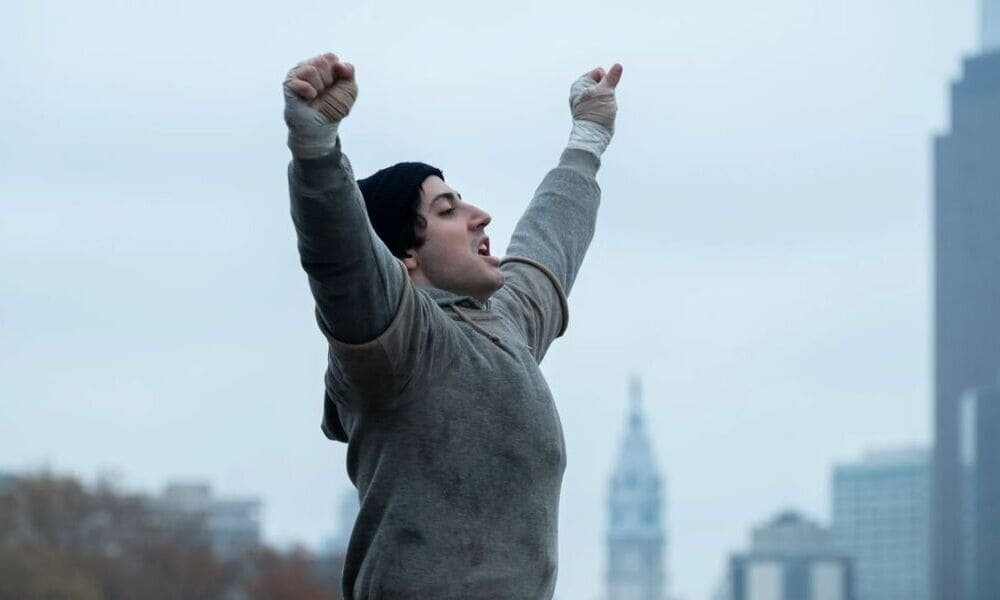
Meanwhile, Hollywood has also found a decidedly more traditional way to restore his youth. In I Play Rocky, Peter Farrelly’s film about the making of the first Rocky, Anthony Ippolito plays the young Stallone. Stallone had greeted the project with a few wry reservations:
“I’m not dead yet.”
Only to change his mind after seeing the actor: in some shots, he said, it almost felt like looking at himself. For now, someone still has to play him; one day, not too far away, even that step could become optional.
After all, artificial intelligence has almost become a promotional genre. Sooner or later, during the round of interviews accompanying a film, a series or a book, the question comes up. An actor can fear it, shut the door on it, celebrate it, declare it inevitable, defend the human soul or explain that it will change everything.
Every answer produces a headline. Every headline keeps the tour going.