Now Reading: Asphalt Guerrilla: AI Declares War on Reality
-
01
Asphalt Guerrilla: AI Declares War on Reality

Edgar Pêra brings to Locarno a film about the FP-25 that blends autobiography, archives, fiction and AI-generated imagery. The real experiment, however, concerns what we are still willing to call memory.
Edgar Pêra brings to Locarno a film about the FP-25 that blends autobiography, archives, fiction and AI-generated imagery. The real experiment, however, concerns what we are still willing to call memory.
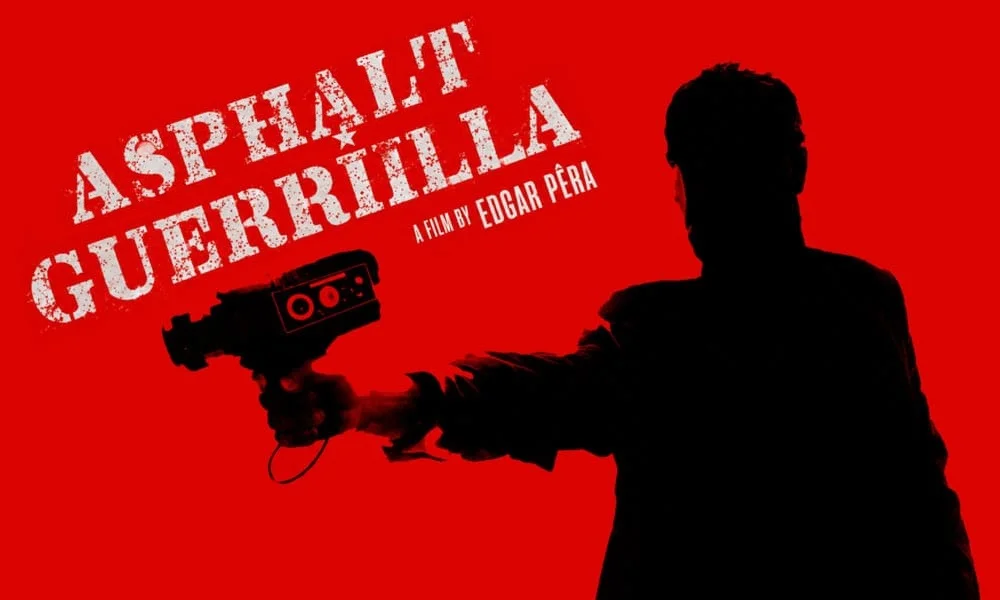
An armed group from the 1980s, a robbery that ended in bloodshed, forty years of archival material and an artificial intelligence capable of manufacturing images of the past. Asphalt Guerrilla, the international title of Guerrilha no Asfalto, arrives at the 79th Locarno Film Festival in the Out of Competition section: 77 minutes in which Edgar Pêra intertwines political history, autobiography and synthetic imagery.
At the center are the Forças Populares 25 de Abril, an armed organization of the Portuguese far left. Bando à Parte, the film’s production company, describes it as a meta-cinematic tragicomedy: the guerrillas trying to fight the system are mirrored by Pêra’s own “guerrilla warfare” as he attempts to make the project outside conventional production structures.
From the FP-25 to Edgar Pêra’s Personal Memory
According to records from the Portuguese Constitutional Court, the FP-25 first appeared publicly on April 20, 1980, simultaneously detonating around one hundred small explosive devices and distributing a manifesto. Robberies, bombings and clashes followed; on May 5, during two bank raids in Cacém, a member of the Guarda Nacional Republicana was killed.
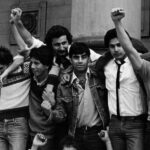
For Pêra, however, this is not abstract history. As a young man, he attended D. Dinis secondary school in the turbulent post-revolutionary Portugal of the period; while he moved away from activism, an acquaintance continued down that path and died in the 1980 Malveira robbery linked to the FP-25. An academic study of the project shows how the film also becomes a reconstruction of the director’s generational memory.
Another source is Guerrilha no Asfalto – As FP-25 e o tempo português, a book published in 1992 by former militant Manuel Ricardo de Sousa: 176 pages devoted to his experiences, his entry into the FP-25 and even his escape from Lisbon Penitentiary on September 21, 1985. The volume, now difficult to find but documented in several bibliographic archives, provides the backbone for a film that Pêra contaminates with autobiography and roughly forty years of footage. The preparation also involved documents on the FP-25, studies of anarchism, period objects and even newly purchased vinyl records, since music plays a central role in the reconstruction.
AI Does Not Reconstruct the Past: It Makes It Suspicious
Pêra had already worked with artificial intelligence in Telepathic Letters, presented at Locarno in 2024, where generated images created an imaginary dialogue between Fernando Pessoa and H.P. Lovecraft. It was during that project that he first mentioned Asphalt Guerrilla, stressing that it would not exactly be “an AI film,” as documented by the Swiss festival.
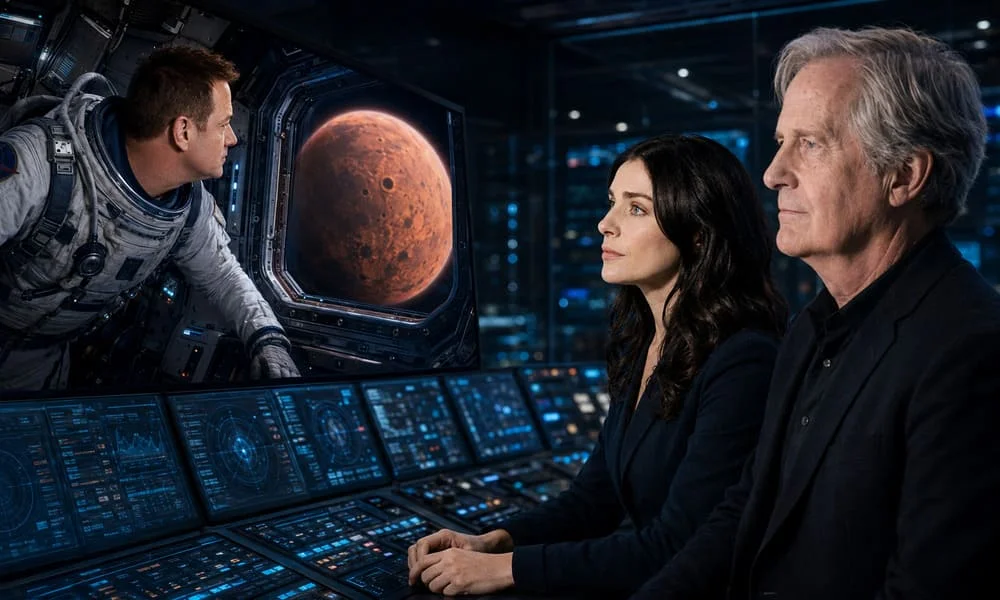
Two years later AI is indeed present, but it does not simply function as a production shortcut. Pêra has explained that he sometimes left clues making synthetic images recognizable, while elsewhere deliberately exploiting their ambiguity. Just as in the mockumentary Synthetic Sincerity, Pêra uses AI’s ability to falsify reality to show how easily reality can be falsified.
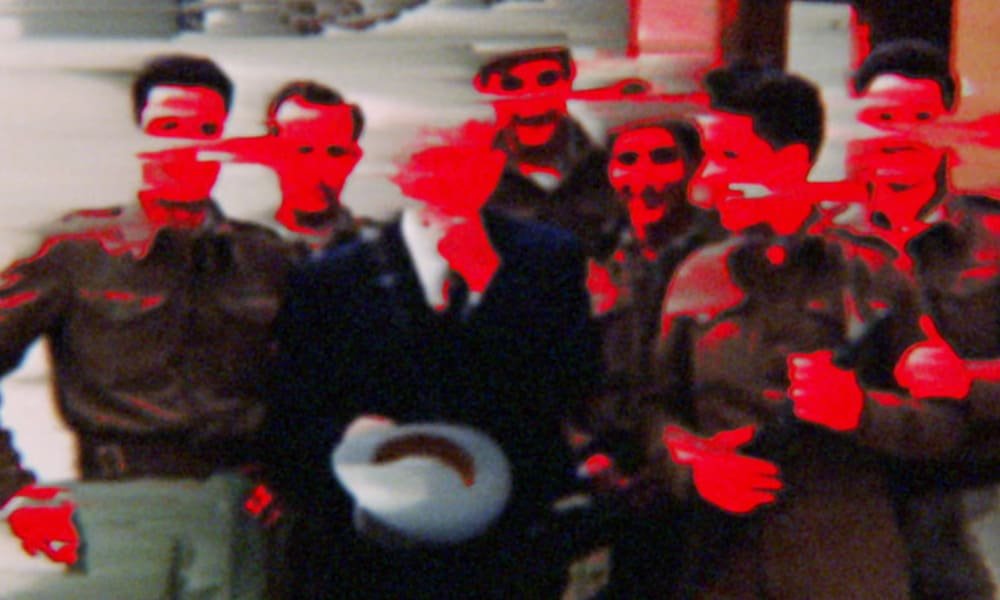
In the realm of archival material, the difference is enormous. A historical photograph can mislead through selection or context, but it still retains a material relationship with something that once passed in front of the lens. A generative image, by contrast, can directly produce the appearance of that event. When authentic archive footage, reconstruction and AI coexist within the same edit, even the genuine document is forced to prove that it is genuine.
From Neuro-Punk to Artificial Intelligence
The choice is consistent with a career that began in 1985, when Pêra filmed the Portuguese rock scene while developing his own “neuro-punk” style. He has made more than one hundred works across cinema, television, installations and cine-concerts, also using a series of alter egos: Mr. Ego for writing and painting, Man-Kamera for image-making and Artur Cyanetto for sound and music. In 1988 he shot Reproduta Interdita among the ruins of Chiado after the devastating fire, and later produced eighteen 3D films as part of his ongoing research.
AI, however, introduces a further rupture: a camera changes the way reality is recorded; a generative model can create something that will appear to have been recorded. This is why Asphalt Guerrilla moves beyond Hollywood’s debate over costs, copyright and labor and reaches a much older question: who controls the past.
The FP-25 wanted to alter reality through political action; forty years later Pêra intervenes in the images through which that reality is remembered. AI makes a third step possible: manufacturing new traces of the past with the appearance of memory. The risk is not merely that we will have false images, but that it will become harder to explain why we should believe the real ones.
AI will not eliminate the author. It will, however, make it impossible to pretend that all images have the same relationship with reality.