Now Reading: NAZA in 515 Cinemas: Applauding the Secrets of Power
-
01
NAZA in 515 Cinemas: Applauding the Secrets of Power


Awards, threats and a 515-screen Italian release give NAZA the aura of a forbidden revelation. The film also raises a less comfortable question about who gains authority from confession.
Awards, threats against the filmmakers and 515 cinemas for NAZA: everything seems to be in the right place, until one asks who, at the end of the screening, will actually collect the applause.
NAZA arrives in 515 Italian cinemas, from September 28 to 30, carrying the Special Jury Prize from Venice and an adversary any publicity office would dream of: Benjamin Netanyahu.
On September 16 the prime minister promised a law that would strip citizenship from those who defame Israeli soldiers, explicitly citing the documentary by Yuval Abraham and Rachel Szor. The ticket therefore acquires a moral surcharge: besides seeing a film, audiences can also irritate the Israeli government.
At least until the projector turns on.
NAZA and the revelations that were already public
Then one reads the filmmakers’ statements and the secret changes consistency: many of the revelations had already been published almost immediately through The Guardian, +972 Magazine and Local Call in the months following October 7.
The Guardian, which contributed to those investigations, is also among the producers of the documentary. A substantial part of what reaches the cinema had therefore already passed through journalism, without waiting for the red carpet.
The film adds a form, an experience, an audience; the truth, however, had not remained locked in a safe. It was available to be read, an activity for which, unfortunately, no standing ovation is scheduled.
Israeli intelligence: horror becomes a catalogue
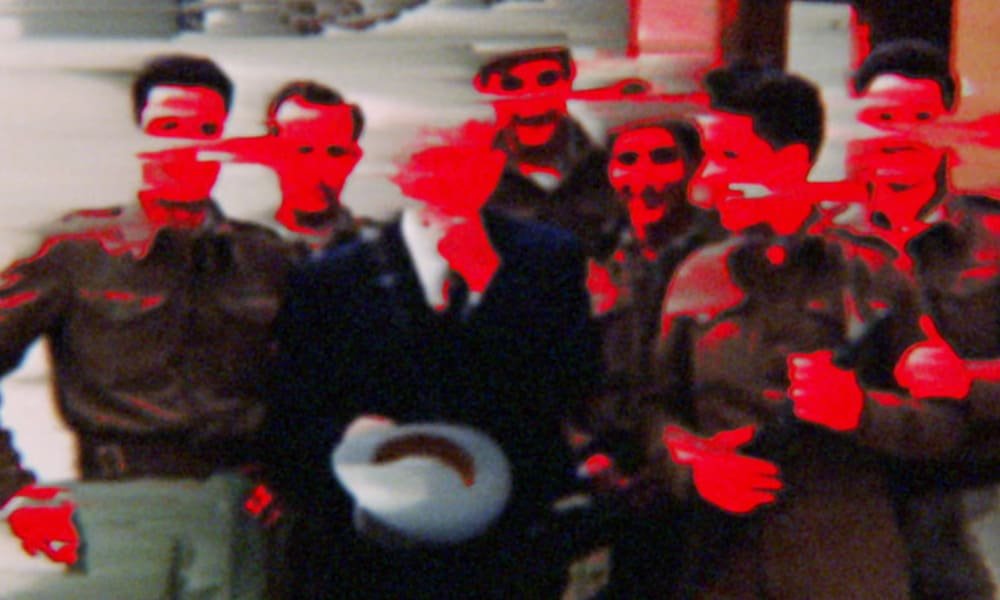
At the center of the story are 24 soldiers and intelligence personnel, explaining target selection, surveillance and killing. According to those interviewed, a target can receive the designation “20 NAZA”: twenty civilians whose deaths are authorized in the strike.
One of the agents says he feels “a little like God,” because he can listen to everything. The phrase should belong among the charges; it also possesses considerable advertising effectiveness. After all, how many apparatuses can present credentials that ambitious without being suspected of exaggeration?
The denunciation puts on screen those who know the machinery from the inside, and here the story changes owners: the pain belongs to the victims, the knowledge to the operators, the authority comes from the console. The documentary thus obtains precious testimony while also returning the apparatus to the role of protagonist, capable of producing both the horror and its explanation, while the confession completes the catalogue of its skills.
In the audience, one may hate everything, as long as one acknowledges that the system sees, listens, decides and, when necessary, tells the story.
Antisemitism and sovereigntism: dissent changes name
Meanwhile Culture Minister Miki Zohar accuses the filmmakers of seeking applause from antisemites, while Netanyahu links the case to antisemitic incitement. The testimony comes from inside the Israeli apparatus; the accusation is sent outward, toward those who listen. A rather convenient transfer: from the content of the revelations to the respectability of the audience.
Within the sovereigntist construction, the government speaks in the name of the State, the State ends up speaking in the name of Jews, and criticism of its institutions can thus be presented as an attack on an entire identity. The fight against antisemitism is enlisted to police dissent, with government policies safely placed behind the fence.
In the case of NAZA there is an almost pyrotechnic paradox: a power can emerge morally discredited and symbolically strengthened by the same narrative, when the revelation of its crimes becomes a demonstration of its omnipotence.
The government protests, festivals applaud, intelligence services emerge from the dark with an impressive résumé: this is where denunciation begins to resemble an advertisement, leaving the audience with one evening’s indignation and the apparatus with the grandeur of the cinema screen.