Now Reading: Rebellion: Elon Musk Bought the Megaphone
-
01
Rebellion: Elon Musk Bought the Megaphone

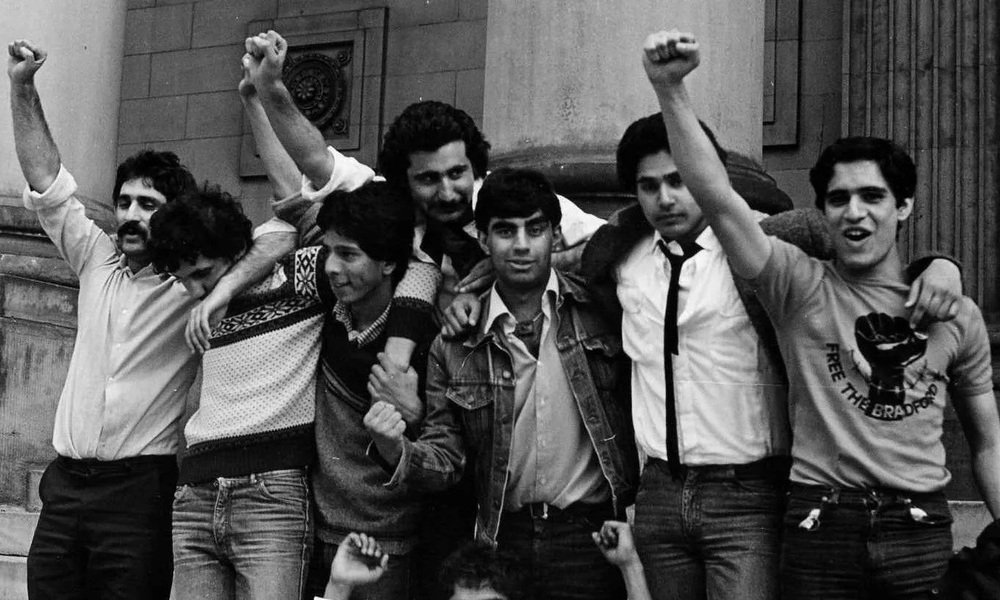
Rebellion brings the Bradford 12 back into the present. Elon Musk is an obvious target, but Britain learned how to manufacture an outsider long before social media.
Rebellion brings the Bradford 12 back to the London Film Festival. Musk is the target, but British politics learned how to manufacture the enemy long before him.
“Your problems are caused by Elon Musk, not migrants.”
Ken Fero did not exactly choose metaphor to introduce Rebellion, the documentary he directed with Tariq Mehmood that arrives at the BFI London Film Festival on 14 October. Mehmood, however, is not only one of the directors: he is also one of the Bradford 12, the twelve young Asian men who in 1981 prepared petrol bombs while fearing a far-right attack and then found themselves in court.
Fero looks at Britain today, the new right, the demonization of migrants and Musk, who in recent years has become a rather enthusiastic participant in European politics. The parallel with 1981 almost looks too convenient. The problem is that it works.
Rebellion: before social media there were already the Bradford 12
In 1981 racist attacks in Britain were increasing. In Bradford, word spread of a possible fascist mobilization and some members of the United Black Youth League prepared petrol bombs. They were never used. The march never happened, but the twelve were arrested and prosecuted.
This is not a militant reconstruction made forty-five years later: the British National Archives tell the story too. At trial, the defence argued the principle that became a slogan: “Self-defence is no offence.” In June 1982 the jury acquitted them.
The interesting part is therefore the sequence: racist attacks grow, a community organizes to defend itself, and the state puts those who organized on trial. Forty-five years later a film comes along to remember it just as British debate is once again explaining national problems by pointing at someone from outside. Technology, at least, has made the process more efficient.
Musk’s problem is that he arrived late
Fero points to Elon Musk. There is evidence for doing so: Musk has supported forces on the European right, repeatedly intervened in British politics and even had a rather turbulent relationship with Nigel Farage. But reducing everything to the billionaire who owns X would also offer an unexpected consolation: remove the megaphone.
Except that the day before the interview appeared, Farage was proposing to suspend asylum claims for up to five years, cancel tens of thousands of pending applications and automatically reject new ones. Meanwhile even the Labour government had opened a TikTok account devoted to showing raids, arrests and deportations.
The target, in other words, no longer belongs only to the margins marching in the street: it has become administrative material, political communication, content.
And here Rebellion stops being simply a film about the return of the far right. In 1981, algorithms, social networks and American billionaires were not needed to turn a minority first into a problem and then those who reacted into a threat to public order. The mechanism already worked perfectly well in analogue form.
Musk, in the end, only bought the megaphone. The voice was already there.