Now Reading: Clint Eastwood, the Artist Who Gave American Cinema Its Beat
-
01
Clint Eastwood, the Artist Who Gave American Cinema Its Beat

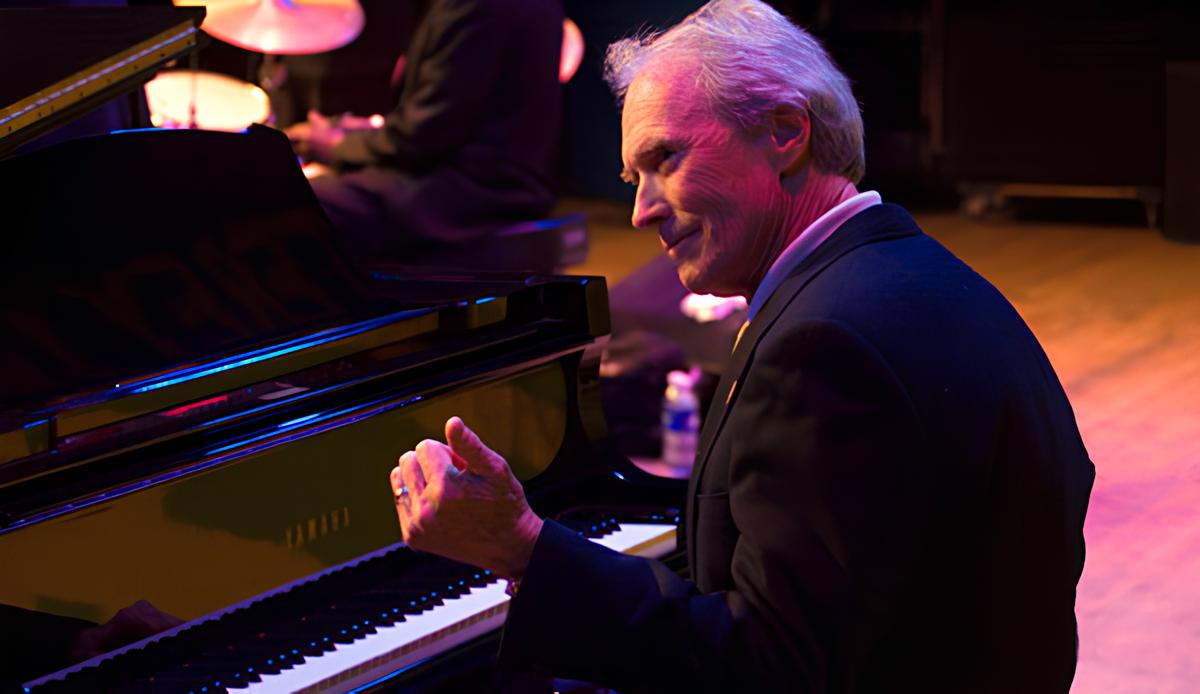
Clint Eastwood turns 96 today. It is a number that, by itself, is enough to reopen the whole catalogue of the myth: the Man with No Name, the classical director, the last hard American still standing.
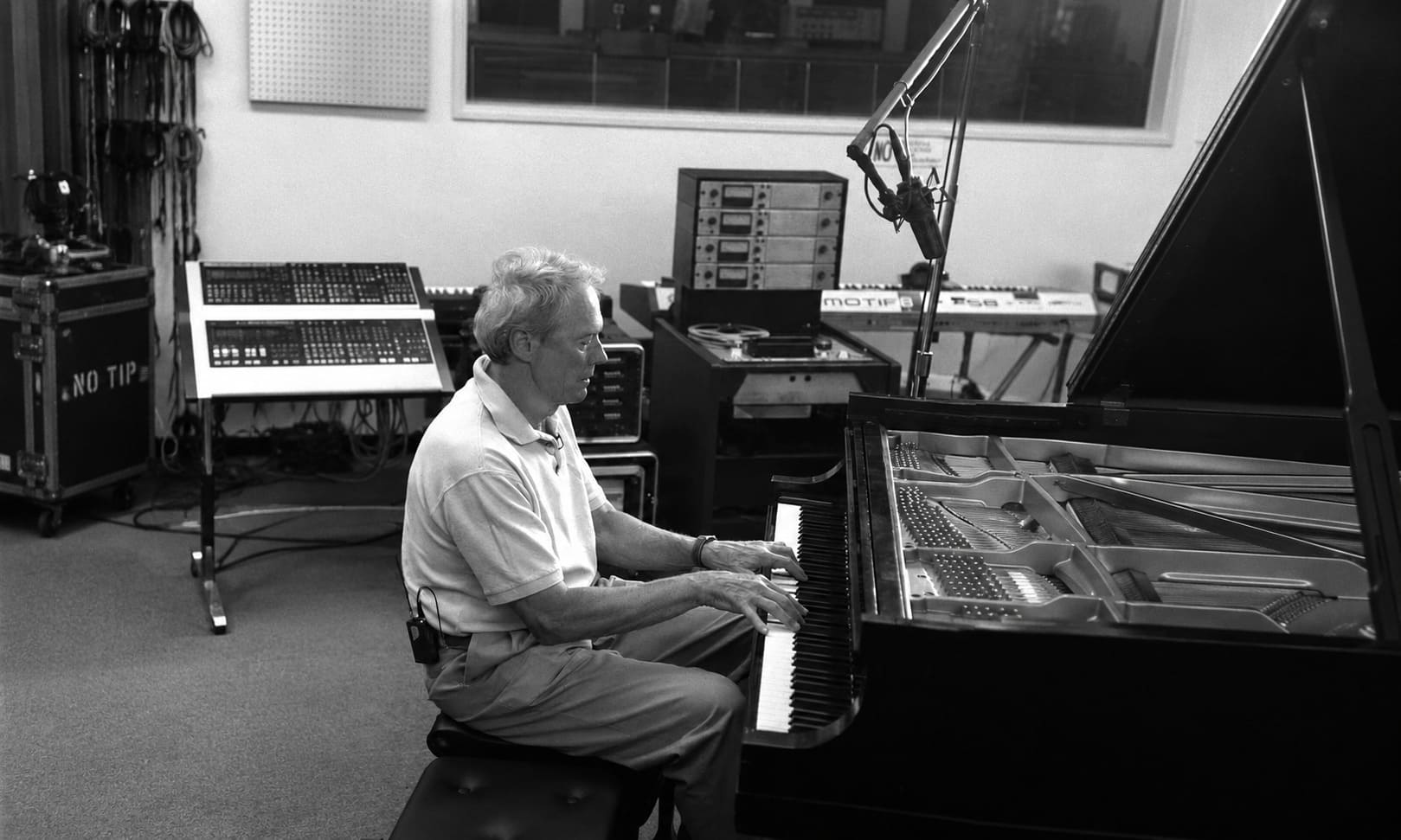
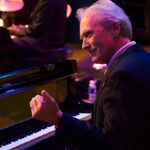
But beneath the granite icon, beneath the lean face and the essential gesture, there has always been another Clint Eastwood: the one who listens to jazz, plays the piano, and thinks of cinema as a score made of pauses, variations and melancholy. Eastwood was born on May 31, 1930, and his relationship with music is not an ornamental detail in his biography, but one of the real keys to understanding his cinema.
As a young man growing up in Oakland, Eastwood played piano in small clubs and has said more than once that, if cinema had not worked out, he might seriously have chosen the path of the musician. Perhaps that is where that saving ironic distance was born, the same distance the general public has often mistaken for simple nonchalance.
In those years he saw figures such as Charlie Parker and Thelonious Monk perform live, and he formed himself within a constellation that had nothing fashionable about it: piano blues, bebop, boogie-woogie, American standards, a love for phrasing and timing more than for virtuoso display.
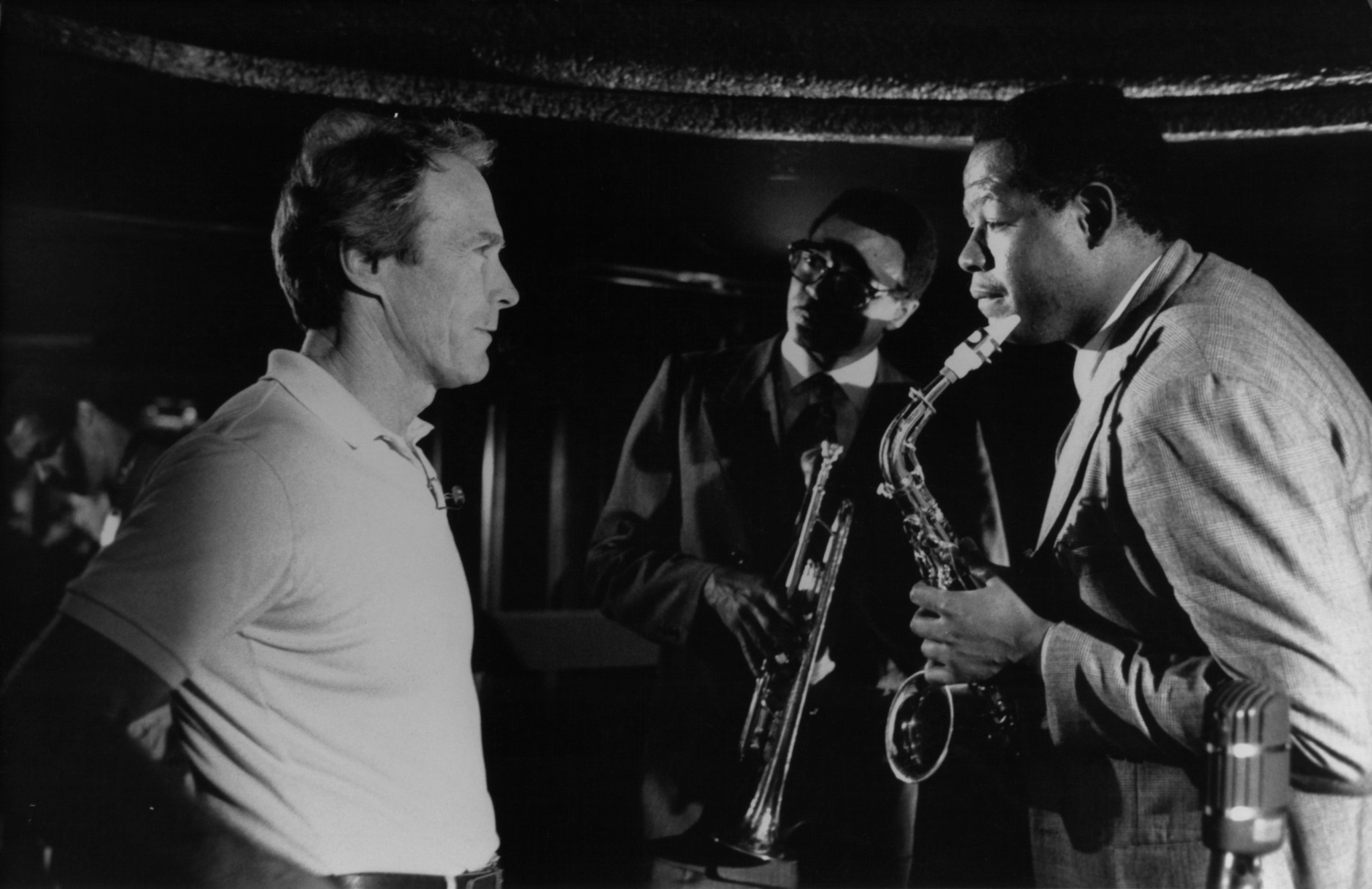
Clint Eastwood directing Samuel E Wright and Forest Whitaker in between scenes from the film ‘Bird’, 1988.
Clint Eastwood’s artistic and sentimental education
His directorial debut in 1971, Play Misty for Me, was not merely a psychological thriller but a film already inhabited by radio, jazz and the desire to let narrative tension pass through a precise sonic environment. Eastwood plays a disc jockey in Carmel; the title itself comes from a recurring musical request, “Misty”, and the film also includes scenes shot at the 1970 Monterey Jazz Festival.
Then came the most obvious and passionate proof: Bird. In 1988 Eastwood directed his tribute to Charlie Parker, entrusting Forest Whitaker with the extremely difficult task of embodying one of the most decisive musicians of the twentieth century. Eastwood did not choose Parker for cultural prestige, nor to add a musical biography to his résumé as a filmmaker, but because Parker was an old wound, a personal fascination. In the film he wanted to use Bird’s original recordings, not covers, precisely to restore the living matter of that presence, without monumentalizing it, while showing the human being consumed by his gift. That idea of greatness as condemnation is another trait that runs through all of his cinema.
That same year Eastwood was executive producer of Thelonious Monk: Straight, No Chaser, the documentary by Charlotte Zwerin that he helped bring out and complete through Malpaso and Warner Bros.
In 2003 he then directed Piano Blues for the series The Blues, produced by Martin Scorsese. It was a journey through his lifelong passion for piano blues, combining rare archive material, personal memory, interviews and performances with musicians such as Ray Charles, Dave Brubeck, Pinetop Perkins and Jay McShann. The film presents Black American music as one of the few truly original art forms produced by the United States.
Monterey Jazz Festival, a long and coherent aesthetic commitment
Eastwood has attended Monterey for decades, has sat on the board of the Monterey Jazz Festival since 1992 and, in 2007, during the festival’s fiftieth anniversary, received an honorary Doctor of Music from Berklee: a recognition that honored not only the famous director, but the man who had brought jazz into cinema.
In September 2024, the Monterey Jazz Festival turned this continuity into an even more explicit public gesture by giving him its first Cultural Leadership Award, presented by Morgan Freeman. At the same time, the festival hosted Eastwood Symphonic, a project led by Kyle Eastwood together with the Monterey Symphony, with orchestral arrangements by Gast Waltzing.
The program retraced themes connected to his father’s films: Gran Torino, Letters from Iwo Jima, Flags of Our Fathers and The Bridges of Madison County. The jazz musician son thus rereads his father’s cinema through quintet and orchestra, bringing a terminal figure of American classicism back to his essential places: the frontier, war, regret, the last dance with the past.
Clint Eastwood directs like a musician, leaving controlled space for improvisation
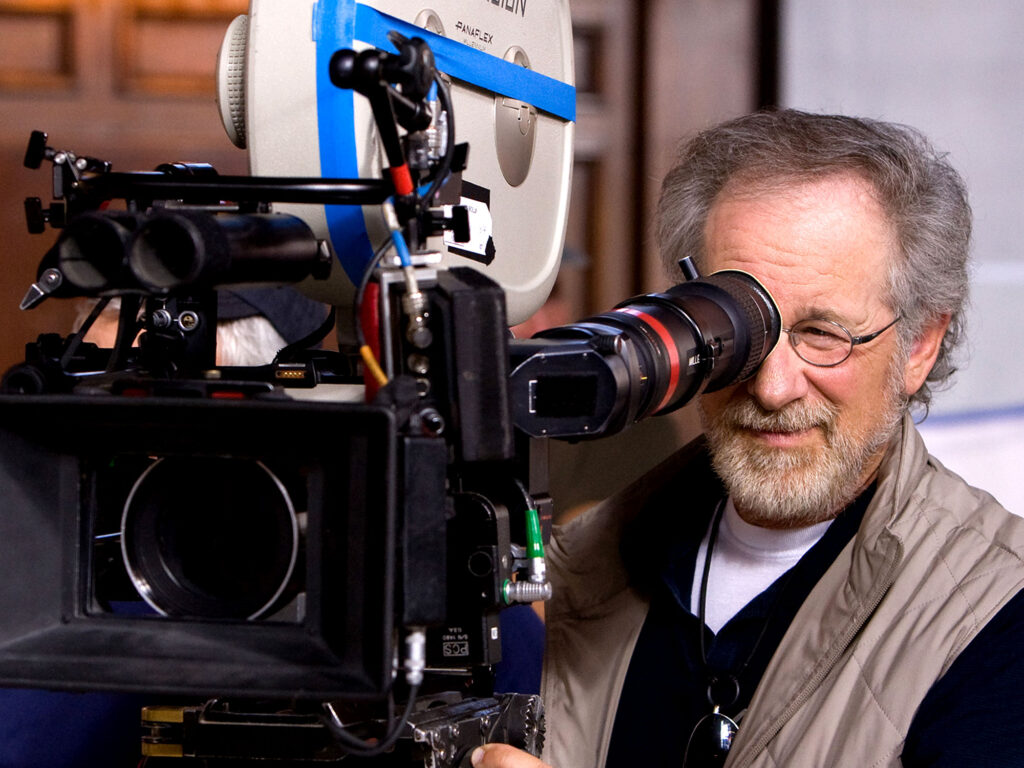
For Unforgiven, he wrote the music before he even started shooting. Eastwood, in fact, never loved directing that shouts, preferring direction that accompanies, breathes and leaves space. His style has something jazz-like about it, not in the superficial sense of chaotic improvisation: few elements, maximum precision, great trust in the internal timing of a scene, and the ability to let actors find a rhythm instead of pinning them to a mechanism.
Mystic River marked his debut as the credited composer of an entire score, and from there Eastwood signed or musically guided a series of remarkable works such as Million Dollar Baby, Flags of Our Fathers, Changeling, Hereafter and J. Edgar. These are almost always sober, minimal, scarcely decorative scores: piano, a few melodic cells, restrained melancholy, a refusal of emotional gigantism.
They do not try to impose themselves on the film. Instead, they seem to emerge from it like a shadow or a memory. In 2008, in Gran Torino, Eastwood co-wrote and performed the song over the end credits together with Jamie Cullum, and the result feels like a kind of human residue, a tired echo, a voice that seems to come from a body already worn out and ready to say goodbye.
The music as the discreet form of a very long artistic old age
In 2014, with Jersey Boys, Eastwood renounced entirely the temptation to write the music himself and placed himself at the service of an already mythological repertoire, that of The Four Seasons. He became a director-listener who does not impose a personal score, but organizes voices, popular memory, stage performance and nostalgia as though filming the way a song survives the bodies that made it famous.
With Taya’s Theme, written for American Sniper, Eastwood returned instead to the minimal, almost skeletal form of the musical theme: a small piece of music inside a huge film, accompanying the human remains of heroism. In Sully, where Eastwood collaborated with Christian Jacob and the Tierney Sutton Band, the theme Flying Home, connected to the pilot, does not inflate the miracle but brings it back down to earth, telling the story of a man forced to bear the public image of his own clarity under pressure.
In 2021, in Cry Macho, through Time Lapse [Clint Version], the last signal of his musical presence emerges: the tremor beneath the pose, the regret beneath the silence. Eastwood has often played and told the stories of hard, solitary, surviving men, incomplete fathers and individuals too proud to ask forgiveness.
And perhaps it is there that the musician fully reveals what the actor has so often kept hidden behind his unbreakable mask: the fragility of men who have done too much, said too little and understood too late their own restrained music.