Now Reading: Steven Spielberg on AI: “Cinema Doesn’t Write Itself”
-
01
Steven Spielberg on AI: “Cinema Doesn’t Write Itself”

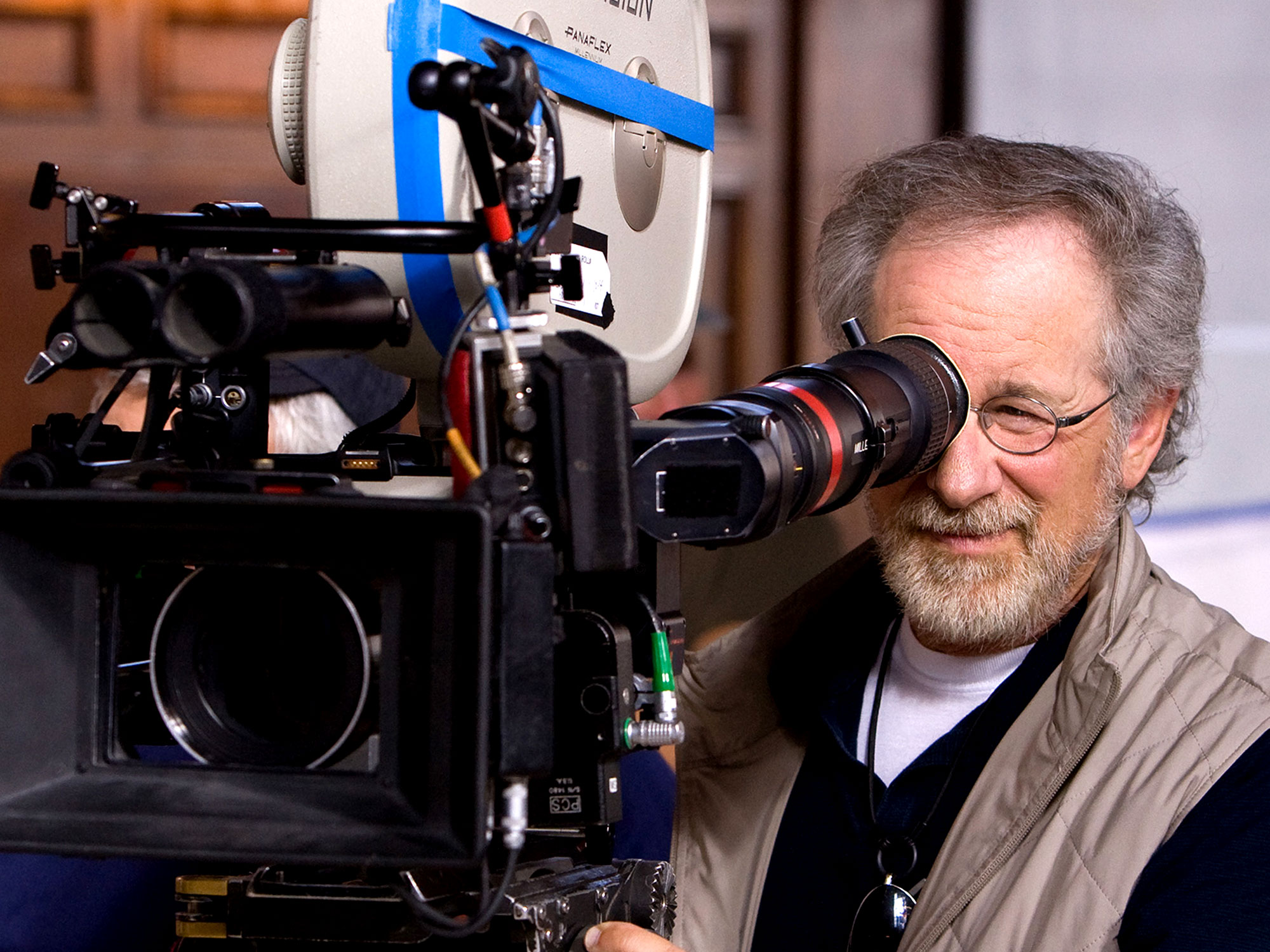
Steven Spielberg sets his boundary on AI in cinema: it can be a tool, but it must not decide dialogue, directing, set design, or have the final creative word.
Steven Spielberg is talking about artificial intelligence again just as his cinema prepares to turn its eyes back to the sky. A few weeks before the release of Disclosure Day, the new science-fiction thriller starring Emily Blunt that brings him back into the territory of UFOs, close encounters and truths too vast to be controlled by human beings, the director draws a very earthly line: AI can serve cinema, but it must not become its conscience.
“The point where I don’t like AI is when it takes a position, or when there is an empty chair at the writers’ table.”
Steven Spielberg does not reject artificial intelligence as a technology, but he rejects it when it tries to enter the place where a creative choice is born. And the “empty chair” is the most precise image: a faceless presence, without experience, without responsibility, invited to take part in writing a film as if it were an author. For Spielberg, that is the moment when cinema stops using a tool and starts being guided by something that has never truly lived anything.
The real boundary for Spielberg on AI in cinema
“I don’t believe there is any substitute for the soul. I don’t think that is an inventable algorithm.”
The statement shifts the discussion from craft to the substance of cinema. Spielberg is not saying that a machine cannot imitate a narrative structure, a tone or a line of dialogue, but that the soul of a scene is born from memory, pain, fear, desire and error. An algorithm can calculate a plausible combination, but it cannot know why a silence hurts, why a shot must remain still, why a line must arrive one second later.
“A computer that thinks it feels more than we feel is antithetical to the way I was raised and the way I will continue to produce and direct.”
The statement carries weight because it comes from a man who is almost eighty and who has lived through the entire twentieth century of cinema, carrying it into the new century. Spielberg is not speaking only as a director: he is speaking as someone raised with an idea of cinema in which feeling was not an effect to be produced, but something to be earned. That is why, for him, the idea of a computer that “thinks it feels more than we feel” reduces emotion to an imitable surface, as if moving an audience could now be a technical function.
Using AI as a tool, not as an author
“Don’t tell me how to write this character’s dialogue. Don’t tell me where the camera should go. Don’t even tell me how the set should look, unless AI is simply a tool in the production designer’s larger toolbox.”
Spielberg brings the discussion onto the set, where theory becomes practice. Dialogue and camera placement are not technical details: they establish who speaks, who looks, who controls the scene. If AI decides a line, it is intervening in the psychology of the character. If it decides where to place the camera, it is deciding the moral point of view of the film. It is this leap from assistance to invisible direction that Spielberg refuses to accept. Subordinated to human judgment, it can help search for references, speed up certain steps, lighten preparatory work, and perhaps even support a production designer during an exploratory phase. But the set remains a choice of world.
“Use AI as a tool, but don’t use it as the final word on anything creative. That’s where I draw the line.”
While studios look to artificial intelligence to cut costs, time and uncertainty, Spielberg defends precisely uncertainty as part of artistic work. A film is also born from hesitation, conflict, intuition and mistakes corrected in the moment. If AI always had the final word, cinema would risk looking less and less like a choice, and more and more like a procedure.