Now Reading: Tribeca legitimizes the first AI-generated political film
-
01
Tribeca legitimizes the first AI-generated political film

Dreams of Violets debuts at the 2026 Tribeca Festival: a live-action film generated with AI, 74-75 minutes long, with a reported budget of $2,000 and plenty of controversy.
Dreams of Violets arrives at the 2026 Tribeca Festival, and is the first fully AI-generated live-action feature film accepted by a major festival. Its world premiere is scheduled for Wednesday, June 10, 2026 at AMC 19 in New York, as part of a Tribeca edition running from June 3 to June 14 and featuring 118 feature films, 103 world premieres and 86 shorts.
The film is by Ash Koosha, born in Tehran, credited as director, screenwriter, producer, editor and composer. Alongside him is Pooya Kooshanezhad / Pooya Koosha, producer and post-producer. The executive producer is Tom Rogers, Executive Chairman of Fountain 0.
There are no real actors on screen: every face, every body, every image in the film is artificially generated. The operation works very well within the American political imagination: Iranian dissent, a New York festival, AI technology and the moral grammar of the West.
A docudrama about Tehran, created without a crew or actors
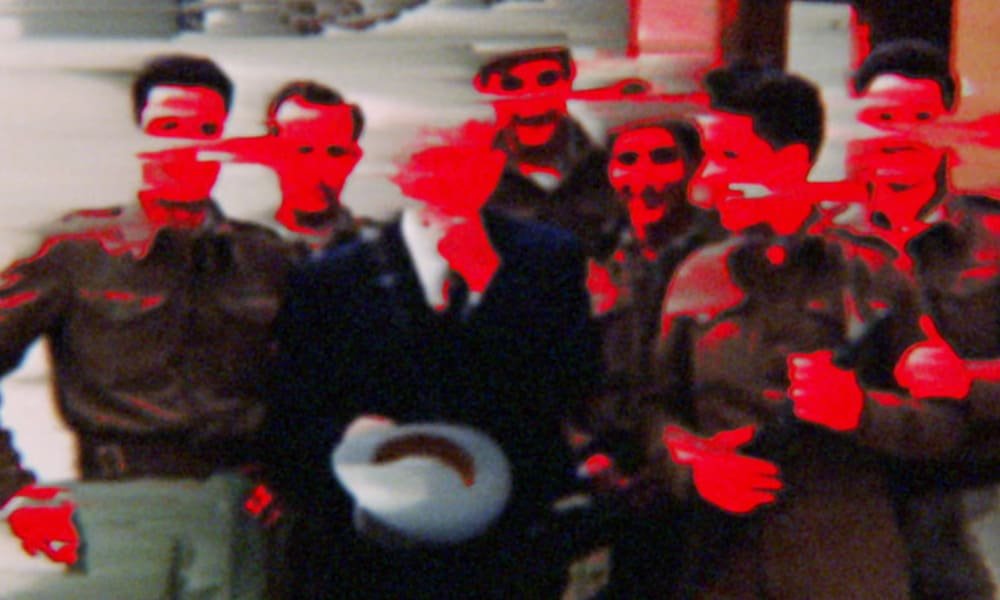
Dreams of Violets is presented as a docudrama of around 74-75 minutes, inspired by stories of Iranian civil resistance and set in Tehran in January 2026. The plot follows five strangers hiding in a dead-end alley while Iranian forces execute wounded protesters. Watching them from a window is Amir, a child in a wheelchair, who decides to intervene.
Figures reported by Human Rights Activists in Iran, based in Fairfax, Virginia, USA, speak of 7,000 deaths and more than 50,000 arrests attributed to the crackdown. The narrative material comes from journalistic reports, photographs and eyewitness accounts, which guided the reconstruction through generative models.
Koosha states that the film is not meant to be merely a technological exercise, but also and above all a memorial work about an event that happened behind an impenetrable wall, and that: “The alternative — silence, oblivion, what the regime would want — is worse.”
The industrial fact: $2,000 against Hollywood
Fountain 0’s press release describes a film created and produced in two months, with a budget of only $2,000: Kling AI for video generation, Claude by Anthropic for language editing, Gemini and Nanobanana by Google for research and images, plus Fountain 0’s proprietary technology to lock, refine and control shots and individual frames. According to available reports, the work was carried out entirely at Koosha’s home in London.
Tom Rogers pushed the claim beyond the individual case: according to him, similar techniques could allow $2 million independent films and $200 million Hollywood productions to significantly reduce costs. Ash Koosha provocatively claims that this will “send chills” through many in Hollywood, while arguing that the effect will be the opposite for filmmakers without access to major capital.
On one side, Fountain 0 talks about the democratization of feature filmmaking; on the other, faced with concerns from industry workers, it argues that AI-generated cinema will open up new professions.
Why did Tribeca legitimize Dreams of Violets?
The official answer lies in innovation: Tribeca has been working for years on AI as a tool for independent cinema, from shorts generated with Runway to its collaboration with OpenAI to support filmmakers interested in integrating artificial intelligence into the creative process.
Then there is the moral factor: when a film presents itself as testimony against censorship and repression, any doubt about the device risks sounding like indifference toward the victims. There has been very little first-hand journalism about the January massacre in Iran, and the internet was also shut down. So what remains to be shown when power prevents people from seeing?
Tribeca is not simply saying that an AI-generated film can have cultural value: it is showing how a product built from scratch can become the cultural antechamber of geopolitical pressure.