Now Reading: From the Blacklist to AI, Locarno 2026 Questions the Power to Choose
-
01
From the Blacklist to AI, Locarno 2026 Questions the Power to Choose

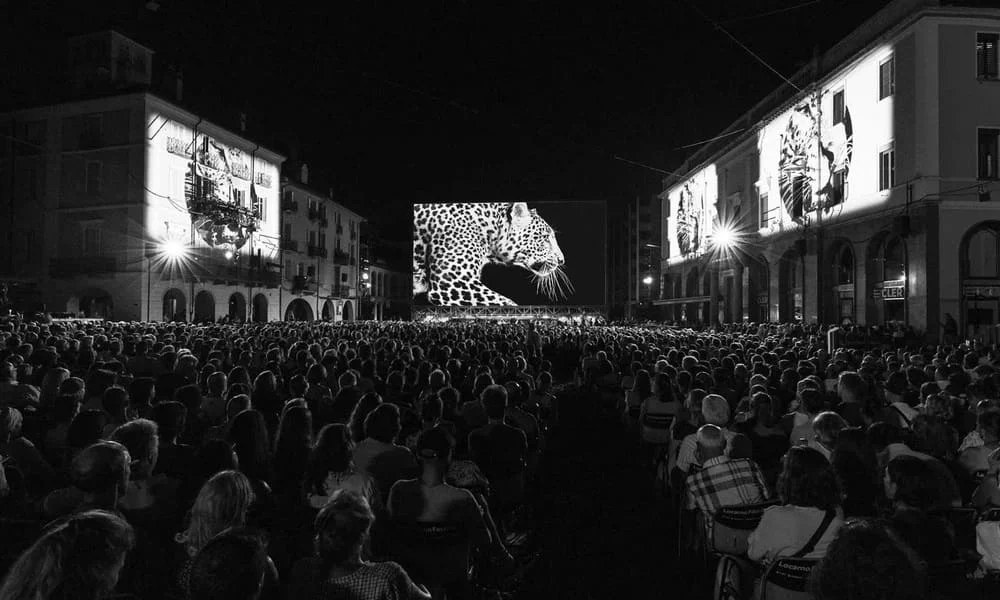
From August 5 to 15, the 79th Locarno Film Festival moves from new films by Hong Sang-soo and Denis Côté to the nights of Piazza Grande, from the Hollywood blacklist to new sources of financing. The common thread is not a theme imposed on the films, but a concrete question: who decides what gets to reach a screen?
On the evening of August 5, on the screen of Piazza Grande, which can accommodate eight thousand spectators, the Locarno Film Festival will open with Les Yeux Verts by Fanny Liatard and Jérémy Trouilh. The following morning, in the Sala Granda of the Hotel Belvedere, analyst Stephen Follows will instead discuss stars, test screenings, franchises and algorithms as tools adopted by the industry in an attempt to make audiences predictable.
The program announced on July 9 includes 233 films, 103 world premieres and productions or co-productions from 69 countries. These figures take shape through the festival’s different venues and stages of production: fourteen titles intended for the vast open-air audience, seventeen films competing for the Golden Leopard, a competition for first and second features, short films, restorations, children’s cinema, African projects and works that still lack their final color grading or sound mix.
Locarno Film Festival 2026: Films, Guests and Program
Piazza Grande offers the most accessible face of this year’s edition.
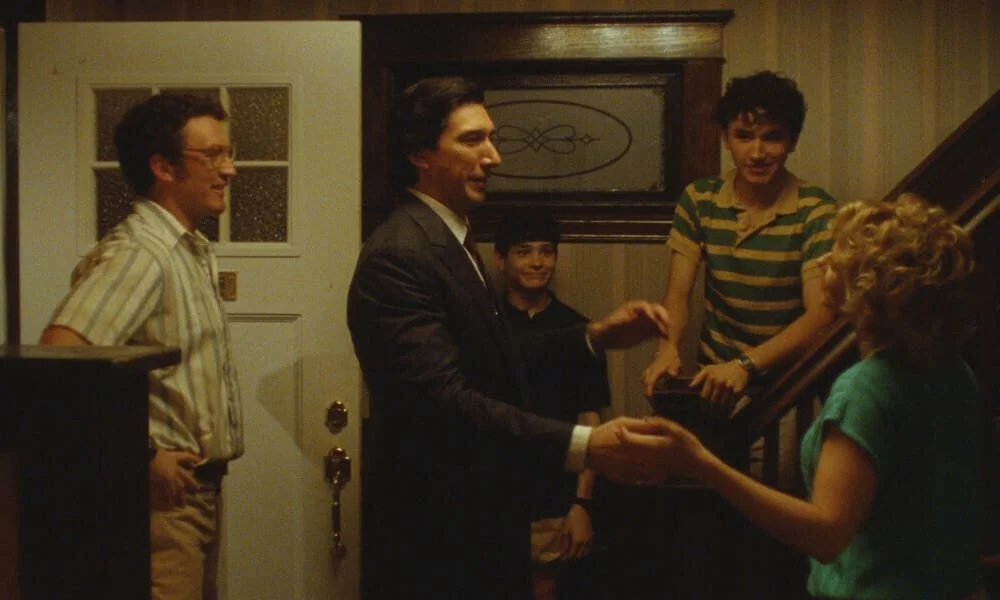
On August 6, Armony by Dario Albertini, starring Valerio Mastandrea, Asia Argento and Ornella Muti, will be followed by Wild at Heart; the next day, the new Ich ist ein Anderer will precede the nearly four-hour extended version of Dances with Wolves. The program will then welcome The Invite by Olivia Wilde, starring Penélope Cruz, Edward Norton and Seth Rogen, Paper Tiger by James Gray with Adam Driver and Scarlett Johansson, and Ni vue, ni connue by Marc Fitoussi, which will close the festival on August 15 with Isabelle Huppert, Sandrine Kiberlain and Diane Kruger.
Following a logic now familiar from streaming platforms, classic titles are not relegated to a secondary section: Taxi Driver shares the same square with new productions.
In the International Competition, Nowhere to Lay My Eyes, written, directed, produced, edited, shot and scored by Hong Sang-soo, follows Sang-hee on a journey to visit her mother, who moved to Jeju Island ten years earlier. In Hearing by Lê Bảo, a technician who installs decibel meters moves through a life marked by silence as his work takes him among presences in a cemetery and restless monkeys in a zoo. Donkey Princess by Cristóbal León and Joaquín Cociña, meanwhile, begins with a king who bans love: his daughter Diana uses a magical bracelet to pursue her exiled beloved through other worlds.
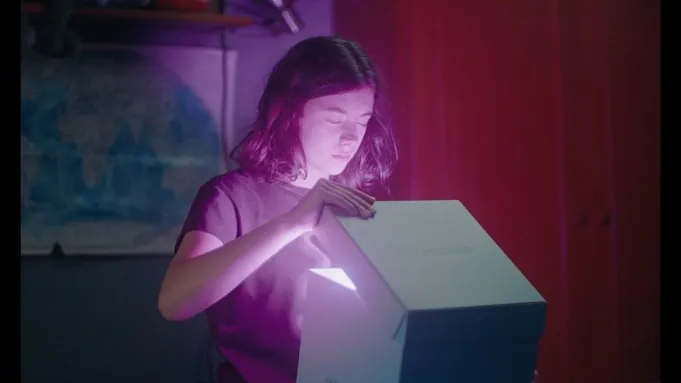
In the Concorso Cineasti del Presente, Los Días Libres by Lucila Mariani places the young Bego in a Buenos Aires suffocated by heat and inflation, as an eclipse approaches and the girl searches online for a technique known as “shifting” in order to reach an alternative reality. In the shorts section, Pardi di Domani presents forty world premieres from twenty-nine countries. And for the first time, the seven films competing in Locarno Kids Screenings will be judged and awarded by thirteen viewers aged between eleven and fifteen.
The Blacklist: When Exclusion Had Names and Official Records
The question of who is allowed to appear in a program gains historical perspective with Red & Black – Hollywood Left and the Blacklist, the retrospective curated by Ehsan Khoshbakht. More than forty films, documentaries, shorts and newsreels reconstruct what happened beginning in 1947, when hearings by the House Un-American Activities Committee pushed studios to cancel contracts and remove credits.
Some writers worked under pseudonyms; others emigrated. The retrospective places Broken Arrow, written without credit by Albert Maltz, one of the Hollywood Ten, alongside Salt of the Earth, made by professionals who had themselves been blacklisted; it also includes On the Waterfront by Elia Kazan, who named names before the committee. It therefore does not construct a tidy, reassuring version of the past: it places works born from incompatible responses to political pressure within the same program.
The blacklist is not the ancestor of algorithms, but it does provide a precise precedent through which to examine the power of selection: back then, the committee, the studios and the names removed from the credits were identifiable; today, proprietary criteria determine which works are recommended, which data are returned to producers and which past behaviors become the basis for future decisions. Cindy Sherman’s poster also engages with the question of authorship: a constructed black-and-white figure, wrapped in a yellow spotted scarf that makes the leopard simultaneously visible and unrecognizable.
James Gray will receive the Career Achievement Award on August 9 and present Paper Tiger immediately afterward; the following day, Zoe Saldaña will receive a Special Pardo and meet the public; Darren Aronofsky will accompany his Pardo d’onore with The Fountain and Mother!. For the Excellence Award, Isabella Rossellini has put together her own program of shorts: flies, snails, worms, ducks, deer and dolphins from the Green Porno, Seduce Me and Mammas cycles. The tribute highlights a less obvious and highly tangible part of her work instead of reducing her career to its most familiar images.
Locarno Pro: Behind the Screen, the Cost of Choice
On August 6, analyst Stephen Follows will open StepIn with Fear, Lies, and the Illusion of Control. His analysis begins with a century of attempts to contain uncertainty: first stars, then test screenings, surveys, franchises and finally algorithms. The problem is not that data are useless, but that a company may end up asking only the questions its tools know how to answer. Knowing where a viewer stops watching a film does not establish which film that does not yet exist deserves to be financed.
The title of StepIn 2026, Power, People, Data, also encompasses the economic conditions governing access to the profession. During the same days, the second Locarno Investment Community will bring together independent cinema, private investors and foundations. The arrival of that capital raises a question the program cannot answer in advance: what guarantees of recognizability, audience and return will be demanded in exchange?
AI will return to the program on August 9, in a conversation with producer Marco Perego-Saldaña, following an edition of Cannes in which three films he produced were in the main competition. Locarno places AI alongside industrial concentration and the impact of platforms on local markets instead of isolating it as a question of visual effects. The issue therefore shifts from the quality of generated images to the moment when a system enters the decision-making process: when a project is assessed, an audience estimated or a creative choice translated into a commercial forecast.
For independent cinema, the risk is that contestable decisions are presented as technical results, while the data, criteria and margins of error remain in the hands of whoever owns the platform.
Nine Years to Reach Piazza Grande
Support takes on a more directly measurable form with First Look. Six Uruguayan feature films in post-production will be screened at Cinema Rialto; the available prizes include color grading, sound post-production, music supervision worth €45,000 and an international poster worth €10,000. What is being rewarded is not an abstract idea of independence: what is missing is provided to images that have already been shot so that they can become films capable of reaching distribution.
Further upstream in the production process is Open Doors. In the second year of the cycle dedicated to 42 African countries, it has selected six projects, six producers and five directors. Activities began online between June and July and will continue in Locarno from August 5 to 10 with training, mentoring, market access and public screenings. Geography thus becomes part of the working calendar, not merely part of the catalog.
Il Cileno by Sergio Castro-San Martín, scheduled for August 13 in Piazza Grande, grew out of a meeting between an Italian producer and a Chilean producer at Match Me! in 2017 and also received funding from the Canton of Ticino. Nine years separate that conversation from its public screening.
Perhaps this distance offers the most concrete measure of the work surrounding the festival.
Across Locarno’s eleven days, films already completed and ready for thousands of spectators coexist with works still awaiting their final color and sound, as well as projects in the earliest stages of development. It is along this entire chain, long before the lights come on in Piazza Grande, that the decision is made as to which stories will truly be given the chance to become cinema.