Now Reading: Paramount-Warner: the merger moves from promises to cuts
-
01
Paramount-Warner: the merger moves from promises to cuts

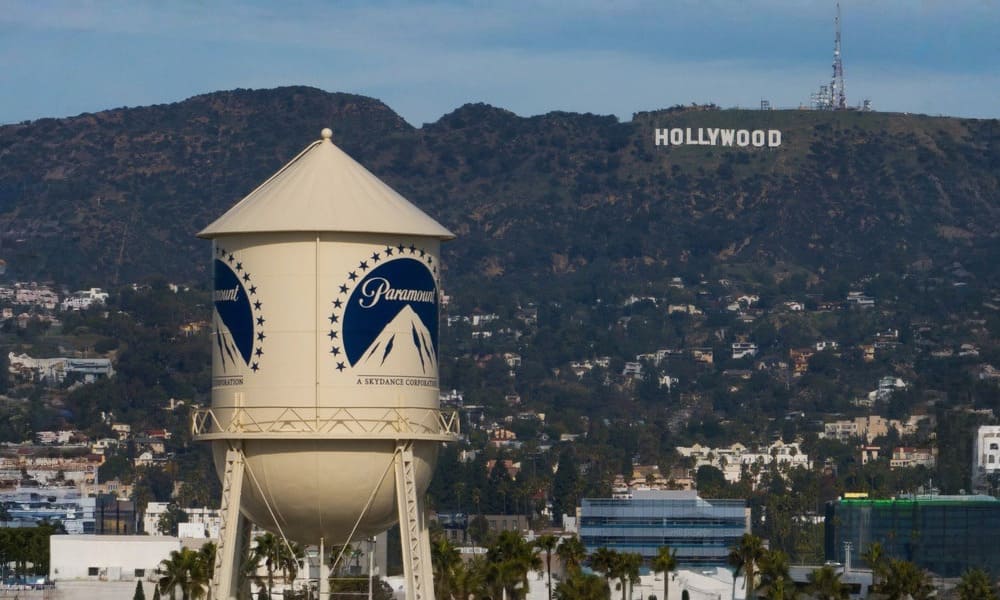
After the DOJ green light, the Paramount-Warner merger opens new fronts: jobs, archives, the FCC, foreign funds and control over audiovisual memory.
Only two months ago, the merger between Paramount Skydance and Warner Bros. Discovery already looked like an open clash between industrial promise and fear of consolidation. David Ellison was promising exhibitors 30 releases a year and a 45-day exclusive theatrical window: more theaters, more strength against Netflix and the platforms. Hollywood responded with a letter signed by thousands of professionals opposing the deal.
The first part of the story was built on promises. But now the U.S. Department of Justice has cleared the acquisition, and around the $111 billion deal harder fronts have opened up over jobs, archives, foreign ownership, documentary filmmaking and editorial independence.
This second part is about the price. Reports on jobs, international reviews, accusations exchanged between Paramount and Netflix, concerns over the CNN and CBS archives, pressure on the FCC and doubts over the way the DOJ closed its investigation. The Paramount-Warner merger has become the clearest case study of the new Hollywood: an old industry weakened by debt, streaming and the decline of linear television trying to save itself with the same medicine that made it more fragile — concentration.
The possible result is a larger, more indebted group, more selective in deciding what to fund, what to distribute, what to archive and what to leave outside the market and outside history. The price of the operation does not concern shareholders alone. It falls on jobs, production pluralism, documentary filmmaking, access to archives and the bargaining power of those who make cinema.
The Protest Keeps Growing, While a New Authorship Advances
The letter published on BlockTheMerger.com in April began with more than one thousand signatures. Today, the official page lists more than 5,600 signatories.
Among the names are directors, actors, screenwriters, producers, documentary filmmakers, technicians and industry professionals: Denis Villeneuve, Kristen Stewart, J.J. Abrams, Joaquin Phoenix, Ben Stiller, Don Cheadle, Javier Bardem, Lily Gladstone, Lin-Manuel Miranda, Laura Poitras, Alex Gibney, David Fincher, Robert De Niro, Mark Ruffalo, Jane Fonda, Pedro Pascal, Yorgos Lanthimos and many others.
The text accuses the merger of further reducing competition, jobs, opportunities for creators and choice for audiences. It also warns that the number of major American studios is set to fall to four. The campaign did not fade after the first media cycle. It grew precisely as Paramount was collecting regulatory approvals and trying to present the operation as an industrial relaunch.
Meanwhile, outside the classic studio perimeter, YouTube has already occupied the theatrical space that Paramount and Warner are trying to defend through a merger. It is no longer merely a video platform, nor merely an infinite archive of amateur content. It has become domestic television, an advertising system, a breeding ground for directors, a laboratory for genres, a distribution machine and a place where a community can be born before a film is even financed.
The Critical Front Moves from Cinema to the System
In May, criticism stopped focusing only on the number of films promised by Ellison. The Hollywood Reporter read the deal as a structural risk for Hollywood’s future, with the issue of synergies and cuts at the center of the discussion. The word “synergy” remains the elegant way mergers describe what later becomes consolidation: overlapping departments, duplicated functions, reduced teams, suppliers forced into competition, compressed costs.
On May 27, again in The Hollywood Reporter, the alarm raised by Laura Poitras and Geeta Gandbhir over traditional documentary filmmaking was reported. That kind of documentary depends on financing, distribution, licenses, archives, footage, television materials and access to audiovisual sources. If major catalogs and major libraries end up in fewer and fewer hands, the stories that remain producible become fewer and more cautious.
The problem does not concern only the editorial taste of new executives. It concerns the cost of access to images, the speed of authorizations, the power to grant or deny materials, and the ability of independent productions to tell historical events without depending on fees and conditions imposed by a small number of groups.
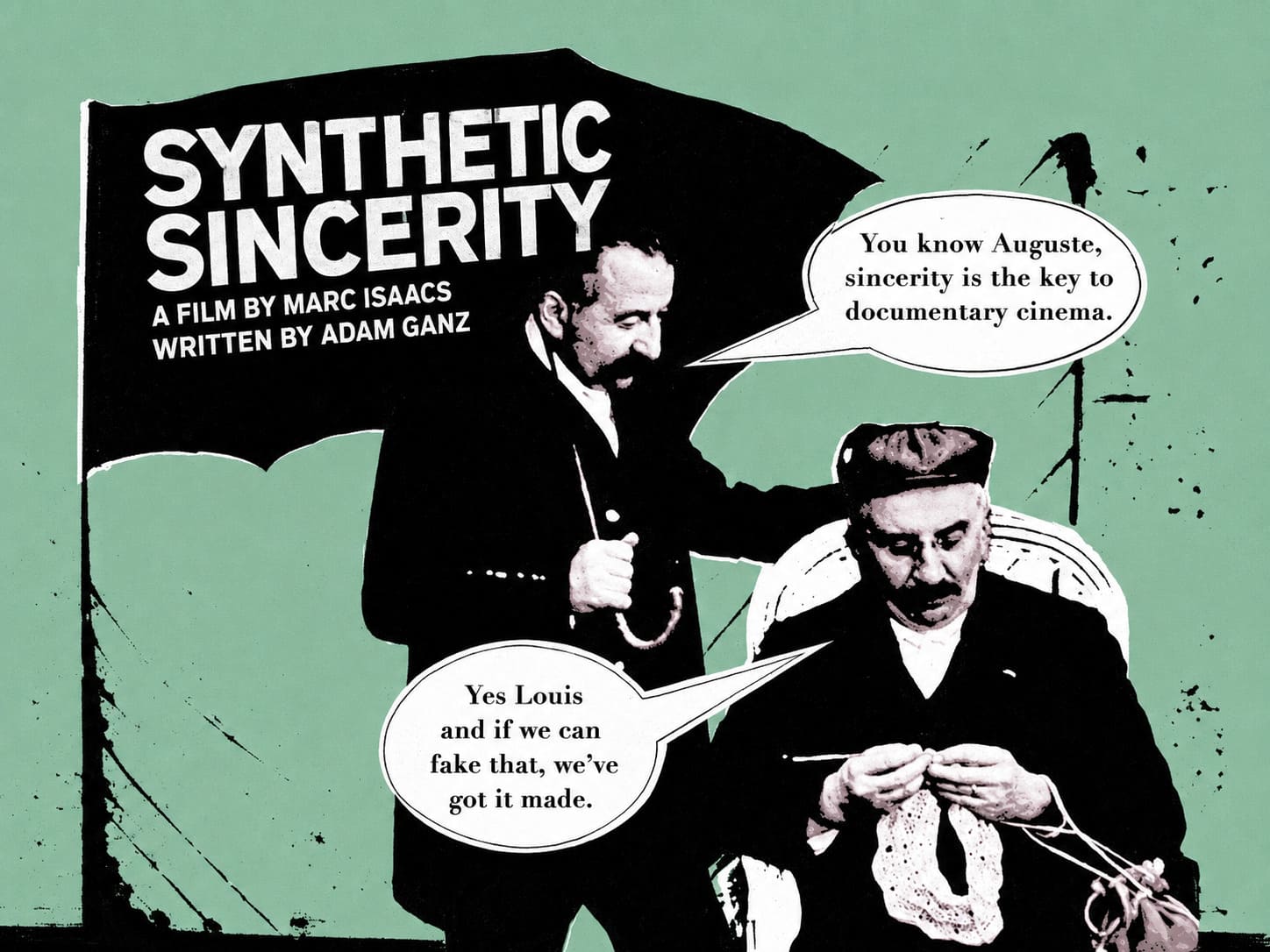
The issue becomes even more fragile in a phase when documentary filmmaking already has to deal with generated images, replaced faces and digitally protected identities: from the AI docufilm Dreams of Violets presented at Tribeca, to the Netflix case The Investigation of Lucy Letby, which uses AI overlays to anonymize two witnesses, up to Marc Isaacs’ paradoxical Synthetic Sincerity .
The question is no longer only what is false, but how much critical sense remains when even sincerity can be synthesized.
Debt, Foreign Funds and Financial Risk
At the beginning of June, the dossier moved onto financial and geopolitical ground. Paramount Skydance requested European antitrust approval for the acquisition of Warner Bros. Discovery, opening the issue of credit risk through the analysis of S&P Global: an operation of this scale does not live on industrial vision alone, but on debt, ratings, promised savings and pressure to generate cash.
The European Union is examining the deal also under the Foreign Subsidies Regulation, with a decision expected by July 14.
The financing includes sovereign wealth funds linked to Saudi Arabia, Abu Dhabi and Qatar. Paramount maintains that editorial control will remain domestic and that foreign investors will have no operational power over the choices of the new group. But in a company that would bring together studios, platforms, broadcasters, news operations and historic libraries, control does not pass only through voting rights. It also passes through available capital, industrial priorities, markets to protect and preventive caution.
For this reason, the European review of foreign subsidies and the pressure on the FCC are not bureaucratic details. They serve to clarify how much capital, diplomacy and commercial interests may narrow the perimeter of the stories that can be produced, financed, archived or distributed.
Netflix and Streaming Become the Convenient Enemy of Freedom
On June 9, Paramount brought Netflix into the regulatory battle. The studio accused its rival of running a campaign to derail the merger with Warner Bros. Discovery, describing it as a “scorched earth” strategy designed to poison regulators’ judgment. Netflix rejected the accusation, calling it absurd.
Paramount presents the merger as a necessary response to the imbalance created by the platforms: Netflix, Amazon and Apple have changed windows, contracts, consumption habits, access to data and negotiating power. The result, however, remains a new concentration. To withstand the proprietary blocks of streaming, Hollywood is building an oversized proprietary block of its own.
In the same hours, scrutiny of the operation moved beyond American borders. The British Competition and Markets Authority opened its formal review of the merger, with a decision on a possible Phase 2 investigation expected by August 7. Shortly afterward came approvals from Australia and New Zealand. The regulatory calendar already showed the distance between Paramount’s narrative and the reality of the dossier: the DOJ carried enormous weight, but it did not close the game.
To reach closing, Paramount is using a legal strategy tied to the First Amendment to defend the operation and present it as a matter of editorial freedom and competition in the marketplace of ideas, attempting to shift the battlefield from economic concentration to freedom of expression.
But if a merger concentrates studios, networks, platforms, archives and information channels, invoking freedom of expression requires first proving how that concentration does not concretely reduce the number of actors capable of producing, financing, distributing and preserving that freedom.
The DOJ Opens the Door Without Conditions
On June 12, the Department of Justice closed its antitrust investigation.
In its official statement, the DOJ says the merger should not harm competition or consumers in the three sectors examined: subscription video on demand, linear television and the development, production and distribution of theatrical films. The Department says it reviewed more than two million documents and conducted an eight-month investigation.
The federal reasoning is built around a precise idea: the industry is dynamic, Netflix has opened a new phase, linear television is in decline, other players compete for content, sports, news and audiences, while studios such as A24, Lionsgate, Amazon MGM, Blumhouse and Netflix can also operate theatrically. According to the DOJ, the combined group would increase competitive pressure in the streaming market and would not reduce the theatrical film offering.
The approval arrived without conditions, divestitures or behavioral remedies. The DOJ imposed no specific obligations on production, labor protection, separate management of the studios, archive access or catalog licensing. It accepted the idea that future competition would be enough to contain the power of the new group.
Paramount-Warner is a predictable response to the streaming crisis, but fewer strong players mean fewer buyers, fewer alternatives for talent, less room for independent producers and more power in the management of libraries and rights.
Political Suspicion Enters the Story
On June 16, The Guardian reported an episode small in scale and large in meaning: Paramount Skydance rejected an ad from the Freedom of the Press Foundation criticizing the merger and the political ties of the Ellison family, justifying the refusal with a “conflict of interest.” The message was supposed to air during a UFC broadcast on Paramount+.
The case clearly shows why the editorial question cannot be separated from the deal. A company seeking to gain control of a media empire rejects an advertisement critical of its own operation. Networks reject ads for many reasons, but here the signal arrives at the most sensitive moment: precisely while the debate concerns whether a group combining CBS, CNN, HBO, Warner, Paramount, platforms and libraries can guarantee independence, pluralism and access.
According to a Wall Street Journal report, DOJ leadership allegedly closed the investigation before internal lawyers could formalize any objections. The DOJ implicitly rejected this interpretation by defending the completeness of its investigation, but the report obviously fueled political criticism.
Elizabeth Warren said the deal smelled of corruption, linking the green light to the closeness between the Ellisons and the Trump administration.
Los Angeles Puts the Cost in Black and White, While the FCC Remains the Last Major Brake
The Los Angeles County Department of Economic Opportunity, together with the LA County Film Office and the Chief Executive Office, published an interim report on the possible economic and employment effects of the merger. The document identifies about 2,495 local positions potentially exposed to overlap between Paramount and Warner.
The report specifies that this is not an automatic prediction of layoffs, but rather a mapping of roles immediately vulnerable to consolidation pressure. The most exposed areas are corporate, technology, real estate, administration and shared functions.
The combined group would carry about $82 billion in gross debt and aim for more than $6 billion in savings. When a merger promises savings on this scale, those savings have to come from somewhere. They come from overlapping departments, integrated systems, closed offices, merged platforms, revised contracts and reduced staff.
Los Angeles thus becomes the place where the global rhetoric of streaming meets the physical addresses of labor. The county notes that the local creative economy supports more than 312,000 workers, including more than 171,000 jobs in entertainment. The report arrives after the pandemic, the 2023 strikes, the 2025 fires and the decline in local production activity.
Cory Booker, Adam Schiff and Elizabeth Warren asked the Federal Communications Commission to block the closing of the operation until the foreign ownership review is complete. The FCC enters the picture because the deal does not concern only two film studios: inside the operation are also broadcasters, news networks and licenses that depend on public authorization.
When foreign capital participates in financing a group that controls channels, news and platforms, the question no longer concerns only who owns the shares. It concerns who can influence the environment in which those networks operate, who decides whether to distribute a news story, license an image or preserve part of the public record.
Archives Are the Point Hollywood Struggles to Name
The archive front remains the most important one for understanding the cultural scope of the operation. Under the same roof would end up Paramount Pictures, Warner Bros., Paramount+, HBO Max, CBS, CBS News, CNN, TNT, TBS, HGTV and an enormous quantity of libraries and rights. For documentary filmmaking, journalism and historical research, archives would become a public infrastructure managed by private actors: images produced inside companies, but necessary to tell the story of wars, trials, elections, scandals, catastrophes, social movements and political crises.
For a major, footage is a cost item; for an independent documentary, it can be the point at which a story stops being producible. Here the archive stops being a warehouse of the past and becomes a tool for selecting the present.
The risk is not that generated images will erase the archive overnight. The risk is more concrete: if archives end up in increasingly concentrated structures and synthetic images become increasingly cheap, the industrial choice can shift quickly. Every time the document costs too much, arrives too late, creates legal problems or carries uncomfortable details with it, reconstruction becomes the more convenient alternative: it costs less than original footage, it is easier to control, easier to sell and creates less legal friction.
The archive forces us to deal with sources, dates, rights, context, grain, contradictions, authorization times and historical responsibilities. The synthetic image has opened a new economy of the perception of reality: the truest image does not win; the image that costs less to control does. And at that point, even being able to distinguish evidence from its imitation will stop being a critical exercise, becoming a cost that someone will prefer to eliminate.