Now Reading: Hollywood and AI: The 25 (+25) Names Reinventing Cinema
-
01
Hollywood and AI: The 25 (+25) Names Reinventing Cinema

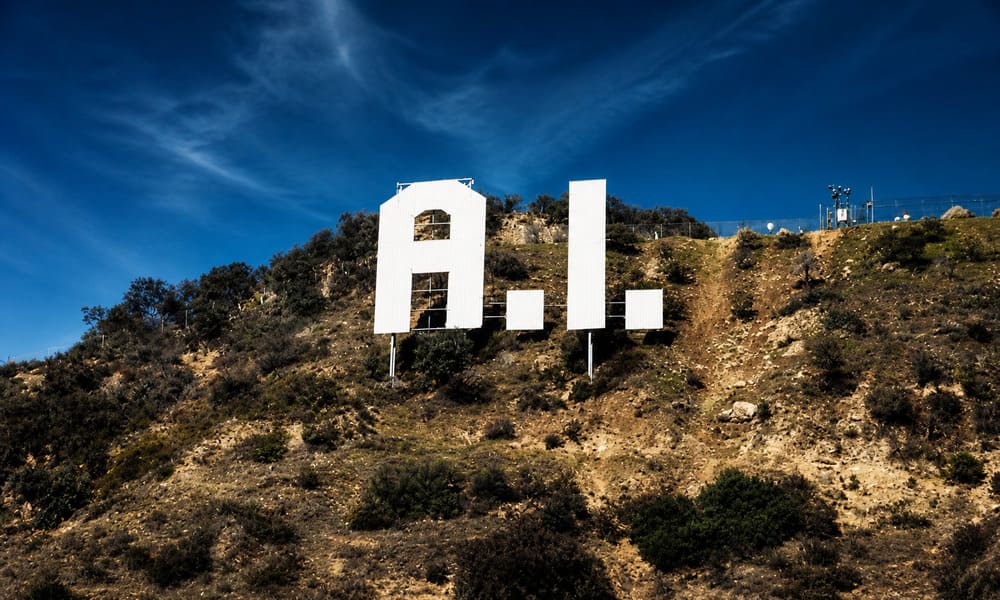
From Ben Affleck to James Cameron, from OpenAI to YouTube: all the most influential startups, studios and activists in Hollywood during this period of technological acceleration.
Hollywood knows its power centers well: producers, studios, agents, directors, platforms. With artificial intelligence, however, the field is still open. Directors, CEOs, activists, entrepreneurs and platforms: some want to use AI to speed up production, others see it as a direct threat to creative labor. Others are building companies, festivals, tools and industrial agreements before Hollywood finds a shared rulebook.
The Hollywood Reporter tried to bring some order with “The AI 25” the list of names currently shaping the relationship between cinema, streaming, the creator economy and artificial intelligence. But perhaps the most interesting part lies outside the list: the excellent absentees. In this article, we will try to understand not only who is missing, but also why that absence reveals a precise communication choice.
From Affleck to Cameron: when creatives enter the AI machine
The most visible name is Ben Affleck. In 2024, at a CNBC summit, he defended human creativity by saying that AI can imitate Elizabethan verse, but it cannot write Shakespeare. Then, on Joe Rogan, he called AI writing “really shitty” because it tends toward the average. But Affleck had also warned: “I wouldn’t want to be in the visual effects business. They’re in trouble.” In March, the reason for his expertise became clearer: he had secretly co-founded InterPositive, an AI postproduction startup acquired by Netflix in a deal estimated by some at $600 million.
James Cameron remains the symbol of Hollywood’s double position. He pushed CGI, virtual production and digital worlds forward with The Abyss, Titanic and Avatar. He imagined Skynet in Terminator. Now he sits on the board of Stability AI, convinced that generative AI can help VFX artists create bigger spectacles. Yet Avatar: Fire and Ash opens with a card stating: “No generative AI was used in the making of this movie.” Cameron says Hollywood will have to find balance, but adds the harshest warning: artists can find a path only “if they exist.”
Leading Stability AI is Prem Akkaraju, former CEO of Weta, the Oscar-winning VFX studio behind Avatar, Avengers: Endgame and The Lord of the Rings. Akkaraju predicts that the next decade will be “the best time to be a creator,” but he also points to the opposite risk: content homogenization and “AI slop.” For him, the works that will win are “AI-enabled” works made by artists, not simply generated ones.
Darren Aronofsky is experimenting with Primordial Soup, a company created to explore AI in audiovisual storytelling. Google DeepMind gave him access to its tools. Ancestra, Eliza McNitt’s project produced by Primordial Soup, received praise for its use of technology; the AI historical shorts On This Day…1776, about the American War of Independence, instead drew criticism.
On the anti-AI front, Justine Bateman has been active since the 2023 strikes. With Credo 23, she promotes films and series that are “very human, very raw, very real,” and she created a “no-AI” festival in Hollywood that has reached two editions, with participants including Sean Baker. Her prediction is blunt: much filmed production will become streaming “content,” personalized by AI while the viewer scrolls through social media. But she also sees the growth of a “New Film Business” built around works without AI and without industrial checklists.
Alongside her are Daniel Kwan, Natasha Lyonne and Joseph Gordon-Levitt, founders of the Creators Coalition on AI. Kwan, the filmmaker behind Everything Everywhere All at Once, has called on studios, unions and agencies to form a united front against the tech industry. The coalition does not reject AI wholesale: it asks for consent, compensation, controls and transparency around training data. Gordon-Levitt, appointed by the UN as its first global advocate for human-centric digital governance, fears personalized videos for each user, with viewers “perfectly isolated” inside the system.
Studios, platforms and startups: the new geography of AI in Hollywood
The most cumbersome role remains OpenAI’s. Sam Altman, after the launch of ChatGPT in autumn 2022, became the public face of AI. Fidji Simo, CEO of applications and former Facebook executive, imagines AI-native tools and forms of entertainment emerging in the next decade. In THR’s piece, however, the Disney case weighs heavily: the partnership between Disney and Sora, described as a text-to-video generator, had sparked protests within the industry. Then, on March 24, Altman reportedly shut down Sora and Disney reportedly withdrew its $1 billion equity investment. Meanwhile, Altman will also appear as a character in Luca Guadagnino’s film Artificial.
Josh D’Amaro, described as Disney’s incoming CEO, remains in favor of integrating AI. After withdrawing from the OpenAI deal, Disney still organized an internal summit on the use of AI across departments. Bob Iger linked D’Amaro’s openness toward technology to his selection as successor.
Amazon is working on two fronts. Albert Cheng, former head of Prime Video U.S. and now AI chief, and Girish Bajaj, VP of technology at Prime Video and Amazon MGM Studios, are bringing AI tools to filmmakers. House of David creator Jon Erwin praised the use of tools for faster and cheaper historical reconstructions. Cheng is also leading a beta test with unnamed filmmakers, with results expected in May. Bajaj is working on audience-facing features: dialogue boosting and personalized episode-by-episode recaps.
At Paramount, after the acquisition led by David Ellison, AI also moves through appointments: Dane Glasgow, formerly of Meta and founder of a fintech machine-learning startup, and Phil Wiser, CTO with past roles at Sony, Hearst and CBS. Wiser has cited the use of AI for script coverage: hundreds or thousands of screenplays to summarize and analyze.
Lionsgate chose Kathleen Grace as its first chief AI officer, after her experience at YouTube and Vermillio. Her task is to help filmmakers, showrunners and social teams. Grace acknowledges the pressure toward efficiency, but frames it as room for better tools in the early phases of creativity.
On the startup side, Cristóbal Valenzuela of Runway AI has official deals with Lionsgate and Harmony Korine, as well as festivals and summits for creatives. When asked what AI cannot acceptably do in cinema, he answers: “None.” Amit Jain of Luma AI, backed by a $900 million funding round anchored by the Saudi government, says AI should not receive credits, just as Microsoft Word is not credited for a screenplay. Edward Saatchi of Fable pushes Showrunner and imagines entertainment split into three shares: human, AI-led and hybrid. Nikola Todorovic, co-founder of Wonder Dynamics with Tye Sheridan, sold the company to Autodesk in 2024 after automating mocap and camera tracking.
In the creator space, key figures include Neal Mohan of YouTube, who in 2026 wants to crack down on AI slop and protect likeness and copyright; Lucy Guo, co-founder of Scale AI and founder of Passes; Alexandr Wang, now chief AI officer at Meta after its $25 billion investment in Scale AI; Mira Lane of Google, a supporter of Ancestra; Zack “Gossip Goblin” London, with more than 1 million Instagram followers for AI shorts; and Matt Stone and Trey Parker, who with Deep Voodoo have spent six years working on bespoke models, also used for Kendrick Lamar videos and for the de-aged Bill Clinton in Ted.
Tricia Biggio, co-founder and CEO of Invisible Universe, is behind the animation studio that already created Qai Qai, the social character born from the doll of Serena Williams’ daughter and later turned into a multiplatform phenomenon. Biggio comes from MGM and Snap, so she knows well the point where entertainment, social media, brands and children’s/commercial audiences meet. Today she brings that experience into AI, focusing on animated content that is faster, scalable and tied to the language of mobile and microdrama.
Tristan Harris and Aza Raskin, co-founders of the Center for Humane Technology, do not come from the studios, but from the technology that has already changed user behavior: Harris was a design ethicist at Google, while Raskin is an entrepreneur, co-host of the podcast Your Undivided Attention and co-founder of the Earth Species Project, dedicated to translating animal communication. Their role in the list is clear: they represent the critical front inside Silicon Valley, the one that knows the mechanisms of digital addiction and warns Hollywood about the risk of handing attention, imagination and audiovisual consumption over to automated systems.
Amar Subramanya, Apple’s new vice president of AI, arrived from Google and Microsoft to replace John Giannandrea. His weight matters for Hollywood because Apple is not just hardware: it is iPhone, Mac, Apple TV, App Store and Apple Studios. If AI truly enters its devices and services, it will arrive directly in the hands of filmmakers, creators and viewers. Less startup noise, more silent integration into tools that are already essential.
Kevin Reilly, now CEO of Kartel AI, is not a figure born in Silicon Valley, but a television executive who has led entertainment at NBC, Fox and HBO Max. Reilly presents himself as a bridge figure, helping traditional media companies enter AI without pretending that the change is not already happening. In his forecast, high-volume content, streaming, localized versions, advertising and promos will become AI-led sooner than the industry is willing to admit. Reilly also warns of the risk of the “commoditization of mediocrity at scale”: mass-produced mediocrity, faster, cheaper and harder to distinguish. And while prestige cinema will remain more governed by human beings because audiences will keep paying more for it, the rest risks becoming perfect ground for automation, efficiency and industrial content generated in chains.
Yes, the absentees exist, and they are truly excellent
The Hollywood Reporter article builds a list of “people” who are shaping AI in Hollywood, but it mainly chooses founders, CEOs, symbolic directors and visible activists. Several real nodes of power remain outside: unions, agents, infrastructure, major operating platforms and symbolic cases.
Tyler Perry is probably the most glaring absence. In 2024, Perry paused an $800 million expansion of his Atlanta studio after seeing the capabilities of OpenAI’s Sora. The expansion would have added 12 soundstages to the 330-acre property. It is one of the few cases in which AI produced not only debate, but blocked a huge physical investment in the industry. Why is he missing? Probably because Perry, at this stage, is more a case of industrial reaction than a builder of AI tools. But his absence is felt: if you talk about AI and physical labor in Hollywood — sets, crews, construction, extras, editors, VFX — Perry is a required name.
Among the most significant absentees is Christopher Nolan, not because he is an AI prophet, but for the opposite reason: today he is one of the strongest names in “human,” physical, theatrical cinema, and since 2025 he has also been president of the Directors Guild of America. The DGA notes that Nolan has been a member since 2001, has sat on the National Board since 2015 and chairs both the Theatrical Creative Rights Committee and the Artificial Intelligence Committee of the guild. Why is he missing? Because Nolan certainly does not embody enthusiasm for the machine; he embodies the boundary beyond which directing refuses to become a software function. And that is precisely why his absence is strategic.
Ted Sarandos of Netflix stated in 2025 that the Argentine series El Eternauta used generative AI for a scene involving the collapse of a building, completed, according to him, 10 times faster than traditional visual effects and at lower cost. Why is he missing? Because THR uses Affleck as the “narrative face” of the Netflix-AI relationship: the actor skeptical in public, AI entrepreneur in private. But from an industrial point of view, Netflix deserved a standalone place. It is the platform that can normalize AI in production workflows much faster than many startups.
Fran Drescher, Duncan Crabtree-Ireland and SAG-AFTRA: the article includes Justine Bateman and the Creators Coalition on AI, but leaves out the actors’ union as a direct subject. That is a serious omission. AI was one of the central themes of the 2023 SAG-AFTRA strike, especially around digital replicas, performer scanning and control over likeness. In 2024, SAG-AFTRA also backed agreements and legislative battles around consent for the use of voice and image; in California, laws were signed to limit digital clones of actors. Why are they missing? Because the list favors “creative” or corporate figures, not negotiators. But that is a perspective error: the real rules on AI in Hollywood will pass through union contracts, not only through festivals, startups or corporate boards.
Meredith Stiehm, Ellen Stutzman, the WGA and the leadership of screenwriters: here too, the absence is very heavy. The Writers Guild of America obtained specific AI protections in the 2023 contract: companies must disclose if they provide AI-generated material to writers; a writer may use AI only with the company’s consent; a company cannot force them to use tools such as ChatGPT. Why are they missing? Because THR chose more recognizable names, such as Daniel Kwan, Joseph Gordon-Levitt and Natasha Lyonne. But the WGA is where the issue becomes concrete: credit, compensation, source material, copyright, model training.
Jensen Huang of Nvidia: a less Hollywood-style absence, but a huge one. All generative AI also runs on hardware infrastructure: GPUs, data centers, computation. Jensen Huang is not a producer, he does not run a studio, he does not make films; but Nvidia is one of the companies that make AI acceleration materially possible. In his CES 2025 keynote, Huang spoke about the shift from perceptive and generative AI to “physical AI” capable of reasoning, planning and acting. Why is he missing? Because in THR’s list, what counts is not who builds the engine, but who drives the car.
David Wadhwani of Adobe: another important technical-industrial absentee. Adobe is already inside real workflows for editing, graphics, postproduction, marketing and design. Adobe presents Firefly as a generative model for creatives, with Content Credentials integrated to indicate when content has been generated or modified with AI. Why is he missing? Because the article prefers “sexier” startups such as Runway, Luma, Fable and Wonder Dynamics. But Adobe is more decisive precisely because it is already installed on professionals’ computers. AI does not arrive there as an announced revolution: it arrives as a button inside the software you use every day.
Scarlett Johansson: not as an AI entrepreneur, but as a political case. The dispute with OpenAI over the “Sky” voice, judged to be very similar to hers after Johansson had refused to lend her voice, is one of the most symbolic episodes around consent, voice, image and the power of AI companies. OpenAI later suspended that voice. Why is she missing? Because the list looks at who is “building” AI in Hollywood. But Johansson represents the other side: the star as a body to protect, a voice to defend, an identity not to be handed over for free. In a piece about Hollywood AI, hers is a loud absence.
Bryan Lourd of CAA, Ari Emanuel of WME and the major agencies: THR discusses studios, streamers, creators and startups, but barely enters the power of agencies. Yet CAA struck a partnership with YouTube to help actors, athletes and talent identify and remove AI deepfakes. YouTube then expanded likeness detection tools that work similarly to Content ID: they search for content generated with the participant’s likeness and allow takedown requests. Why are they missing? Because they are less narrative names than Altman, Cameron or Affleck. But the agencies will control a decisive part of the game: licensing of faces, voices, avatars, digital archives and contracts for synthetic replicas.
Bob Iger: yes, the article mentions Iger, but it does not truly place him on the list. It puts Josh D’Amaro at the center. That is understandable if the logic is to look at Disney’s future. But Iger was the manager who led Disney through the phase in which AI, IP, streaming and character protection became a single industrial problem. The fact that THR chooses D’Amaro signals something precise: it wants to tell the story of who will inherit AI integration, not who governed the previous era. Why is he missing? It is a “strategic” absence, not an oversight. THR is shifting the focus toward the post-Iger period.
Lynette Howell Taylor of The Academy / AMPAS: the institution that decides what gets rewarded as cinema. In these very hours, the Academy has established that, starting with the rules for the 2027 ceremony, only human beings will be eligible for Oscars in acting and writing categories; filmmakers may use AI tools, but synthetic actors and AI-generated screenplays are not eligible as authors or performers. Why is she missing? Because the article looks more at production than at cultural legitimization. But the Oscars matter: they can establish what the industry accepts as recognizable artistic labor.
Matthew Loeb, president of IATSE, represents crews: electricians, costume designers, technicians, editors, departments that risk seeing AI enter their tasks before it even appears in the credits. Mike Rianda and The Animation Guild bring the issue into the most exposed field: animation, where concept art, storyboards, backgrounds and visual assets can be automated at a frightening speed. Charles Rivkin, head of the Motion Picture Association, is the face of industrial copyright: catalogs, franchises, characters, archives, IP to protect while models learn precisely from that imagery. Shira Perlmutter of the U.S. Copyright Office matters because she can influence what is truly protectable when a work is born with AI: face, voice, image, text, human contribution.
Mati Staniszewski of ElevenLabs shifts the issue to voice, between dubbing, localization and vocal licenses for living or dead actors. Scott Mann of Flawless brings the topic onto the practical terrain of visual dubbing and AI lip synchronization: the possibility of making an actor speak any language without redoing the performance. Tom Graham of Metaphysic represents likeness as industrial property: the digital face that can be registered, authorized, sold and used. And David Ellison, cited more than truly placed at the center, is the owner bringing into Paramount a culture closer to software, data and optimization than to the old studio system. Why are they missing? Because they are not all “poster figures” for creative AI, but pieces of a new infrastructure.
Jamie Salter, founder, chairman and CEO of Authentic Brands Group, is the man behind the company that built an empire by buying and relaunching brands, catalogs and celebrity likenesses. He is the name behind the Digital Marilyn project, developed with Soul Machines and presented at SXSW 2024, which understood before many others that dead icons could become living assets: reusable, resellable, updateable. Why is he missing? Because Salter shows the part Hollywood still prefers not to illuminate: the treasure chest of likenesses it owns, which can now be resurrected, licensed, animated and put back on the market as if death were only a contractual pause.
David Holz of Midjourney: if Runway, Luma and Stability are there, can the founder of Midjourney be missing? Disney and Universal sued the company in 2025 over alleged copyright infringement involving protected characters; Warner Bros. Discovery later filed a separate lawsuit over characters such as Superman, Batman, Wonder Woman, Scooby-Doo and Bugs Bunny. Why is he missing? Because Midjourney is one of the companies that made AI-generated imagery mainstream before Hollywood did.
The list photographs the protagonists; the absentees show the real price
In the end, “The AI 25” says a lot about who today wants to put their name on Hollywood’s future.
But its omissions may say even more: left outside are those who do not make a scene, but make rules, contracts, infrastructure, rights, lawsuits and platforms. Left outside are the places where the power of AI is truly taking shape. Left outside are the real pioneers.
For a century, American cinema worked like this: studios, capital, stars, agencies, distribution, awards, control of the imagination. AI promises, or threatens, a different chain: models, data, GPUs, global platforms, creators, licenses, digital replicas, content generated everywhere.
And so “The AI 25” works perfectly. Not as a list of the new owners of the future, but as a document of a system that keeps looking at itself in the mirror while the center of gravity shifts elsewhere. Hollywood still thinks it can decide who will enter the AI era, decide what can be used, who must be paid, which face can be copied and which job can disappear without noise.
The problem is that AI entered cinema without asking Hollywood for permission.