Now Reading: AI in Cinema, the Lesson of Tribeca 2026: Fewer Prompts, More Craft
-
01
AI in Cinema, the Lesson of Tribeca 2026: Fewer Prompts, More Craft

At Tribeca 2026, Dear Upstairs Neighbors shows a concrete path for AI in cinema: custom-built models, artists in control, and carefully managed workflows.
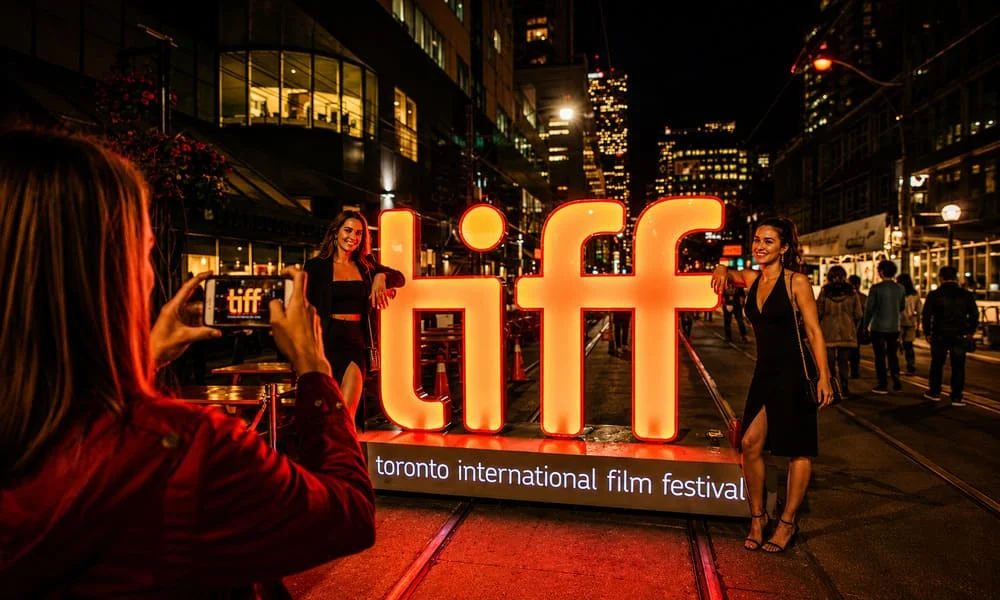
The Tribeca Festival 2026 closed in New York after twelve days of screenings, talks, and premieres, running from June 3 to June 14. Among the most discussed topics was, inevitably, the use of artificial intelligence in cinema, an issue we have followed in recent months from many angles: synthetic actors, deepfakes, copyright, creative labor, economics and industry, generated images, and the relationship between algorithms and authorship.
At Tribeca, the conversation around AI became more concrete, also thanks to projects connected to Google DeepMind and OpenAI, because the festival effectively showed the two paths that now seem realistically available: on one side, videos generated through prompts, still fragile and often unable to sustain a true cinematic grammar; on the other, a more technical use of AI, built inside the work of artists.
Dear Upstairs Neighbors, when AI follows a human design
The most interesting case to emerge from Tribeca is Dear Upstairs Neighbors, a short film written and directed by Connie Qin He, a Pixar veteran, and made in collaboration with Google DeepMind. A young woman, Ada, tries to sleep while increasingly strange and disturbing noises come from the apartment upstairs. Behind this small nocturnal story lies one of the most concrete experiments in the use of artificial intelligence in cinema: a film in which generative models are progressively fine-tuned to support an already defined artistic vision.
The strength of the short lies precisely in the amount of human work required for automation to produce something coherent. To build the film’s visual style, the production involved Yingzong Xin, a Pixar production designer, who created concept art in Photoshop and on paper with acrylics. Dear Upstairs Neighbors starts from an aesthetic that had already been conceived, from a visual world that had already been shaped, and from preliminary animations created with Autodesk Maya to guide movement, comic timing, and the arrangement of scenes. Only afterward were these animations used to train customized versions of Veo and Imagen, Google’s models used to generate and refine the images.
Ultimately, this points to a new kind of production department, where designers, directors, animators, and AI technicians build specific tools for a single project: a path that is less spectacular to describe than the rhetoric of a machine creating on its own, but far more credible for cinema.
OpenAI, Sora, and the limits of “generated” cinema
The comparison with the other experiments seen at Tribeca clarifies the issue. The shorts connected to OpenAI, such as Smoked by Alice Gu and Mauvais Soleil by Youssef Michraf, show real possibilities but also clear constraints: brief shots, narrative solutions designed to work around the limits of generative imagery, and scenes that function better when the artificial element is incorporated into the film’s own subject matter.
Even Dreams of Violets, presented as a feature-length film made with AI tools at extremely low cost, confirms the productive power of the technology more than any true aesthetic breakthrough. The economic figure is striking, while the artistic result, at least for now, is mainly interesting as a symptom.
With the festival now over, Tribeca’s lesson seems clear enough: AI appears ready to enter production processes only when someone has the competence to know what they want to achieve. The most plausible future is not a room full of prompt engineers ordering films from standard models, but a production chain of custom-trained models, controlled by artists with a recognizable vision.