Now Reading: Paolo Strippoli at the EFAs: From the Meteorological Trilogy to the Oscar Race
-
01
Paolo Strippoli at the EFAs: From the Meteorological Trilogy to the Oscar Race

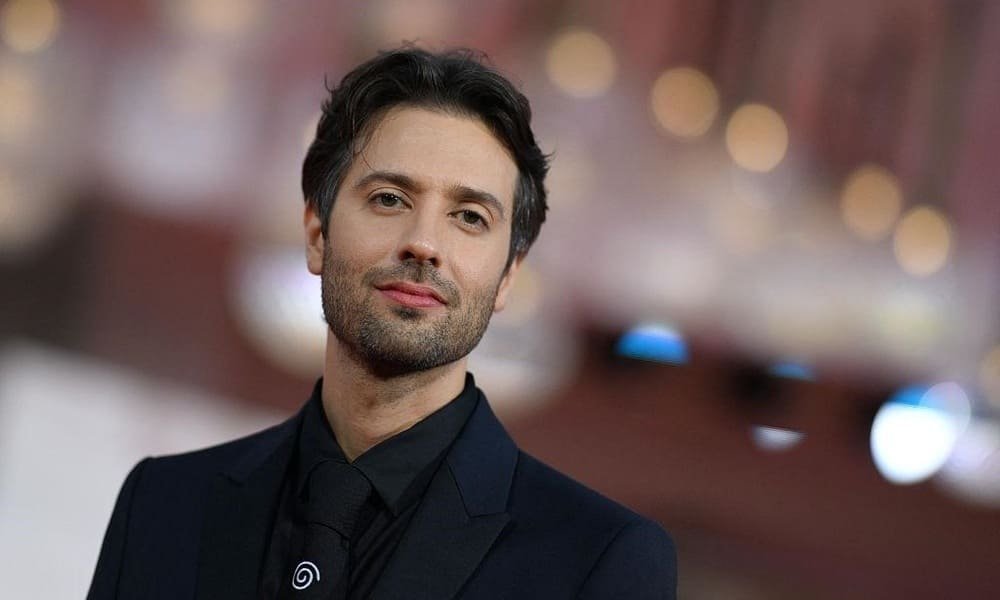
Who is Paolo Strippoli, the director of L'Estranea: from horror and Netflix to the EFAs and the Oscar race to represent Italian cinema.
Who is Paolo Strippoli, the director of L’Estranea: from horror and Netflix to the EFAs and the Oscar race to represent Italian cinema.
At 33, Paolo Strippoli has taken a rather unusual route to the center of Italian cinema: Netflix, horror, torrential rain, dysfunctional families, genre festivals, Venice, the Oscars. As of today, he can add the European Film Awards. L’Estranea is, in fact, the only Italian film on the shortlist announced today, October 14, by the European Film Academy.
The EFA shortlist includes 45 fiction features, within an overall selection of 68 films spanning fiction, documentaries and animation from 40 countries. Nominations will be announced on November 14 and the awards presented in Athens on January 16. For L’Estranea, it is another step in an international trajectory that, within just a few weeks, has already passed through Venice, Toronto and selection as Italy’s Oscar submission.
The interesting point is not simply that Strippoli has come this far so young. It is how he got here: by making exactly the kind of cinema that, for a long time in Italy, seemed destined to remain outside the door.
From Corato to the Oscars, by way of the Meteorological Trilogy
Strippoli was born in Corato, in the province of Bari, in 1993. He studied Performing Arts and Sciences at Sapienza, then directing at the Centro Sperimentale di Cinematografia. Before becoming a filmmaker in his own right, he followed the most traditional apprenticeship: working as an assistant director for Gianni Amelio on La tenerezza, Daniele Luchetti on Io sono Tempesta and Gianni Zanasi on Troppa grazia. In 2019, he won the Premio Solinas for the story treatment L’angelo infelice.
Then, however, the résumé takes a turn.
In 2021, he co-directed A Classic Horror Story with Roberto De Feo, produced for Netflix: a horror film combining folk horror, international references and a certain irony about contemporary image consumption. Piove followed in 2022, then La valle dei sorrisi in 2025. In the former, a Rome suffocating under its own anger is struck by a substance capable of turning resentment into violence; in the latter, a seemingly happy mountain village has found a deeply unsettling system for ridding itself of pain.
The films change their skins, but not entirely their obsessions: family, trauma, pain, loss of control. And water.
Almost without planning it, Strippoli has built a meteorological trilogy. In Piove, water accompanies the city’s collapse; La valle dei sorrisi is permeated by constantly threatening weather; in L’Estranea, a flood follows the family crisis until the private apocalypse becomes material too. For him, as someone who admits to being obsessed with control, extreme weather is a way to strip characters of the illusion that they can govern what happens.
Three films, three embraces and plenty of trauma
There is another, less predictable signature. Strippoli realized that his first three features all end with an embrace: A Classic Horror Story, Piove and La valle dei sorrisi. A curious recurrence for a filmmaker associated above all with horror, but quite consistent with a cinema in which violence almost always works because there is first a bond to be tested.
It is no coincidence that Strippoli continues, at least partly, to reject the label “horror director.” Not because he considers the genre something to distance himself from. On the contrary: he calls it one of the freest narrative and visual spaces available to a filmmaker.
Among the films that shaped him is Kiyoshi Kurosawa’s Pulse, which he discovered as a teenager. Less a catalog of scares than a horror film capable of using the supernatural to speak about loneliness, alienation and human relationships. The same idea has stayed with Strippoli: genre as a language, not a subject.
L’Estranea: the horror hidden inside an Italian family
With L’Estranea, the mechanism becomes even clearer.
Strippoli and co-screenwriter Salvatore De Chirico begin with a classic family melodrama and graft onto it psychological thriller and incursions into horror. The director himself has said that this hybrid nature made the project difficult to pitch to producers: faced with the screenplay, the implicit question was essentially, “What kind of creature is this?”
The creature is set in Bari in 1999, within a newly affluent family obsessed with the possibility of losing its hard-won status. Strippoli also knows that world through his own childhood: arriving in Bari from provincial Corato, he says he observed families for whom homes, clothes, expectations of their children and appearances were not simply vanity, but visible proof of social advancement.
At its center are Jasmine Trinca and Romana Maggiora Vergano, mother and daughter; Adriano Giannini completes the family unit, while Valeria Bruni Tedeschi plays the figure who gives the film its title. Bruni Tedeschi was in Strippoli’s mind from the writing stage: the character was imagined for her and, according to the director, the film would probably have taken a different shape had the actress declined.
Paolo Strippoli on the EFA shortlist
The film premiered in competition at Venice, where it also received the Arca Cinemagiovani award for the festival’s best Italian film, then went to the Toronto International Film Festival: there, it placed First Runner-Up for the Midnight Madness People’s Choice Award, an unprecedented result for an Italian title in that section’s history. Its journey continued through Busan and numerous international festivals.
Then came its selection as Italy’s Oscar entry.
Among the 21 titles submitted were films by Nanni Moretti, Marco Bechis, Gabriele Muccino, Riccardo Milani, Monica Guerritore and Isabel Coixet. The ANICA committee chose L’Estranea, explicitly identifying it as a “genre” film by a young filmmaker. Strippoli described the decision as a particularly strong signal precisely because thrillers and horror films are rarely chosen to represent Italy officially. At 33, he is also among the youngest directors ever selected by the country: only Marco Bellocchio was younger, chosen at 27 in 1967 with China Is Near.
L’Estranea has remained the only Italian film on the European Film Awards’ European fiction shortlist while simultaneously representing Italy in the race for the international Oscar. In its first weekend in Italian theaters, it also took more than €800,000, placing third at the box office.
For years, Italian genre cinema was too commercial to be truly auteur-driven and too strange to be truly commercial. Now that Strippoli is at the EFAs and in the Oscar race, the problem seems to have remained mostly within those old categories.