Now Reading: Street Fighter: $70 Million Projected at the Box Office
-
01
Street Fighter: $70 Million Projected at the Box Office

Street Fighter box office: the new film is targeting a $70 million worldwide debut. From the Van Damme film to the new cast, a look at Capcom's adaptations.
Street Fighter box office: the new film is targeting a $70 million worldwide debut. From the Van Damme film to the new cast, a look at Capcom’s adaptations.
When Street Fighter became a film in 1994, Hollywood was trying to turn an arcade phenomenon into cinema; in 2026, cinema is looking to the Capcom universe for an audience that is already organized, international and accustomed to recognizing its characters, moves, costumes and poses for decades.
The new adaptation directed by Kitao Sakurai brings Ryu, Ken, Chun-Li and the World Warrior Tournament back to the screen, choosing 1993 as its setting. Street Fighter II had already transformed arcades, while console versions were bringing Capcom’s tournament into living rooms across half the world.
Street Fighter’s box-office problem has always been the plot
Street Fighter has some of the most recognizable characters in video game history, but it began as a sequence of fights. In the game, it is enough to know that Ryu is looking for opponents, Chun-Li wants to stop Bison, and each character comes from a different corner of the planet. In a film, you have to put them in the same room.
The 1994 film turned Street Fighter into a military action movie built around Jean-Claude Van Damme’s Guile, shifting the center of gravity away from the tournament and the characters that had made the game famous. In 2009, The Legend of Chun-Li instead tried narrowing the field, isolating a single fighter and adapting her to the more familiar structure of an origin story.
Neither route really managed to reproduce that strange, euphoric atmosphere of an international tournament that makes the game instantly recognizable.
The first film had a $35 million budget and grossed $99.4 million worldwide, while the real disaster was the second: a $50 million budget and just $12.7 million in worldwide box office. The film franchise effectively stopped there, while the video game franchise kept moving through generations, adding characters, selling new versions and waiting for cinema to come knocking again.
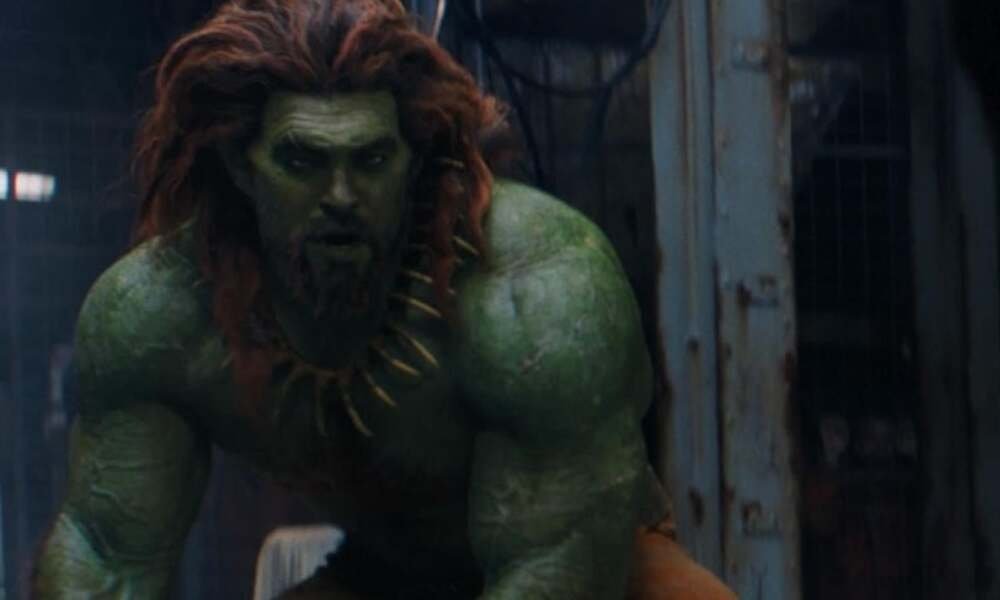
Momoa is Blanka, 50 Cent is Balrog: this time, the casting looks like the game
The new adaptation at least seems to have understood that normality has never been a feature of Street Fighter. The cast follows the same logic of recognizability, but deliberately pushes it toward pop spectacle. Andrew Koji is Ryu, Noah Centineo is Ken, and Callina Liang plays Chun-Li; around them are Jason Momoa as Blanka, David Dastmalchian as M. Bison, Roman Reigns as Akuma, Cody Rhodes as Guile, Curtis “50 Cent” Jackson as Balrog, Vidyut Jammwal as Dhalsim and Orville Peck as Vega.
Wrestlers, musicians, actors and performers end up on the same selection screen, almost as though the casting had applied to cinema the logic through which the video game has always turned incompatibility into spectacle.
Street Fighter belongs to an era when a video game could build its world without explaining everything, relying on silhouettes, special moves and a few seconds of animation before the fight. The third round therefore begins in an unusual situation: this time, Hollywood has to prove it deserves to continue.