Now Reading: Robert Gaudette wins at the Runway AI Film Festival
-
01
Robert Gaudette wins at the Runway AI Film Festival

Robert Gaudette wins the Runway AI Film Festival with a short film generated by AI: art, labor and cinema enter a new industrial zone.
Robert Gaudette is 54 years old, lives in Toronto, and has worked in technology, photography and the nonprofit sector. He has no traditional film training, no crew, no actors and no producers. Yet his eight-minute short film, A Face Only a Mother Could Love, won the $50,000 Grand Prix at the Runway AI Film Festival in New York, now in its fourth edition.
Among the finalists — from Costa Verde by Léo Cannone & New Forest Film, a summer memory built around the magical drift of generative images, to Little Mes by Lucas Levitan and Fabián Jiménez, a monologue on possible lives, up to POSTMAN by YUUUKI and TAIRELL ISN’T REAL by Dave Clark — Gaudette’s short stood out above all for the emotional and behavioral continuity of its protagonist.
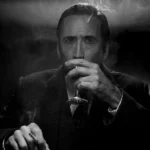
The film follows Marcel, a Parisian man with a facial deformity who dances every evening in his apartment while waiting for a companion who will never arrive. It is a fragile, tender story, decidedly out of step with a sector obsessed with franchises, IP and metrics. Its production, however, shows where part of the audiovisual industry is moving: from shooting to generation, from the set to the workstation, from the crew as a necessary structure to a process in which the author selects, corrects and edits visual possibilities produced by the model.
Does a film without a set change the value of the set?
The Runway AI Film Festival touches one of the exposed nerves of today’s audiovisual industry: how much cinema remains when the production process is compressed to the point where the set almost disappears? To make A Face Only a Mother Could Love, Gaudette worked with AI tools without involving performers, camera operators, set designers, costume designers, location managers or producers. The traditional value chain is reduced to a workstation, technical skills and many iterations.
Even independent cinema has always required capital, permits, people, equipment and time: those who failed to cross that threshold remained invisible. Gaudette says he had written dozens of screenplays that stayed in drawers, ignored by a system with no economic incentive to listen to him. With AI, that barrier begins to weaken, together with the industrial filter that decided who could reach production before even reaching an audience.
This democratization, however, reduces the economic need for many professions that have so far shaped cinema as collective labor. Hollywood will look at experiments like this with growing operational interest: fewer shooting days, fewer people, lower financial risk.
The solitary author platforms like
Runway has raised hundreds of millions of dollars and is trying to position itself at the center of the new audiovisual production chain. Gaudette’s award works as a public demonstration: AI video does not merely produce strange clips, fast advertising assets or social-media experiments. It can sustain a character, a tone, a melancholy.
The ability to move an audience is not enough, on its own, to promote content into art. But Gaudette’s authorship now coincides with the very ability to guide an unstable technical system toward a recognizable form: individual imagination is exercised through tools that once belonged only to collective, expensive and hierarchical structures.
Gaudette describes the current technical limits of the process as a form of “creative gambling”: models work on short sequences, continuity requires many attempts, deletions, remakes, generations and a great deal of computational energy. Yet Gaudette embodies an ideal figure for platforms and startups, because he concentrates creative labor in a single advanced user.
For those who have remained outside funding circuits, this is a concrete possibility. For the industry, it is a model of authorship and cost reduction at the same time: a perfect formula for advertising, pitches, previs, low-budget series and more ambitious narrative products.