Now Reading: Fortnite and Unreal Engine 6: Epic Redesigns Gaming
-
01
Fortnite and Unreal Engine 6: Epic Redesigns Gaming

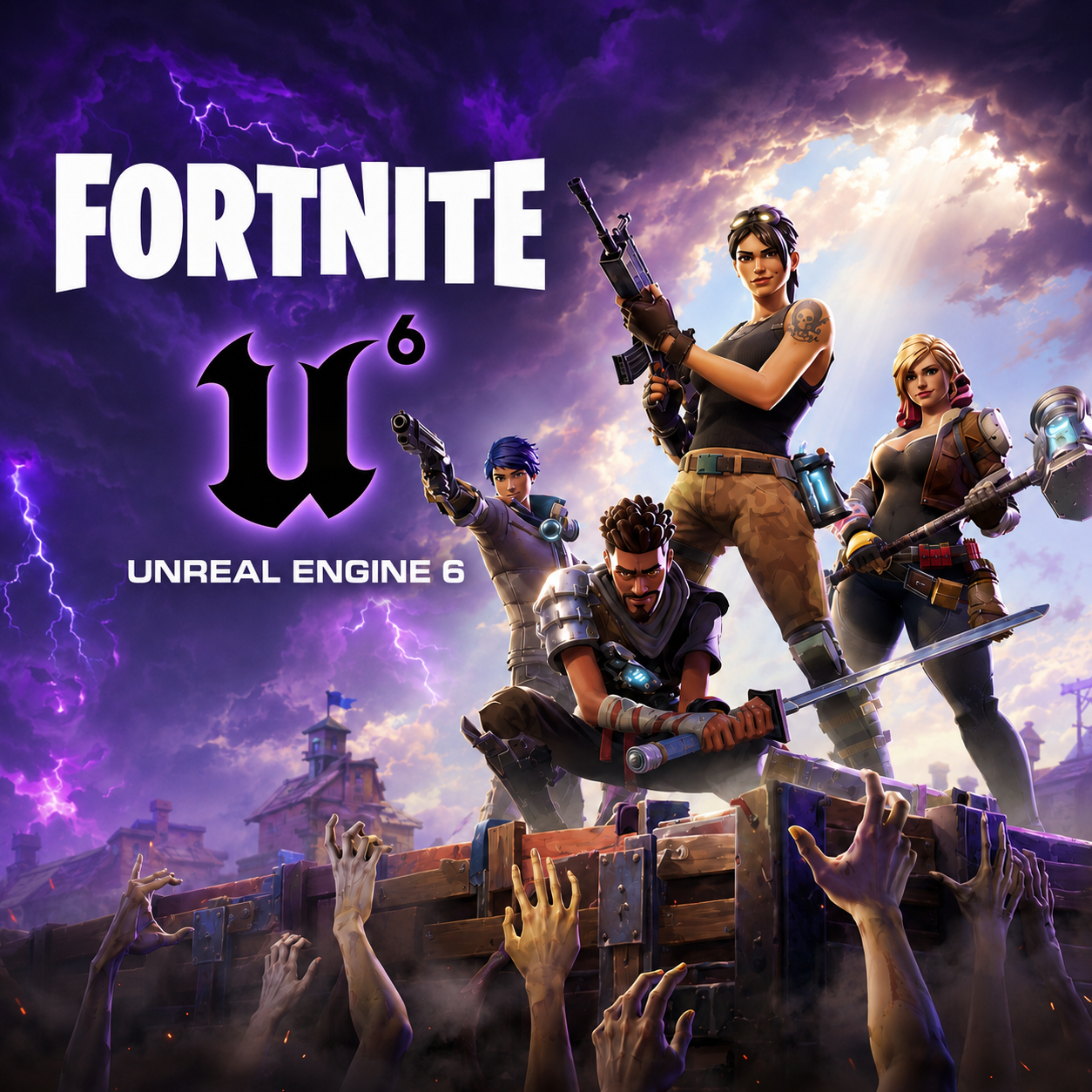
Epic connects Fortnite, Unreal Engine 6 and generative AI. Skins, assets and creative labor enter a new industrial phase.
Epic Games has made the direction of its next industrial cycle clear: turning Fortnite from a game-platform into shared infrastructure. During State of Unreal 2026, the company linked the future of Fortnite to Unreal Engine 6, whose early access is expected by the end of 2027, with a full release planned 12 to 18 months later. The stated goal is to let developers create games compatible with Fortnite skins and, over time, make the border between different gaming experiences more porous.
Skins Become Infrastructure
The move touches one of the central issues of the digital economy: the value of virtual purchases. A skin bought inside Fortnite would no longer remain locked inside the battle royale enclosure. It could circulate across other worlds built with Unreal Engine. For Epic, this extends the economic lifespan of digital objects. For developers, it opens access to an ecosystem where interoperability can bring visibility, while also increasing technological dependence.
The model looks less like a traditional video game and more like a cultural operating system. Fortnite becomes showroom, IP archive, social space, marketplace and production environment. The player is not simply buying a costume. They are buying an identity that can be used inside an environment controlled by Epic.
AI Enters the Creative Engine
The second step concerns generative AI. Epic has announced pipelines and tools connected to Unreal Engine, including an experimental Model Context Protocol plugin designed to integrate models such as Claude and Gemini into the development process. The company presents these tools as multipliers of creativity and productivity, useful for reducing manual operations and accelerating the work of development teams.
This is where the issue becomes more fragile. When a dominant engine incorporates AI into the creative workflow, technology stops being an accessory. It becomes a production standard. Assets, concepts, testing, lighting, iterations and prototypes can move through automated tools. The promise is speed. The risk is pressure on time, staff and artistic responsibility.
Reactions have already arrived. Poncle, the studio behind Vampire Survivors, is reportedly reviewing a collaboration with Fortnite after Epic’s communication around the use of generative AI. The case matters because it comes from an independent team, strongly linked to a handmade identity and distant from the more aggressive logic of automation.
The Metaverse Returns Under a More Concrete Name
Epic avoids the old abstract enthusiasm around the “metaverse” and moves through infrastructure: engine, marketplace, skins, AI, editor, creator economy. The strategy is more concrete and more invasive. There is no need to sell the public a new virtual world when it becomes convenient to build inside the one that already exists.
For gaming, the issue is industrial before it is technological. If Fortnite becomes the space where IPs, assets and digital identities circulate, Epic increases its weight over developers, brands and audiences. If Unreal Engine integrates generative AI as an ordinary function, video game production changes its timing, costs and power relations.
The future proposed by Epic is efficient, expandable and monetizable. The open question is how much room will remain for authors when the platform has also defined the language used to create.