Now Reading: Robert Gaudette: AI and the Future of Independent Authorship
-
01
Robert Gaudette: AI and the Future of Independent Authorship
Robert Gaudette: AI and the Future of Independent Authorship

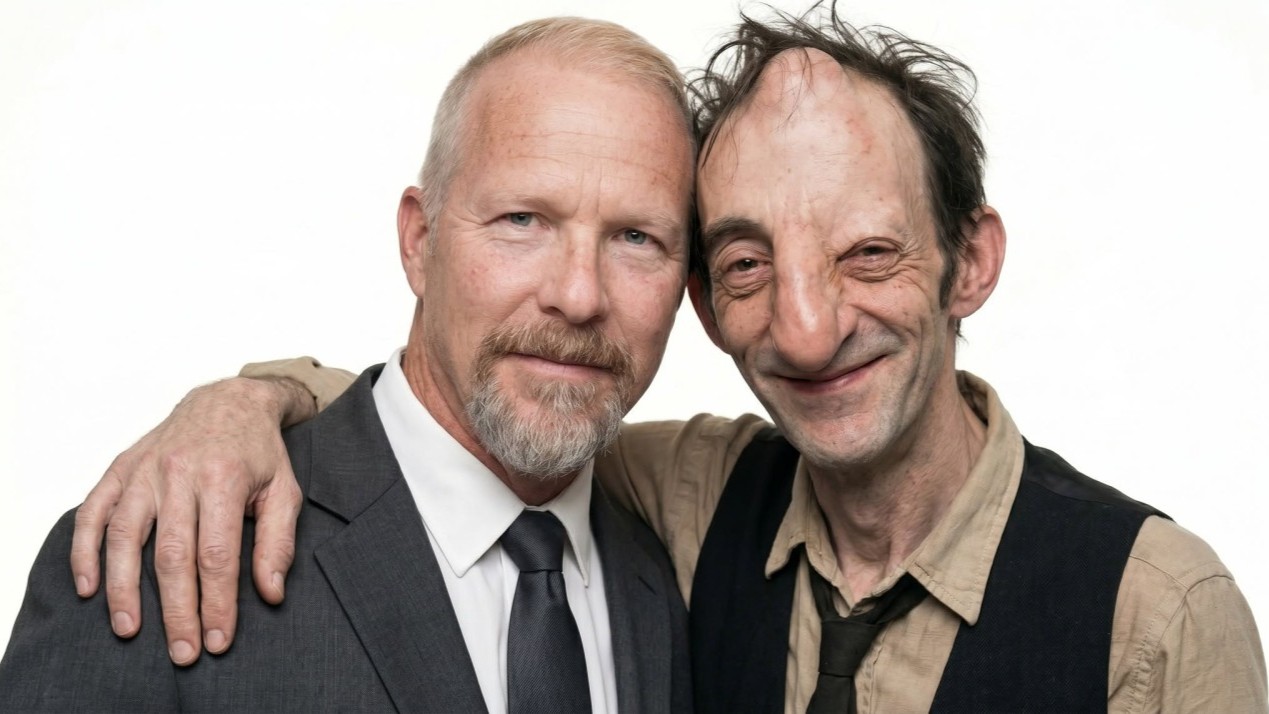
Robert Gaudette discusses A Face Only a Mother Could Love, generative AI, the Runway AI Film Festival, and the future of authorship between image, imperfection, and storytelling.
Winner of the Grand Prix Film at the 2026 edition of the Runway AI Film Festival, Robert Gaudette uses technologies born to smooth the world in order to bring back into the image what the world tends to correct, hide, and normalize. In his AI cinema, there is no desire to erase imperfection, but almost the opposite gesture: to seek it out, hold onto it, and give it a face strong enough that it cannot be ignored.
This is where Marcel Dupont, the protagonist of A Face Only A Mother Could Love, is born: a gentle soul, endowed with a quiet and methodical solidity, and a body that carries the judgment of others, transformed into a lesson in masking. He is a figure through whom we can ask how much of our idea of beauty is still capable of inspiring us, and how much of it has already been trained by images too perfect to be innocent.
To tell stories with AI today means entering unstable territory, where the author does not control everything, but must learn to recognize what matters. Generating is not enough, because the image that comes from the machine is still mute if no one knows how to listen to it, choose it, and guide it toward a form. One has to discard, correct, go back, understand when an error remains only an error, and when instead it opens up an emotional possibility that control would never have foreseen.
In this sense, AI cinema does not resemble the automatic miracle promised by much technological rhetoric, but rather a new and demanding form of care: a sculpture made of attempts, accidents, obsessions, and judgment, born where artistic cooperation stalls or cannot even begin, amid absent budgets, impossible crews, denied access, insufficient time, and stories destined to remain for years in the most fragile form of all: an idea left in a drawer.
Today, AI is more interesting as a cultural symptom than as a technological evolution. Not because it makes human labor useless, but because it reveals how often that labor has already been made unreachable by economies, hierarchies, and production mechanisms that decide in advance which images may come into being and which may not. The future of independent cinema will not depend only on the ease of producing images, but on the rarer ability to know why a story deserves to be told.
The Interview
Before AI entered your work, you had already moved through photography, writing, visual design and technology. Looking at A Face Only A Mother Could Love, which part of it feels truly new to you, and which part feels like something you had been preparing for long before these tools existed?
The visual elements felt familiar – composition, lighting, production design but carrying a cohesive visual story through 7 plus minutes was new to me. In photography you are at most carrying a story through an essay or an editorial sequence of stills. Driving the narrative forward using motion, action and character performance in a way that was able to be assembled was new to me in any formal way beyond 30 seconds to a minute. It’s a bit kismet that I had learned many of the skills needed to create an AI short either as a hobby or in different roles I had previously.
Editing, sound design, cinematography (to a degree), visual design, production design were all skills I had developed over the years. Really a nice match to the skills needed when working in generative AI. Also I’ve been fortunate enough to work on a lot of pre-visualization/pre-production projects with some amazing directors and producers and through that process I’ve been able to learn a lot about a story or concept that goes from creative brief to pitch to storyboard.
Your photographic work was already interested in bodies, faces, imperfection, texture and a form of beauty far from conventional ideals. Is Marcel Dupont a continuation of your previous visual research?
Maybe incidentally. I’ve always been drawn to imperfection in the visual image even when I was working in fashion photography. Counter to a long duration of perfect and flawless images in that field. In a short film, I knew it would be a challenge to have character development so I chose a very visual way of showing the type of life Marcel had lived. I think audiences immediately understand how the world would have responded to him. That was the real motivation behind the visual disfigurement.
In recent years, fashion and visual culture have expanded the idea of beauty, giving value to bodies and faces once considered irregular or marginal. With AI, however, we may be entering a new phase, one in which beauty can be generated, corrected and standardized endlessly. Do you see Marcel as part of a resistance to synthetic beauty, or do you think AI will end up creating new canons of human Beauty?
Yes, I think so but I do see a better balance now than a decade or two ago. I think you see a lot of realism in fashion, beauty and film nowadays. The pendulum has swung back a bit. I also think that due to the smooth more polished aesthetic of most image and video AI generations that people are striving to create greater realism by adding flaws. Over time maybe this pushes even further towards a more realistic standard of beauty.
You had written many screenplays before this film. Did AI change your imagination, or did it simply give production access to stories that were already waiting for a way out?
Yes, exactly. I think many people were in the same situation. You have stories and ideas and writing them is just what you naturally do but how do you share those in a way that is appealing to a wider audience? Posting or publishing your stories really doesn’t draw much of an audience these days given the highly visual nature of modern storytelling. The odds of getting funding to produce something you’ve created, especially short form (where return on investment is really limited) is incredibly challenging. So when AI technology developed to a point where I thought I could create something that would be engaging enough to share and be able to carry the story across to an audience, I was really interested in developing some of the ideas and stories I had written.
Traditional cinema often works through addition: crews, actors, locations, equipment, sets. Your process, instead, seems to involve a great deal of subtraction: generating, rejecting, selecting, refining. In this phase of choice, which discipline guides you the most — writing, photography, visual design, music or editing — and how close does this new form of authorship feel to the work of a sculptor?
Writing. The story is what engages with people beyond visual spectacle. It’s always been about story and will continue to be. I would have loved to have worked with a team on this film but I had no budget and honestly wasn’t even sure what I was making it for. It was a personal project and only became a festival submission after I completed it and thought I had something worth sharing. Being able to add/edit/change my script while I was generating clips (and doing rough assembly) was a bit like sculpting. AI gives you the ability to experiment in ways that would be too costly in traditional animation or film making. I did frequently revise and make additions as I worked through things. Adding and subtracting and watching a better film develop out of this approach.
You have described part of the AI process as something similar to pulling the lever of a slot machine. When the system produces chance, accidents and failures, where does authorship truly begin: in controlling the machine, in recognizing what works, or in orienting a technically unstable system toward a recognizable emotional and visual form?
I don’t think it’s that different from traditional filmmaking in some ways. You create an environment and structure for something to happen. The actors give you their performances within that environment and you capture magic or you don’t. You do this repeatedly and sometimes you get a happy accident or something unexpected that elevates things. You also can have the opposite happen where something just isn’t working and you have to trudge through and keep at it. Authorship begins with the story, if you wrote it, it’s yours, you are the author. Using AI to visualize it understandably is a complex conversation at this point in time. We need to get the issues over data licensing resolved and things are in the courts.
If festivals, producers and traditional institutions truly wanted to take this new form of authorship seriously, what kind of infrastructure should they create around AI authors? Do we need new funds, labs, distribution paths, ethical standards, hybrid crews, training programs — or, before all that, a different way of looking at what can now be considered cinema?
I think a lot of that is already in motion. There are great creative partner programs offering a lot of support to creators. There are new platforms and festivals catering to AI and hybrid content. And a lot of training and education programs are being offered – so we are well on the way. Is it cinema? I’m not sure we may need new terminology. I look at AI films as a category of its own, like anime or other forms of animation.
There are certainly crossovers where AI can be, and is being, used in live action and more traditional animation projects. However AI films are something a bit different and I don’t think it needs to emulate something else in order to be engaging and entertaining. Audiences will decide what they are interested in and which tools they enjoy the results from. AI can now story tell in a way that wasn’t possible just a few months ago so we are in the early stages of finding out.
In recent years, YouTube has become more than just a platform for showing work. It is a space where audiences, languages and even new paths into the industry are formed. Starting in 2029, it will host the Oscars, while some films born from online creators are achieving enormous results in theaters. How do you read this shift: is YouTube still a showcase, or is it becoming a new infrastructure for cinema?
Creator-focused entertainment has been a growing phenomenon for some time now and I think audiences are drawn to this more and more. It provides a much more diverse range of voices and stories and AI will amplify that. With less reliance on large amounts of funding there will be a huge resurgence in “indie” media production. We have seen this in the podcasting space as well as in many others. I think there will be many more platforms and outlets created to help organize and curate all of this new content in ways that draw different audiences.
Many successes born online are explained with the word “virality”, but in your case it seems more interesting to speak of “intimacy”: a direct, personal, almost fragile relationship between an author and an audience that recognizes something human inside a technological image. Do you think the future of independent cinema will depend less on virality and more on new forms of trust and closeness with the audience?
Getting enough awareness of your project in order to draw an audience will always be a challenge especially with the increasing volume of options. Virality is really just another way of looking at successful marketing. People connected with it in some way. With “tastemakers” and curators I think you don’t need to target “virality” as a goal. I think there are voices that can help promote and create awareness of your film. So I think you can really expand your storytelling beyond a formula designed to hook someone in the social media space. Things have become pretty formulaic in many ways and I think you can break out of that requirement by connecting with people that curate and support projects that will resonate with their individual audiences. The goal in storytelling is connection but there is a business component and the best projects seem to find a way to balance those two things really well.
Your film was made outside the traditional system, but the Runway AI Film Festival brought it into a recognized cultural space. After this recognition, what advice would you give today to a young author who wants to tell stories?
Write them and write them in the best possible version you can. Only after do you begin to format or make compromises and concessions for it to fit a format. Have a point of view and have something to say. Then make it. If you have the budget to hire a team then go that route. You can’t be great at everything and the right creative teams produce the best work. However if you are like me and there’s not a lot of reason for people to be interested in investing or collaborating then just do your best and visualize your story as best you can.
And where should they begin: with writing, with images, with AI tools, with building an audience, or with a deeper personal discipline?
It should always begin with story, that’s the foundation to build on. Then learn to curate. We all have ideas of what is good and bad but can you self-reflect and explain why? Can you write for an audience or a client that has a different vision than you? This is somewhat of an abstract topic but a very important one. We can get locked into our own echo chambers and each one of us can fall victim to our ego’s sense of “taste” superiority. You like something better than something else so obviously people that don’t agree are incorrect. This is something to really work on. It will make you a better curator and that is so much of what art is. How does the photographer pick the best shots? How does the editor see which sequences to pull together? Study art, cinema, literature and push yourself to be able to explain the reasons why you like what you like. Then expand on that so that you can start to understand why the audience likes what it likes.
After this recognition, where is your work heading next? Are there any new projects, scripts, films or series that feel particularly important to you at this stage of your creative path?
After this recognition, my focus is on continuing to build momentum with work that feels both personally meaningful and creatively ambitious. I have three short scripts designed for AI film festivals that I’ll be developing next, each exploring different ways this new medium can be used to tell emotionally resonant stories. I also have a feature script that is nearly complete, which feels like an important next step in expanding the scope of my storytelling. Alongside that, I’m developing an episodic YouTube series called The Little Cloud Thief, planned as a 40-episode project. It’s a world I’m excited to keep building because it allows me to explore long-form character and visual storytelling in a format that can grow directly with an audience.
We thank Robert Gaudette for the honesty and generosity with which he shared his creative process with us, showing that even within a generated image, a human dialogue can remain alive.