Now Reading: Andy Serkis on AI, Diversity and Motion Capture in the New Gollum Film
-
01
Andy Serkis on AI, Diversity and Motion Capture in the New Gollum Film
Andy Serkis on AI, Diversity and Motion Capture in the New Gollum Film

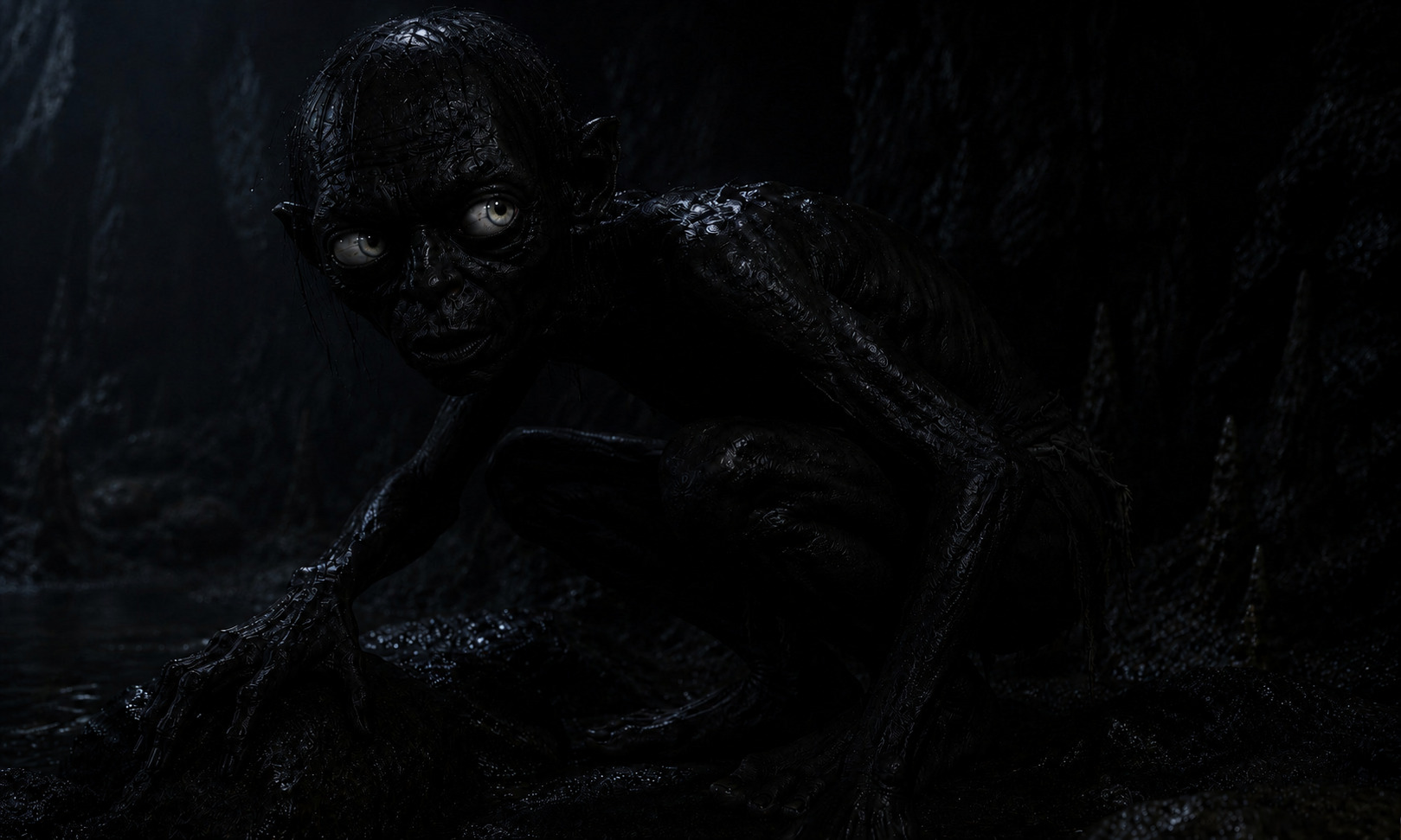
Andy Serkis clarifies how AI will be used for de-aging, discusses diversity in the cast and renews his campaign for motion-capture performances to receive proper recognition.
Andy Serkis is currently filming The Lord of the Rings: The Hunt for Gollum in New Zealand and, within the space of just a few hours, has opened up three debates likely to accompany the film until its release on December 17, 2027: the use of artificial intelligence, representation in Middle-earth and the recognition of actors working through motion capture.
His comments come as Serkis continues to defend his adaptation of Animal Farm. The director acknowledged that the animated film did not receive the North American launch he had hoped for, having been overshadowed by controversy surrounding its political interpretation and the decision to turn Orwell’s novel into a family-friendly story.
Cosmetic AI for De-Aging, Not for Generating Scenes
Serkis explained that artificial intelligence will have a limited role. Some characters will be digitally de-aged, and the process will involve machine-learning systems, but the director ruled out the creation of shots generated entirely by AI.
The stated aim is to recover the combination of techniques that defined Peter Jackson’s trilogy: miniatures, prosthetics, practical effects and CGI. Serkis considers AI a legitimate creative tool when it does not exploit other people’s work, harm individuals or produce falsifications. In contemporary cinema, however, the boundary between technical assistance, the replacement of human labour and the unauthorised use of data remains a grey area at the centre of ongoing industry disputes.
The decision to use de-aging also addresses a practical problem. Serkis has not revealed which actors will be digitally rejuvenated, but the film is set between the events of The Hobbit and The Fellowship of the Ring, with several performers returning to Middle-earth more than twenty years after the original trilogy.
Serkis has also renewed a campaign he has pursued since his first appearance as Gollum: a performance created through motion capture should be eligible for an Academy Award just like any other acting performance. In his view, the technology does not create the character but alters its appearance, in much the same way that digital make-up or de-aging can modify an actor’s face without erasing the work behind the performance.
Diversity, Gollum and the Fight for Motion-Capture Recognition
Presenting artificial intelligence as a tool limited to cosmetic effects and rejuvenation reinforces the idea that the body, voice and acting choices remain human, while software and algorithms merely construct the surface through which creatures such as Gollum reach the screen.
Asked by the BBC about criticism of the franchise’s historically almost entirely white casts, Serkis said that The Hunt for Gollum would address the issue to some extent. However, he rejected the idea of casting designed, in his words, to be “politically correct” or to “tick boxes”, arguing that the choice of actors should remain consistent with the story and with the world derived from Tolkien’s imagination.
Today, however, that answer risks generating more debate than it resolves. Referring to the influence of Norse mythology on Tolkien may explain part of the franchise’s imagery, but it does not fully address the responsibilities of an adaptation produced in 2026. If Gollum’s digital appearance is merely a surface that does not erase the identity or labour of the performer, then casting decisions should not reduce an actor to their ethnic appearance either—whether as grounds for exclusion or inclusion.
The decisive criterion should always remain what the performer brings to the character.