Now Reading: AI Is Inevitable. So Say the People Selling It to Us
-
01
AI Is Inevitable. So Say the People Selling It to Us

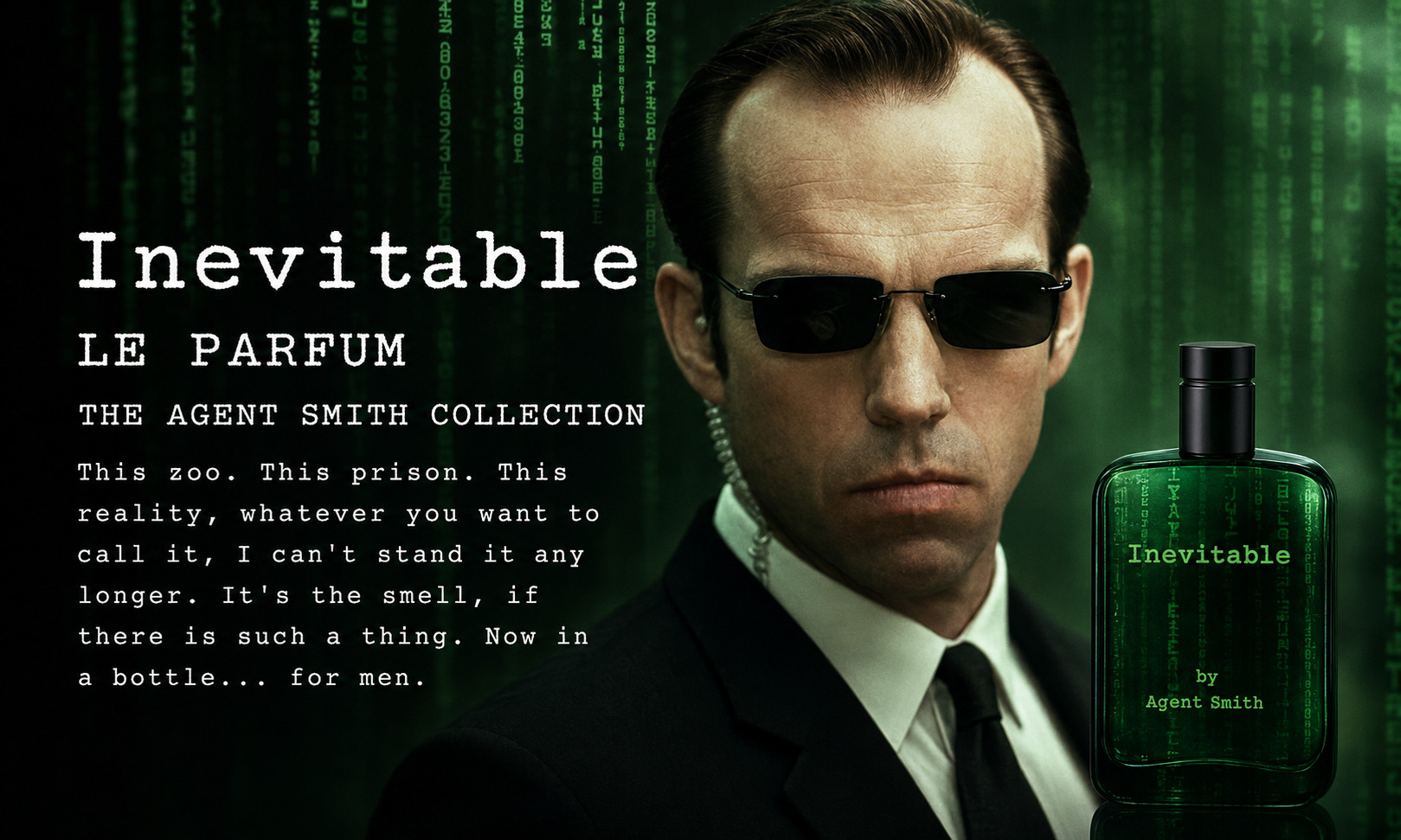
From Del Toro to Nolan, artists, unions and researchers are mounting increasingly influential resistance to the use of artificial intelligence. Yet an anti-AI front is not enough to create the cultural reverse shot still missing from the narrative of industrial inevitability.
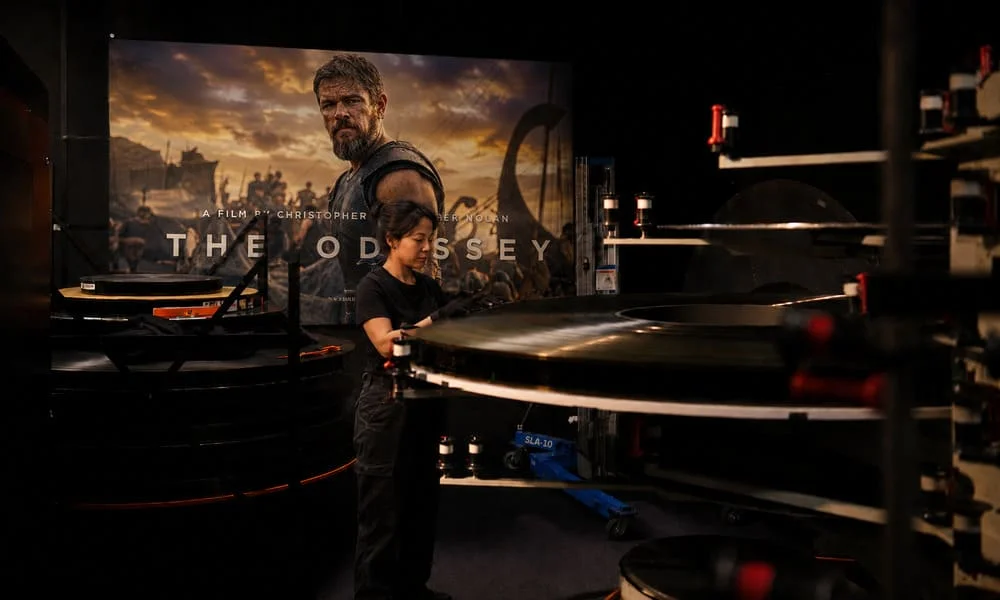
To convert Pan’s Labyrinth into 3D, Guillermo del Toro employed around a thousand people. Not a thousand prompts—a thousand people. At San Diego Comic-Con in July 2026, the director explained that every decision about depth had been made by hand and that the process, besides taking longer, had cost considerably more than an automated conversion. What matters is that Del Toro did not apologize for it. He defended the expense as an investment in the “genealogy of art”: eliminate one generation of workers and you also erase the expert craftspeople that generation would have become.
The line says more than the familiar lament about the soulless algorithm because it describes an industrial process. A craft is preserved not only in masterpieces, but in the chain of smaller assignments, mistakes, corrections and apprenticeships through which someone learns it. If the machine absorbs the first rung, the company saves money today and discovers tomorrow that it has sawn through the ladder. Two days earlier, Denis Machuel, the head of staffing multinational Adecco, had used less cinematic language to say almost the same thing: abolishing entry-level roles damages the pipeline of future talent. For once, Del Toro’s monster was wearing an HR badge.
Christopher Nolan approaches the subject from a different angle and does not deny that artificial intelligence can provide useful tools for images and effects. What he considers “nonsensical” is the idea that it can replace people and creativity wholesale, and he regards the public’s growing intolerance of “AI slop” as a healthy development. In July 2026, he called AI a “transparent Trojan horse”: everyone can see the horse, everyone knows what it contains, yet those pushing it inside the walls continue to present it as a delivery that must be accepted. Back in 2023, he had already identified the most concrete political risk: executives and companies can use the algorithm to abdicate responsibility, passing off a decision of their own as the neutral output of a system.
The anti-AI front exists in the news, in lawsuits, strikes and public campaigns, but not yet as a shared theory: artists who reject artificial generation, unions that bargain over its use, authors demanding licenses, performers protecting their voices and faces, researchers denouncing the concentration of power, economists who want machines capable of assisting labor, and scientists convinced that frontier models may threaten humanity. Some reject the tool; others want to use it on better terms; still others may become partners of the industry as soon as they secure consent, compensation or a license.
Calling all of these positions an “alternative” would erase the very conflict that must be seen. There are many ways to oppose AI, but there is still no politics capable of preventing industrial transformation from becoming a fait accompli. A true cultural reverse shot should reveal the subject left outside the frame and propose a different direction. The anti-AI front can halt a production, win a contractual clause, prohibit a replica or force payment for a catalog. A reverse shot to industrial inevitabilism would have to explain why the ability to automate does not give a company the right to decide on its own what to automate, using whose materials, at whose expense and for whose benefit.
The Broad Anti-AI Front Is Fighting Different Wars
The most famous artistic critique of AI predates ChatGPT and, technically, was prompted by something different. In 2016, Hayao Miyazaki was shown an experimental animation in which an artificial creature dragged itself along using its head as a leg. Thinking of a disabled friend, the director said he could not watch it with any interest and called it “an insult to life itself”. The sequence has become a universal prophecy about generative art, even though it concerned a specific demonstration of bodily movement. The myth simplified the facts but preserved their core: an image is not innocent of the experience from which it comes.
Tim Burton described the same discomfort in terms of identity. After seeing Disney characters recreated in the style of his films, he said the process seemed to take something from the artist’s soul or psyche. This is not a legal argument, because style is not protected by copyright in the United States in the same way as an individual work. But it contains an economic consequence that remains underestimated: when a system extracts the recognizable elements of a career and offers them as an instant effect, it turns a professional history into a filter. The author remains famous enough to make the product desirable, but becomes superfluous when it is time to produce it.
Del Toro is fiercer and more precise. In 2024, he dismissed generative images as “semi-compelling screensavers”, then shifted the criterion from outcome to risk, arguing that the value of art depends on the amount of experience, memory and vulnerability an artist puts on the line. A machine can simulate the traces of that exposure without ever having lived it. His is a humanist position, but not a nostalgic one: Del Toro uses animatronics, digital effects and sophisticated production techniques, so he is not defending a cinema sealed in 1895. He is defending the principle that the tool must remain within a relationship of human responsibility, and that savings must not sever the transmission of a craft.
Even artistic rejection does not form a single bloc. In 2023, Nick Cave had called a song generated “in his style” grotesque, but two years later he was struck by the video for Tupelo, made by director Andrew Dominik with artificial imagery, and admitted that his position had softened after encountering an artist who had used it to construct a form capable of surprising him.
In The Brutalist, director Brady Corbet used Respeecher to correct certain Hungarian vowels and consonants spoken by Adrien Brody and Felicity Jones. After the controversy, he clarified that the actors had worked with a dialect coach for months, that no English-language lines had been altered, and that the process—handled by the sound department—was intended to preserve their performances, adjusting a consensual performance rather than inventing a performer. These positions share a refusal to judge art solely by the final file, as though process, consent, attribution and labor were scaffolding to be removed before the opening. Yet they do not produce the same rule. Between a prohibition on generated imagery and its authorial, disclosed and consensual use lies a distance that the word “anti” can conceal, but not resolve.
Those Who Can Stop the Machine Prefer to Bargain With It
Directors’ statements capture headlines, but rules change when someone has the power to stop production. That is why the most influential center of the front is made up not of stars but of unions, which have turned nebulous concepts such as creativity, dignity and presence into the language of contracts: consent, compensation, credit, notice, specified use and the right to strike.
The 2023 writers’ strike did not “defeat AI,” but achieved something more restrained and more important. Under the Writers Guild of America’s rules, AI cannot be considered a writer; material produced by a system does not become literary material for contractual purposes; a company cannot force a screenwriter to use it; and writers retain the right to challenge the use of their work for training. This prevents a producer from lowering pay and credit by claiming that the source text was written by a machine and that the human merely “fixed up” the material.
In 2026, the union went a step further with its new four-year agreement, ratified by 90.38 percent of voters, which preserves the protections won in 2023. If a company makes members’ screenplays or projects available for the commercial training of generative systems, it must also notify the WGA in writing. The official summary of the agreement provides that the union may request a meeting, including a discussion of compensation. This is not yet a mandatory collective license, but the beginning of a right to know what is being sold and to debate who should be paid.
The Directors Guild of America established an equally clear principle: AI is not a person and cannot replace the duties assigned to members, while directors must be consulted about creative uses of these systems in the films they direct. IATSE, which represents many technical workers, secured mechanisms for consultation on company policies, training and protections against misuse in 2024. These agreements do not freeze technology, but they prevent a software update from unilaterally rewriting a job description.
The American Federation of Musicians agreement may be the most instructive example for anyone who reduces every precaution to Luddism. The text explicitly distinguishes generative AI from MIDI, synthesizers, audio workstations, pitch correction and other traditional digital tools. If a musical recording is used as a prompt to generate music for a production, financial obligations to the musicians are triggered. The union did not demand a return to the harpsichord; it separated the tool that modifies a performance from the system that swallows it to produce a replacement.
SAG-AFTRA fought on the most exposed terrain: the replicable person. The protections accumulated across film, television, advertising and video games require, in various forms, informed consent, a description of the intended use and compensation for digital replicas. The video game contract ratified in 2025 ended nearly a year of striking and allows performers to suspend consent for the generation of new material during a strike. This is an enormously important strategic detail: without that clause, a company could deploy the clone precisely when the body that made it possible folds its arms.
These agreements also reveal the limits of the word “anti,” because unions negotiate contracts with voice-replication companies. SAG-AFTRA, for example, reached an agreement with Replica Studios allowing voice actors to grant controlled licenses. It is not defending an actor’s right never to have a digital twin, but the right to decide whether, when, for which work, at what price and with what ability to withdraw consent. This is effective resistance, but it is compatible with the existence of the market: once freedom of choice is protected, the replica can be sold.
Likeness: The Body After the Contract
For a background actor, the conflict may begin with a scan. SAG-AFTRA rules require that a background performer be notified in advance, be told the intended use and be paid when the replica is used beyond the original performance. The union’s guidance makes clear that producers must still hire human beings up to the applicable coverage minimums: a digital crowd cannot become the trick by which a set is emptied while the company claims to have complied with the contract.
The difference between owning a recording and owning a person emerged outside the studios in the case of Scarlett Johansson. In 2024, the actress said that she had declined an offer to lend her voice to ChatGPT. When OpenAI unveiled “Sky,” many listeners thought it sounded like Johansson in the film Her; CEO Sam Altman had even accompanied the launch with a single word: “her.” OpenAI said it had hired a different voice actor before approaching Johansson, denied imitating her and nevertheless suspended the voice. There is no need to determine here whether Sky was a copy, because the sequence already contains the problem: what is a refusal worth if the market can purchase a close enough resemblance?
Replication becomes even more ambiguous when the subject cannot object. In the 2021 documentary Roadrunner: A Film About Anthony Bourdain, director Morgan Neville had several lines written but never spoken by Anthony Bourdain synthesized, without disclosing their use to the audience. The voice did not invent the words, but the act of having spoken them. The controversy therefore concerned not only authorization from the estate—about which conflicting accounts emerged—but also the documentary compact. A letter read by an actor declares its mediation; the dead man’s timbre conceals it.
In Alien: Romulus, by contrast, director Fede Álvarez recreated the face and voice of the late Ian Holm for the synthetic character Rook. Holm’s widow had approved the operation and, according to the director, believed that Holm would have wanted to return to that universe. The estate’s consent makes the case different from a clandestine appropriation, but it does not make it simple: who interprets the artistic wishes of a dead person, and for how long should that person’s face remain available to the industry that archived it?
American law currently provides uneven protection from state to state. That is why the NO FAKES Act, backed by a bipartisan coalition, seeks to create a federal right over voice and likeness against unauthorized replicas. In June 2026, the bill advanced unanimously out of the Senate Judiciary Committee, but it is not yet law. Organizations such as Public Knowledge fear overly broad definitions and risks to satire, political expression and freedom of speech. The tension is real: a protection strong enough to block commercial clones may become broad enough to strike parodies and transformative works.
The Academy, too, has drawn a boundary rather than imposing a general ban. The rules for the 99th Academy Awards reiterate that the use of generative tools neither automatically helps nor penalizes a film, and that what matters is the degree of human authorship. In the acting categories, however, performances must be by real, consenting people; in screenwriting, the text must be the work of human beings. The algorithm may enter the department, but it cannot settle into the empty chair and ask for a statuette.
Consent alone does not resolve everything. A young actor may “choose” to grant a perpetual replica when faced with a take-it-or-leave-it contract, while an estate may authorize something the artist never anticipated. A union can set minimum terms, but only where it exists and can enforce them. The achievement of Hollywood’s labor struggles lies in turning the digital body from a free by-product of a working day into an object of negotiation; their limitation is that a negotiable right can still be bought. Here the front secures a protection, while the reverse shot must still ask which choices cannot be delegated to purchasing power alone.
Copyright Unites the Victims—Until a Price Arrives
Before the clones come the data. In 2021, Emily Bender, Timnit Gebru, Angelina McMillan-Major and Margaret Mitchell published On the Dangers of Stochastic Parrots. The paper is remembered for the image of “stochastic parrots,” but its critique was already industrial: ever-larger models increased environmental and financial costs, absorbed biases from poorly documented data collections and produced linguistic form without understanding. Above all, scale made it difficult to know which materials had entered the system, so the product appeared new while its genealogy was made untraceable.
Three years later, former Stability AI executive Ed Newton-Rex issued a one-sentence declaration: training generative systems on unlicensed works poses a major threat to the people who created them, and the number of signatories has surpassed 48,000. In 2025, more than a thousand British musicians, including Kate Bush and Damon Albarn, released Is This What We Want?, twelve tracks of empty studios and concert halls whose titles spelled out the sentence “The British government must not legalise music theft to benefit AI companies”. At least the silence had been recorded with the authors’ consent.
The legal dispute is often presented as though it already had two definitive answers: for companies, all training is “fair use”; for authors, all machine learning is theft. The U.S. Copyright Office report on generative AI training says something less convenient. It acknowledges that some uses may be transformative and lawful, but considers it possible to exceed the bounds of fair use when enormous quantities of protected works are copied to produce competing commercial content, particularly if the materials were obtained illegally. The Office believes licensing markets can develop and regards a simple opt-out system as difficult to reconcile with the principle that use requires the copyright holder’s consent.
The courts have so far produced a map, not a universal verdict. In Thomson Reuters v. Ross Intelligence, a federal judge ruled that copying 2,243 Westlaw headnotes to build a competing legal product was not fair use. It was a search system rather than a large generative model, which is precisely why the decision does not settle the debate. It does show, however, that the word “AI” does not automatically turn commercial appropriation into disinterested research.
In the authors’ case against Anthropic, Judge William Alsup separated two operations the company preferred to narrate as one. Training a model on lawfully purchased books could be a transformative use; building a permanent library from pirated copies was not. In July 2026, a court approved a $1.5 billion settlement covering around 482,000 books. In rough terms, that is just over $3,000 per title before fees and distributions: enough to make discovered piracy expensive, but not enough to return authors a stable share of the value generated by the model.
In Kadrey v. Meta, by contrast, the authors lost. But Judge Vince Chhabria’s order stressed that the decision depended on the weakness of the evidence of market harm presented by those plaintiffs and did not declare all training lawful. The judge identified potential market dilution—the mass production of works capable of competing with the originals—as the stronger argument. The question, then, is not whether the model stores a page in memory like a copyist. It is whether using millions of pages makes it possible to build an automated competitor to the people who wrote them.
This distinction explains why the copyright front is both powerful and fragile. Protecting works may restore power to illustrators, musicians and writers, but it may also hand the market to the only groups wealthy enough to buy enormous catalogs. A license makes training more legitimate without ensuring that compensation reaches the people who created the content, or that a new competitor can afford it. Copyright can become a bulwark against expropriation or a tollbooth for large owners, depending on who owns the tollbooth.
Wholesale Victims, Retail Licensors
The cultural industry’s most instructive contradiction can be seen in licensing contracts. While some technology companies argue in court that training on accessible content is permissible without payment, they sign multimillion-dollar agreements to secure that same content. In 2024, OpenAI reached a deal with News Corp that, according to Associated Press sources, could be worth up to $250 million over five years. Around the same time, Google agreed to pay Reddit about $60 million a year for access to the platform’s content. Data, evidently, is free until its owner has a legal department large enough to say otherwise.
OpenAI also reached an agreement with Axel Springer to use journalistic content and provide summaries with attribution; the official announcement presented it as a partnership between AI and journalism. Runway chose the custom-model route: its collaboration with Lionsgate provides for training on the studio’s proprietary catalog. In 2026, Lionsgate then increased its equity investment in the company. The major studio did not suddenly become opposed to automation; it secured a place on the capital side of the arrangement.
These agreements are preferable to clandestine extraction, and they demonstrate that the licensing market—declared impractical when an individual author asks for permission—becomes perfectly workable when a conglomerate sits on the other side of the table. The question remains what exactly is being sold, because a film catalog contains scripts, performances, sets, music and thousands of creative decisions governed by different contracts. The fact that a company owns a film does not automatically mean that every worker surrendered the right to become training material for future products.
This is where the WGA’s new notification requirement acquires its value. If a major studio sells the screenplays in its archive to a lab, the union must at least be told and can raise the issue of compensation. Without comparable collective power, creators discover the work’s new economic life only after the model is already on the market. Copyright protects the container; the contract decides who participates in the proceeds.
Large creative campaigns carry the same ambiguity. The Human Artistry Campaign brings together associations from music, audiovisual media, publishing and sports around the principles of consent, licensing and transparency. In 2025, more than four hundred public figures—including Del Toro, Paul McCartney, Cate Blanchett and Mark Ruffalo—asked the White House not to grant OpenAI and Google a special copyright exemption. This front can mobilize celebrities and associations, but it does not automatically coincide with the interests of freelancers, because major studios can move from victims of appropriation to privileged suppliers as soon as the system assigns a price to their archives.
There are attempts to build a different supply chain. Fairly Trained certifies models trained on licensed or legitimately available data, while Adobe says that Firefly is trained primarily on authorized, public-domain or proprietary catalog content and that customer data is not used for training. These are not proof that every output is harmless, nor are they solutions accessible to everyone. They are more modest and more useful demonstrations that training without permission is not a technical necessity but a cost decision.
A catalog owner can oppose expropriation, obtain payment and then support the same model that authors feared, winning its battle without changing the direction of the transformation. The front can redistribute a share of the proceeds among already powerful actors. The cultural reverse shot must still ask whether the work should become raw material, which rights authors should retain and whether a system’s legitimacy can depend solely on the buyer’s ability to pay.
The Hidden Factory and the Two Apocalypses
The word “artificial” makes the system seem more autonomous than it is. In 2023, Time documented that workers in Kenya, hired to classify texts involving sexual abuse, violence and hatred in order to make ChatGPT safer, were paid less than two dollars an hour in some cases. OpenAI paid contractor Sama around $12.50 per worker per hour; after wages, costs and margins, only a fraction reached the people reading the traumatic material. The moderation that allows the product to speak in a reassuring tone began with people forced to look at what the customer would never see.
Kate Crawford built her Atlas of AI around this erasure: mines, supply chains, servers, classifiers, surveillance and extractive labor form the material infrastructure that marketing presents as a cloud. Intelligence appears to be a property of the machine because the people who trained it are dispersed far enough away. The industrial miracle often relies on an old stage trick: placing the stagehands behind the backdrop.
Energy use also disproves the myth of immateriality. The International Energy Agency estimates that global electricity consumption by data centers could exceed 945 terawatt-hours in 2030, more than double the 2022 figure, with AI as the main driver of growth. In the United States, Lawrence Berkeley National Laboratory calculated that data centers consumed 4.4 percent of the country’s electricity in 2023 and could account for between 6.7 and 12 percent by 2028. The range is wide because it depends on efficiency, demand and the pace of new installations, but uncertainty does not make consumption disappear. It makes it more urgent to know who decides where to build, who pays for the grid and what other energy demand is squeezed out.
Not all uses carry the same weight. In a study led by Sasha Luccioni, image generation consumed an average of about 2.9 kilowatt-hours per thousand requests, compared with around 0.002 kilowatt-hours for text classification—more than a thousand times as much in the sample examined. The figures vary with the hardware, model, resolution and electricity used, so the result does not justify banning every generated image. It does show, however, that placing a small classification task and the continuous generation of video under the same label conceals enormous material differences, chiefly to the benefit of those selling both as a single inevitable service.
On employment, the best estimates caution against both euphoria and apocalypse. In 2025, the International Labour Organization calculated that one in four jobs worldwide has some degree of exposure to generative AI, with clerical roles the most affected and a potentially greater impact on women in high-income countries. According to the ILO, the most likely scenario is the transformation of tasks rather than the wholesale elimination of jobs. Yet “transformation” does not tell us who pockets the productivity gain, who loses autonomy, who is placed under surveillance or who pays for retraining, because it is a statistical description, not a social policy.
In July 2026, Adecco added another caution: three and a half years after the arrival of ChatGPT, there was no general collapse in employment across OECD economies. Nearly a quarter of the U.S. job cuts announced that year had been attributed to AI, but Machuel observed that some companies use it as a narrative cover for restructuring, weak results or pre-existing problems. The machine does not fire anyone, but it can make a dismissal impersonal, modern and apparently non-negotiable.
The hidden factory brings together three forms of extraction: works taken as data, human labor disguised as automation, and physical resources concealed by the interface. This critique does not necessarily demand that every model be shut down, but that people and costs reappear in prices and decisions. It is already different from aesthetic rejection, because it may accept a useful function while contesting its supply chain, whereas an artistic judgment may reject the output even when the supply chain has been authorized.
Present Harms and the End of the World
The critical front also contains two intellectual lineages that public debate groups under the same label: “AI safety.” The first looks at harms already being distributed—discrimination, surveillance, industrial concentration, labor exploitation, data appropriation and opaque decision-making. The second considers the possibility that future, far more capable systems could escape human control or facilitate catastrophes on a vast scale. The two can be in dialogue without identifying the same responsible parties, the same victims or the same priorities.
Gebru, Bender, Crawford and Meredith Whittaker focus on the present structure. The AI Now Institute’s 2025 report, Artificial Power, describes the integration of AI as a transfer of power toward large companies and tech oligarchs, and identifies labor organizing as one of the few countermeasures already available. Whittaker, president of Signal and a former Google employee, connects the development of AI to the surveillance business model: the concentration of data and infrastructure is not a peripheral flaw, but the condition that enabled a handful of companies to build systems of this scale.
On the other side, researchers such as Yoshua Bengio, Geoffrey Hinton and Stuart Russell fear systems capable of pursuing objectives incompatible with human ones. In 2023, a Future of Life Institute letter signed by more than 30,000 people called for a pause of at least six months in experiments more powerful than GPT. That same year, a statement from the Center for AI Safety argued that mitigating the risk of extinction from AI should become a global priority. It was signed by authoritative scientists, but also by the CEOs of the labs accelerating the race.
The paradox does not make future risk imaginary, as the International AI Safety Report 2026 demonstrates by documenting real advances and uncertainties involving autonomy, manipulation, cyber capabilities and loss of control. Bengio founded LawZero to develop systems oriented toward safety rather than maximum agency, but the existential agenda may produce a politics very different from that of the social front. If the answer is to authorize only enormous labs capable of bearing gigantic compliance costs, dominant companies gain a barrier to entry and present their own power as a safety requirement.
The divergence becomes obvious when the question is one of time. A person classifying traumatic data in Kenya does not need to wait for superintelligence to be exploited, just as an author whose book entered a pirate library takes no comfort from the fact that the model is still incapable of planning a war. On the other hand, proving present harms does not exclude the possibility that future capabilities may introduce new ones. Holding the two scales together is necessary. Pretending they already point to a common policy leaves unresolved who will govern the controls, who will be protected first and who will continue to pay while the end of the world is being discussed.
Where the Front Ends and the Problem Begins
By this point, the map contains at least five different forms of opposition: humanists defend experience and authorship; unions bargain over labor and replicas; rights holders demand licenses; material critics make extraction and infrastructure visible; and safety researchers seek to limit future capabilities. They may sign the same letter or appear in the same headline, but no signature, on its own, determines what should replace the contested model.
The clearest fault line concerns price. A major studio may denounce the extraction of its films and become favorable to training once it receives money or shares in the technology company. A performer may accept a replica if its use is described and compensated. A publisher may demand respect for copyright without passing a meaningful share of the license fee to authors. These transactions correct the expropriation, but not necessarily the concentration of power. They make the system contractual without automatically making it an alternative.
The second fault line concerns scale. WGA and SAG-AFTRA protections are concrete victories for organized workers in one of the world’s most visible industries, but they do not protect the isolated freelancer, the outsourced annotator or the creative worker in a country without collective bargaining with equal force. A front can win where it has leverage; a reverse shot should explain how those victories can become rights not reserved for people already powerful enough to stop a set.
The third fault line concerns the technology itself. It is impossible to build an alternative as long as the debate asks only whether one is “for” or “against” AI, as though a consensual audio correction and a perpetual replica were the same moral object.
Finally, there is the conflict between protection and monopoly. Stricter copyright, expensive licenses and safety requirements can curb real abuses, but they can also hand the market to the few groups capable of owning catalogs or bearing the cost of compliance. The front knows how to identify what it refuses to endure. What is needed are institutions, incentives and rights that do not turn every safeguard into a new advantage for those who already dominate the supply chain.
The Inevitable Has a Budget and a Board of Directors
Technologies resemble forces of nature most of all when the actors financing them disappear from view. Generative AI still has owners, suppliers, utility bills and a need for capital so profoundly human that it worries even credit-rating agencies. In July 2026, Reuters reported that UBS estimated the major cloud operators’ annual investment at $673 billion, an increase of 76 percent. A few days later, Fitch listed a possible AI market correction among the largest global credit risks. Natural evolution, in short, has a treasury department.
That capital does not prove that the products will be useless. It does prove that, after committing sums of this magnitude, companies have an enormous interest in creating demand, converting customers, securing data and persuading the market that every activity must pass through their systems. Inevitabilism is not necessarily a conspiracy. It is also the rational language of those who must make an immense investment profitable. If every company fears being left behind, they all buy the same insurance against the future and help manufacture the future they fear.
The transition from offering to obligation is easy to see at work. In April 2025, Shopify founder Tobi Lütke told employees that effective AI use would become a baseline expectation, and that before asking for new hires, teams would have to explain why the work could not be done with AI. This was not a meteorologist’s forecast, but a policy set by the owner of a company and later destined to become evidence that “the world of work is changing.” The future certifies itself.
In Hollywood, the prophecy was even more explicit. In 2023, Jeffrey Katzenberg, former chairman of Walt Disney Studios and co-founder of DreamWorks, predicted that an animated film then made by five hundred artists might require less than ten percent of that workforce within three years. He did not say AI would enable five hundred people to produce ten times as many works. He chose the unit of measurement that matters to industry: how many human beings can be removed from the bill.
In 2024, OpenAI’s then chief technology officer, Mira Murati, observed that some creative jobs might disappear and perhaps should never have existed in the first place. The remark is instructive not for its brutality, but for the shift in authority it contains: the person building a tool also claims the right to judge which professions deserve to survive. Meanwhile, after seeing Sora’s video capabilities, Tyler Perry suspended an $800 million expansion of his studios. He did so not because AI had already replaced those sets, but because the expectation that it could was enough to freeze a real investment. The only freedom left seems to be adapting to a future that others have already purchased.
Inevitabilism thus performs three erasures. It erases the decision-maker, as “technology” takes the place of the company. It erases the alternatives, as whatever receives financing comes to appear technically necessary. Finally, it erases distribution, as higher productivity is presented as a collective benefit before anyone establishes who will receive the resulting time, income or power.
The Best Pro-AI Argument Does Not Save the Model
A serious critique must grant AI its best cases. A blind person can use Be My AI, the service developed by Be My Eyes, to receive image descriptions, read labels and navigate everyday situations. An independent creator can produce previously inaccessible previsualization, translate a project, clean up sound or prototype a scene without waiting for a studio’s permission. A small group can compete with organizations that own capital and catalogs. A worker can delegate repetitive tasks and devote more time to the part that requires judgment.
The history of creative technologies counsels caution. Photography, sound cinema, the synthesizer, sampling and digital editing were all accused of making professions redundant or falsifying art, while today no credible aesthetic is synonymous with purity of the tool. Tools expand the ability to make things and lower certain barriers. None of this proves, however, that they must be trained on unauthorized material, that infrastructure must be concentrated in a few companies, that data must be kept secret, that entry-level roles must be eliminated or that every productivity gain must be transferred to employers. It proves only that there are applications worth protecting.
There is also a difference between democratizing access and making production more precarious. If an illustrator can generate a background at low cost, that illustrator gains autonomy. If the platform learned from the backgrounds of thousands of illustrators without consulting them and sells publishers a substitute for their work, the same function redistributes power in the opposite direction. Both descriptions can be true. The political question, therefore, is not whether the software is good or bad, but what social relationship it creates in each use.
Industrial rhetoric often uses assistive cases as a general power of attorney. It shows a blind person recognizing an object and, without any intervening steps, arrives at a multinational corporation’s right to train on a publishing archive. It shows the independent filmmaker and concludes that a department of professionals is a luxury. The person being helped becomes the moral advertisement for an economic model over which they had no say.
The Missing Reverse Shot Is Not Another “No”
The economist Daron Acemoglu has tried to measure the distance between promise and productivity, between “it can be done” and “it will be done.” Companies call these questions “obstacles” because they slow the passage from technical possibility to economic rent. In democracies, that delay has another name: decision. In The Simple Macroeconomics of AI, he estimates that, based on the tasks plausibly affected, AI could increase total factor productivity by about 0.66 percent over ten years. It is a debated and cautious estimate, not a prophecy. Its chief value is to remind us that “transformative” is not a number, and that real benefits may be far more modest than the financial valuations built upon them.
Together with David Autor and Simon Johnson, Acemoglu has outlined a path toward pro-worker AI in which the direction of innovation is the decisive issue. Systems can be designed to automate tasks and monitor those who remain, or to give new capabilities to teachers, nurses, technicians, electricians and craftspeople. The second path does not emerge spontaneously from the market, because labor savings offer companies a more immediate return. It therefore requires public research, tax incentives less heavily tilted toward automation, a voice for workers and procurement criteria that reward integration rather than replacement.
Hollywood has already produced some of the building blocks of such a policy: AI is not an author or a person; workers may refuse it; a replica requires a described use and compensation; consent cannot neutralize a strike; and the sale of training materials must be disclosed. Copyright adds other elements: data provenance, licensing and liability for pirate libraries. Energy policy should add consumption, location and grid costs. Labor policy must add paid training, protection for entry-level roles and participation in productivity gains.
The European Union began with transparency. For general-purpose models, the AI Act requires a policy for complying with copyright and a sufficiently detailed public summary of the content used for training, with obligations entering into application in stages from 2025. But assembling a list of rules is not enough. A criterion is needed to settle the conflicts left open by the front: consent must be meaningful rather than purchased within relationships that offer no alternative; license fees must reach creators, not only catalog owners; and safety must not become a barrier built by the dominant labs.
Productivity must free time or increase income and capacity rather than merely reduce headcount, while assistive applications must be judged on their value without granting blanket immunity to the supply chain that produces them. This also means recognizing a right that is almost absent today: the collective right not to adopt a technology merely because it exists.
The Right Not to Adapt to Inevitability
A company may benefit from automating a department, while a community may value apprenticeship, the quality of work, a plurality of authors or the energy costs avoided. As long as these values enter the calculation only after the industrial decision has been made, the debate is not choosing the future; it is negotiating compensation for a future already chosen.
The broad anti-AI front bears little resemblance to an army and even less to a genuinely anti-AI movement. It is a coalition of refusals, protections, fears and interests. Its heterogeneity is not a flaw to be corrected with a more elegant name, but the political fact from which to begin: those who defend the soul of a work may not share the agenda of those who want to license it, while those who secure a license may become allies of the system. Likewise, those who fear extinction may strengthen already dominant companies, and those who win a contract may leave behind anyone without a union.
Those involved in the transformation must be able to help determine its direction, not merely adapt to the conditions set by those who own the machines. The future has not decided yet and, for that very reason, it cannot be left to those who have already paid to define it.