Now Reading: Nolan Celebrates Gen Z’s Anti-AI Stance, but Only Looks at the West
-
01
Nolan Celebrates Gen Z’s Anti-AI Stance, but Only Looks at the West

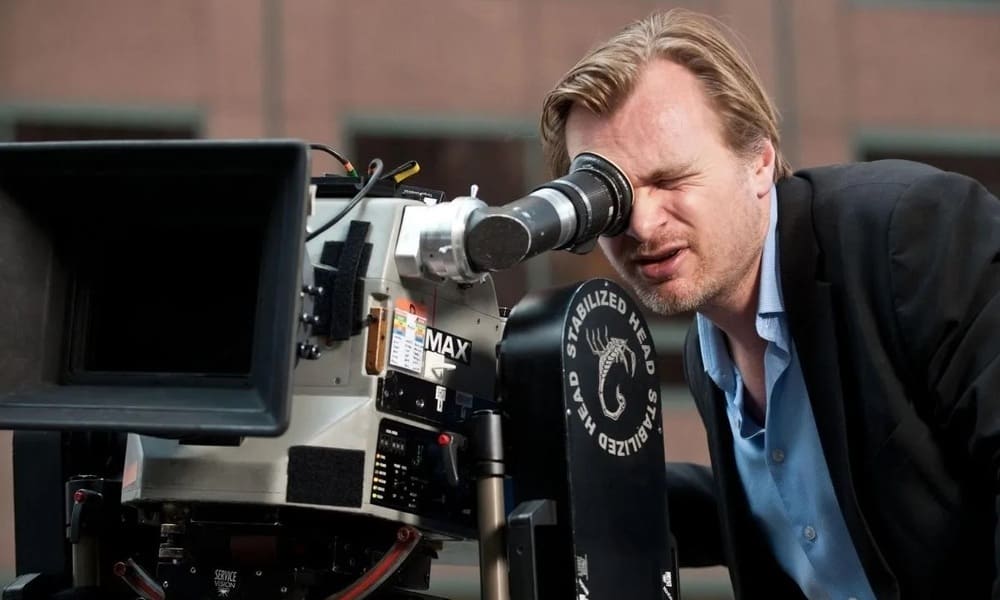
Christopher Nolan argues that Gen Z is rejecting AI in cinema. But four children and two Western success stories do not represent a global audience.
The director observed his own children’s reactions, cited two young filmmakers who emerged within the English-speaking ecosystem, and turned these elements into a generational diagnosis: Gen Z is supposedly “utterly rejecting” generative artificial intelligence.
As he prepares to take audiences on a new IMAX-format Odyssey, Christopher Nolan looks confidently towards a cinematic future still grounded in physical production processes, practical effects and images perceived as authentic. To support his argument, he points to his four children’s “immediate and harsh” judgement of “AI slop”, claiming that young people can quickly identify artificial content precisely because they have grown up within the digital environment that produced it.
The statement clearly echoes Nolan’s longstanding “luxury cinema” policy. His films present expensive, rare and geographically limited formats such as 70mm IMAX as the ideal viewing experience: technically extraordinary conditions, but accessible only to a select portion of the audience. Authentic cinema therefore comes to coincide with cinema experienced under the privileged conditions Nolan himself helps define, except when he welcomes into the canon certain “outstanding works” already validated by commercial success, once even Spielberg is ready to invest in them.
Nolan Talks About Gen Z, but Describes a Very Specific Part of It
The young people evoked by the director are primarily Western, culturally privileged, immersed in American cinema, English-language platforms and a new form of cinephilia shaped on YouTube.
Kane Parsons and Curry Barker did not emerge from an analogue school that miraculously survived modernity; they are children of the algorithm: digital editing, collaborative folklore, online communities, accessible software and audiences built before they ever entered cinemas. Parsons and Barker may prefer practical effects and reject generative AI in their own work, but their careers demonstrate precisely how new filmmakers can develop through technologies and routes outside Hollywood’s traditional pathways.
The phrase “AI slop” also places technology, mediocrity and industrial immaturity in the same category, treating poor results as an inherent property of the tool. Yet recognising an ugly, artificial-looking video should not be the same as rejecting every language that may emerge from generative artificial intelligence.
The figures ultimately reveal a reality far less elegant than Nolan’s diagnosis: in the United States, 40% of Gen Z follow at least one AI-generated influencer, while 44% say that the creators they follow use artificial intelligence in their content at least occasionally. These numbers do not prove enthusiasm for generative cinema, but they describe an audience that is already exposed, engaged and far less inclined to “utterly reject” AI-generated content than Nolan’s rhetoric suggests.
Outside Hollywood, AI Cinema Has Already Begun
In India, artificial intelligence is already transforming production, dubbing and distribution in practical ways. Studios are using it to create entirely synthetic works, adapt existing films and distribute content in the country’s many languages. Mahabharat: Ek Dharmayudh, for example, surpassed 26.5 million views despite disastrous reviews: an enormous popular success accompanied by critical contempt, and therefore perfectly aligned with the finest Hollywood tradition.
The difference is that, unlike recycled franchises and intellectual properties exploited to exhaustion, “AI slop” is being watched, financed and improved at remarkable speed. Millions of young Gen Z viewers are already encountering these languages without passing through Western cinephilia, A24 or videos explaining David Lynch.
In China, vertical microdramas born on digital platforms already reach hundreds of millions of viewers and are beginning to integrate synthetic actors, automated dubbing and video-generation tools. Almost half of China’s population watches at least one microdrama, while some companies are planning to replace a significant portion of performers with AI in productions intended for the domestic market. Once again, the point is not the current quality of the results, but the speed at which a new audiovisual language is being normalised before an enormous audience.
And it will be precisely these audiences, despite Nolan, Hollywood and YouTube, that define cinema in the years ahead: young, numerous and already accustomed to fluid, hybrid and global forms of consumption, in which cinemas, smartphones, platforms and synthetic images are not moral hierarchies, but tools belonging to the same collective imagination.
The new luxury will no longer be monumental production but, to quote Inception, the idea: one capable of taking root, growing and transforming the language itself. Just like The Backrooms and Obsession: stories born quietly, ignored or marginalised, until the industry eventually absorbs, finances and consecrates them. Always too late.