Now Reading: The Hunted: Wachowski Accuses Hollywood as All-Trans Cast Becomes a Risk
-
01
The Hunted: Wachowski Accuses Hollywood as All-Trans Cast Becomes a Risk

Lilly Wachowski says Hollywood likes the screenplay for The Hunted but does not want to finance a $10 million thriller with an entirely trans cast.
Lilly Wachowski says Hollywood likes the screenplay for The Hunted but does not want to finance a $10 million thriller with an entirely trans cast.
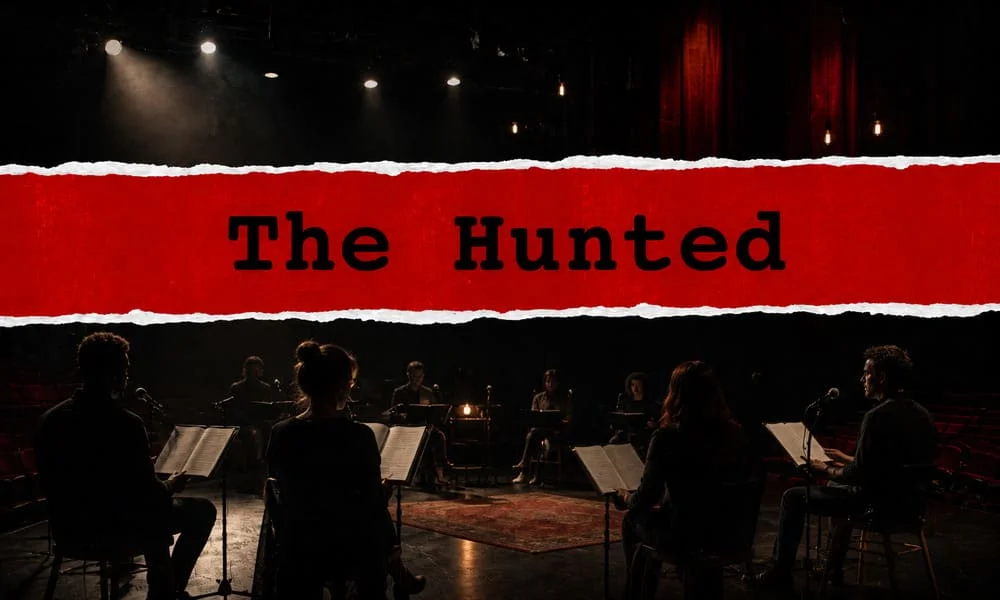
When we first wrote about The Hunted, the project by Lilly Wachowski and Mickey R. Mahoney was still mostly a curious cinematic object without an actual film attached to it: a dystopian thriller in development, also produced with the involvement of Natasha Lyonne, set to receive public readings at the Dynasty Typewriter in Los Angeles.
The readings took place on August 7 and 8, and just a few days later it became clearer why Wachowski had chosen to bring the screenplay directly in front of an audience: the film cannot find the money to get made.
Speaking on KCRW’s The Business podcast, Wachowski explained that people in Hollywood supposedly like the script, but that their enthusiasm stops at the prospect of an entirely trans cast. “People like it,” the director summed up, adding that nobody actually wants to produce a project that is wall-to-wall trans.
Ten Million Is Not Matrix Money, but Hollywood Is Taking Fewer Risks
The Hunted is conceived as a film costing around $10 million, a tiny figure compared with the production machinery behind The Matrix, but hardly insignificant in independent cinema. That is precisely the range in which Anarchists United wants to operate, the nonprofit arts organization run by Wachowski together with Lawrence Mattis and Sarah Marie Flores: the goal is to produce smart genre movies for under $10 million and build a system less dependent on the studios.
The Cannes Marché du Film was described as a market rich in productions in the $10 million to $15 million range, although often supported by European financing models, while American studios are becoming increasingly risk-averse and concentrating on fewer films with broader potential audiences.
Nor was The Hunted designed to be harmless: it depicts a dystopian America in which trans people are brutalized and pushed to the margins of society, while two women follow the trail of a crime all the way to the highest levels of government. Wachowski sees it as a response to the contemporary condition of trans people and has said she poured anger, frustration and outrage into the screenplay.
A political thriller, no familiar intellectual property and no star automatically useful for international presales: from a financier’s perspective, the risks exist even without invoking discrimination.
Can Hollywood Say Trans Actors Do Not Sell After Never Giving Them the Chance to Sell?
This is where the economic alibi begins to go in circles.
The GLAAD report on films released in 2025 analyzed 225 films from ten major distributors, including Disney, Warner Bros. Discovery, Universal, Paramount, Sony, Netflix, Amazon and Apple. Only 46 titles, or 20.4%, included LGBTQ characters and, according to the reported data, not a single transgender character appeared across those 225 films.
An actor becomes “bankable” by accumulating major roles, audiences, international recognition and a commercial track record; if those opportunities are rarely offered, their lack of bankability can then be presented as a natural fact of the market.
The case of Elliot Page, however, shows that even recognizability does not necessarily eliminate the problem: Page’s appearance in Christopher Nolan’s The Odyssey fueled months of controversy over the casting, amplified by conservative commentators and even by the false rumor that Page would be playing Achilles. Page actually plays Sinon, but the controversy survived the correction, to the point that even Ben Shapiro called the casting “silly and egregious.”
In recent years, moreover, some major productions have reduced or removed LGBTQ content during development. Pixar cut a reference to a character’s transgender identity from Win or Lose; in 2026, chief creative officer Pete Docter also confirmed that the extensive overhaul of Elio removed queer elements present in an earlier version after audience testing produced results the studio considered insufficient.
The Accusation Is Also a Strategy for Making the Film Exist
The paradox is fairly obvious: Hollywood would have to create trans performers recognizable enough to reduce commercial risk, but when one of them enters one of the safest blockbusters of the year, their very presence can become the risk being debated. The market therefore measures the commercial appeal of performers whom that same market has given very few opportunities to become commercially appealing.
There is, however, one element that should not be ignored: Wachowski is publicly using the film’s financing problem to generate attention around The Hunted. The Dynasty Typewriter reading transformed a screenplay that might otherwise have remained on producers’ and agents’ computers into an event, then into an interview, and finally into an international news story.
The film has not yet found its $10 million, but it has already found a public identity.
That, however, does not make the accusation disingenuous. Wachowski herself has explained that she wants to find different forms for putting the work in front of people: the reading becomes at once a creative act, a community gesture and pressure on the market. For an organization trying to build a system independent of the studios, publicly showing what the studios refuse to finance is already part of the production strategy.
The Real Risk of The Hunted Cannot Be Measured Yet
There is one final thing that no source allows us to establish: how good the screenplay actually is.
There are no reviews of the film, no test-screening data are available, and the claim that Hollywood insiders like the script comes from Wachowski herself. It would therefore be simplistic either to treat it as a masterpiece being suffocated by fear or to argue that the director is using the trans issue to disguise a weak project.
The point, then, is not to determine whether every producer who passed on the project is transphobic. Mainstream American cinema gives trans performers a microscopic amount of space, while a $10 million film wants to put those same performers at the center of a political thriller without the safety net of a franchise. Wachowski clearly has an interest in turning that contradiction into a public story; the industry, however, has spent years making sure that contradiction genuinely exists.
The Hunted still has to become a film.
The system that considers it risky, on the other hand, is already fully in production.