Now Reading: The Internet’s Horror Pleni: When Too Much Information Becomes Noise
-
01
The Internet’s Horror Pleni: When Too Much Information Becomes Noise

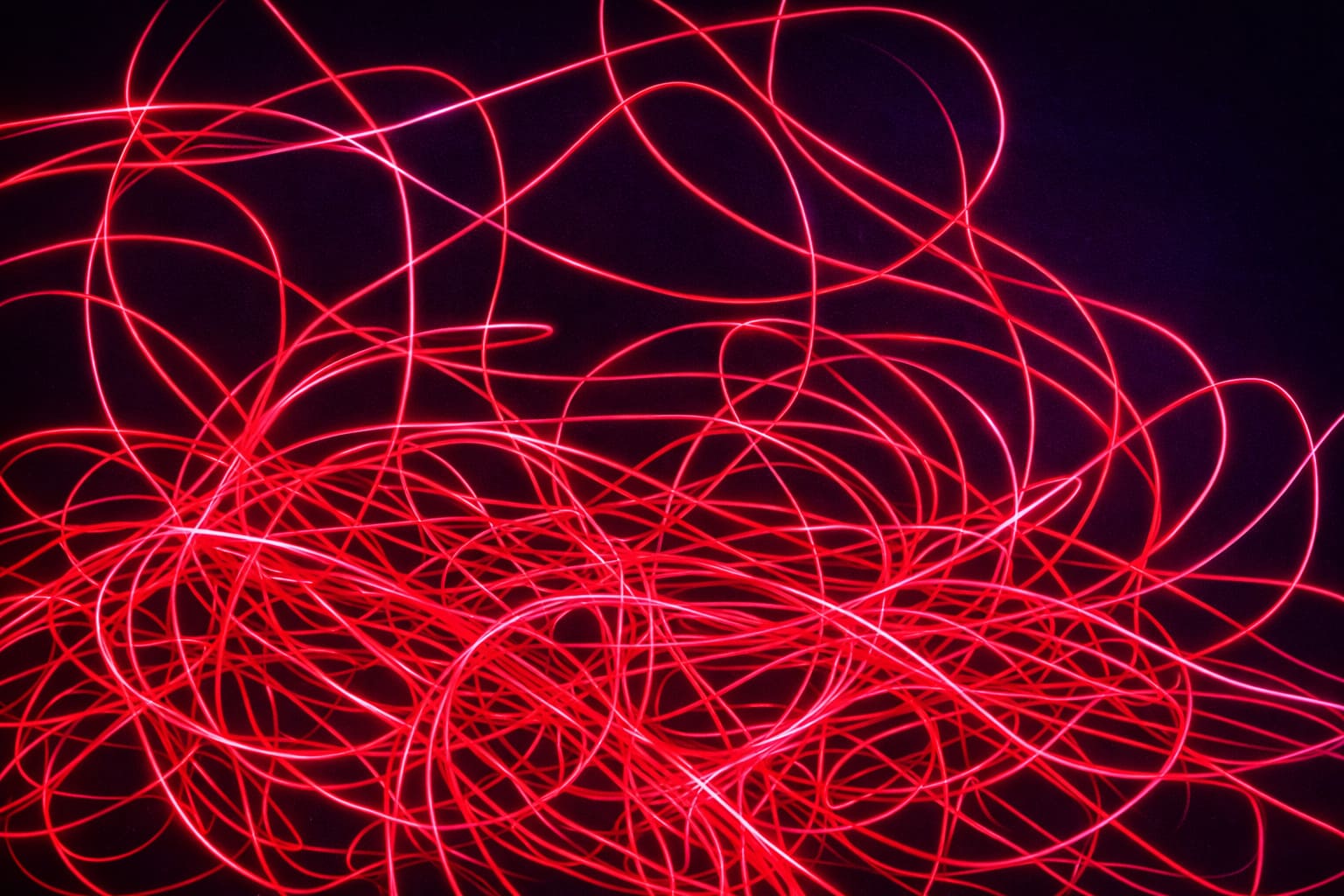
The internet produces more information than ever before. Information overload, anticipated by Gillo Dorfles in Horror Pleni, is changing the way we understand the world.
We live in the age with more information than any other period in human history. Every day, we scroll through hundreds of pieces of content: articles, videos, posts, podcasts and notifications. The internet promised us unlimited access to knowledge. And, in part, it kept that promise. The problem is that this abundance has created an unexpected effect: the more information we have, the less capable we seem to be of understanding the world. This is what we now call information overload. But the phenomenon is not entirely new.
Decades before the arrival of the internet, an Italian intellectual had already described something very similar. In 2008, the philosopher and art critic Gillo Dorfles (1910–2018) published an essay that would become widely known: Horror Pleni: The (Un)civilisation of Noise. The Latin expression literally means “horror of fullness”. Dorfles observed how contemporary culture was filling every available space with images, objects, sounds and messages. According to Dorfles, the problem was no longer emptiness. The problem was excess. At the time, he was writing about advertising, television and mass culture. Today, that concept seems to describe the internet’s information ecosystem perfectly.
From Emptiness to Overload
For much of human history, the main problem concerning information was scarcity. Books were rare, access to knowledge was limited and news travelled slowly. The internet completely reversed this balance. Today, the problem is not finding information. The problem is selecting it. Every minute, millions of pieces of digital content are published: posts, articles, videos, comments and images generated by artificial intelligence. This continuous flow creates a condition very similar to the one described by Dorfles: a world saturated with stimuli. A world in which the space available for reflection and understanding continues to shrink.
The Horror Pleni of Information
In Horror Pleni, Dorfles described a culture dominated by an overabundance of signs and images. According to the philosopher, when everything becomes communication, communication itself risks losing its meaning. This principle has become even more evident in the digital age. The internet is not only a gigantic library. It is also a machine that continuously produces content. Every user can become a producer of information. Every platform encourages constant publication. The result is an information environment that never stops expanding. This phenomenon is closely connected to the functioning of the attention economy, in which platforms and content compete to capture our time.
The Human Brain Was Not Designed for the Internet
Our brains evolved in an environment very different from the digital one. For thousands of years, human beings had to process a limited amount of information from their immediate surroundings. The internet has multiplied that amount exponentially. When we are exposed to too much information, the brain uses cognitive shortcuts to decide what to believe.
- we tend to trust information that confirms our existing opinions
- we pay more attention to emotional content
- we quickly discard anything that requires too much time to understand
These mechanisms are natural. The problem is that the digital ecosystem amplifies them.
Algorithms and Information Selection
Social networks do not present content chronologically or according to its importance. Algorithms select content according to how likely it is to generate engagement. Comments, shares and viewing time. In other words, the algorithm does not ask whether a piece of content is useful or accurate. It asks whether it will capture our attention. This is one of the reasons why emotional or controversial content tends to go viral. To understand this mechanism more clearly, it is useful to read the analysis of how social-media algorithms work. Over time, these systems create personalised feeds that reinforce our preferences and reduce our exposure to different points of view. This is the phenomenon known as the filter bubble.
The Information Paradox
The result of these dynamics is a curious paradox. We live in an age with more information available than ever before… yet our understanding of reality is often more fragmented. The internet does not organise information coherently. Content is presented as isolated fragments: posts, tweets and videos lasting only a few seconds. This kind of information consumption makes it difficult to build a complete understanding of complex phenomena. It is no coincidence that many users feel the internet is becoming increasingly confused, as explored in our article on why the internet seems to be getting increasingly stupid.
When Information Becomes Noise
The danger of information overload is not merely confusion. The danger is that information itself loses value. When we are exposed to hundreds of pieces of content every minute, our attention becomes increasingly fragmented. And when everything becomes communication, nothing can truly stand out. This is precisely the kind of scenario Dorfles imagined through the concept of horror pleni. The internet has made knowledge accessible to everyone. But it has also created a new form of cultural overload.