Now Reading: Paramount-Warner: Memory Is Left Out of the Guarantees
-
01
Paramount-Warner: Memory Is Left Out of the Guarantees

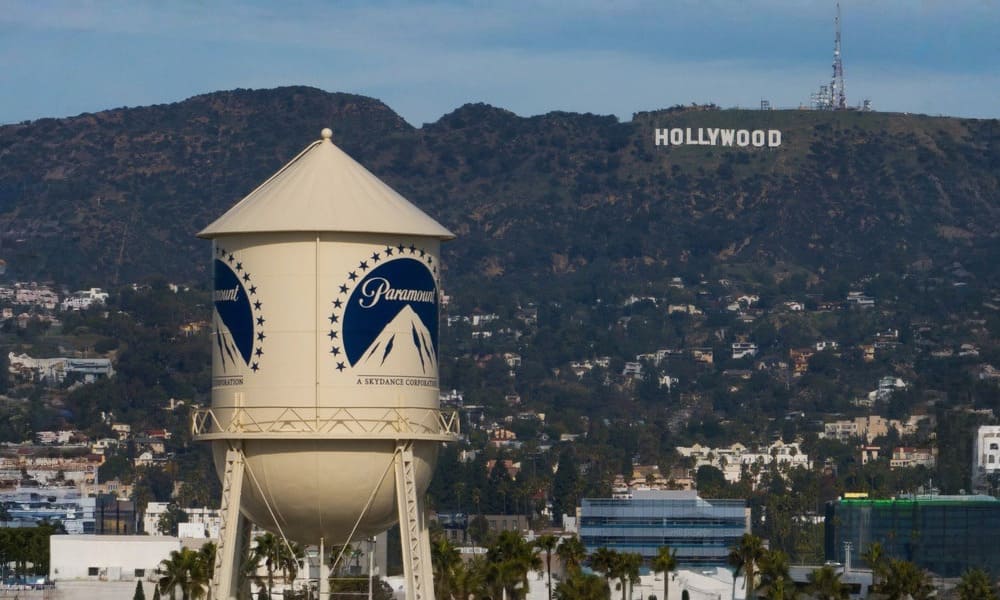
The Paramount-Warner merger would bring the CNN and CBS archives under a single owner. For documentary filmmakers, the issue is not only preserving them, but being able to use them.
The Paramount-Warner merger would bring the CNN and CBS archives under a single owner. For documentary filmmakers, the issue is not only preserving them, but being able to use them.
Four million images, reports and pieces of material collected by CNN over roughly 45 years; on the other side, 85 years of CBS News archives, including unaired footage, outtakes and B-roll. If Paramount Skydance’s acquisition of Warner Bros. Discovery were completed, these two collections would come under the same owner for the first time.
That is the issue raised by an IndieWire investigation and, before that, by the Archival Producers Alliance: the concentration is not only about studios, platforms and television networks, but also about the material documentaries use to reconstruct what has already happened.
The Alliance, which represents more than 650 industry professionals, has taken the issue as far as the British government. The paradox is simple: an archive can be perfectly preserved and still become unusable. To show even a fragment of it in a film requires a license, and that license depends on the owner.
An Archive Exists Only as Long as Someone Grants the License
Reuters reported a particularly revealing precedent: a filmmaker was denied access to war footage he had previously used because, at that moment, the United States was involved in a conflict and the images showed soldiers “in a bad light.” The filmmaker’s name was not disclosed, but the case makes the mechanism clear. The footage had not disappeared; it had become unavailable because of a decision by its owner.
Nor would this be an isolated precedent. In 2019, Disney, owner of ABC News, introduced a policy reserving the ability to license the network’s reports, reporters and anchors to outlets within the group. According to the Archival Producers Alliance’s account published by Poynter, the rule was later withdrawn, but in the meantime several documentaries were denied material. For a story about 9/11, for example, a clip of Peter Jennings could physically exist in ABC’s archive and still be unavailable to an independent producer.
This is where four million assets stop being a catalogue figure. British documentary filmmakers can use the BBC and local archives, but for wars, U.S. elections, civil rights and international politics they repeatedly rely on images from American networks. In some cases, there is no second camera from which the same scene can be licensed.
London Protected the Newsrooms, Not Access to Memory
The British government had initially threatened to intervene in the merger on pluralism grounds. On August 6, it then cleared the deal after securing binding commitments on editorial independence, Channel 5, children’s programming, separation between linear channels and streaming, and £80 million in new investment. In the guarantees made public, however, there is no equivalent protection for access to the archives.
The distinction matters more than it may seem. Protecting the independence of CNN or CBS means debating who decides today’s news; protecting archive licensing means deciding who will be able to show yesterday’s images tomorrow. It is a layer of the merger debate — already shaped by cuts, competition and editorial control, as reconstructed in our previous analysis — that had only just begun to become visible.
For now, the risk remains conditional: the deal is blocked in the United States while a lawsuit brought by twelve states moves forward, and Paramount has even listed a possible sale of CNN among the options on the table. The ownership structure of the archives, therefore, could still change. But the problem raised by documentary filmmakers remains intact: television memory does not need to be erased in order to disappear from a film. It is enough for someone, when the licensing request arrives, to say no.