Now Reading: Donnie Darko: The Sequel Begins as an 800-Page Novel
-
01
Donnie Darko: The Sequel Begins as an 800-Page Novel

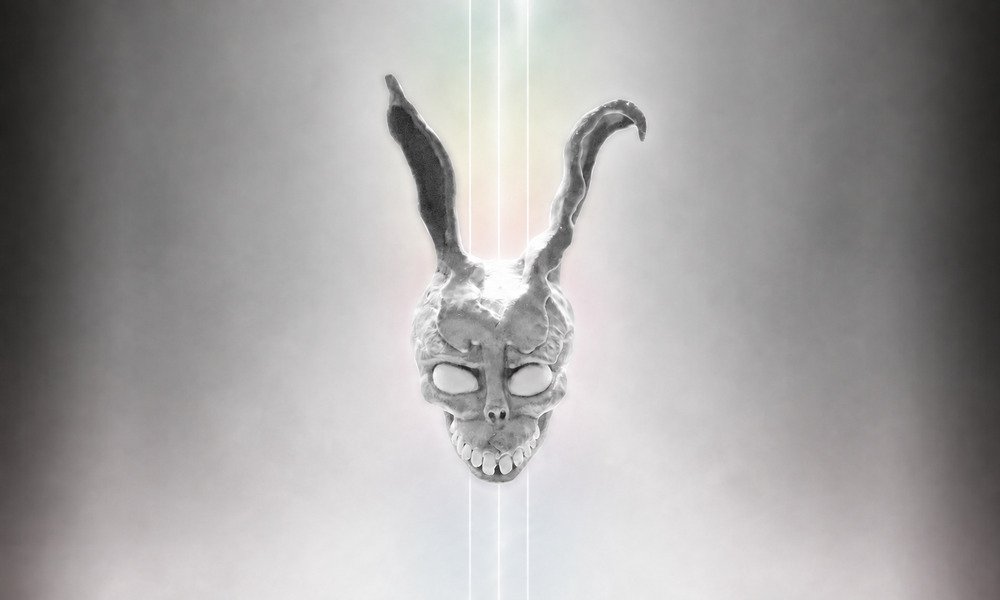
Richard Kelly is continuing Donnie Darko with The Philosophy of Time Travel, an 800-page novel designed to stand alone and potentially open the way to multiple films.
Richard Kelly is turning the sequel to Donnie Darko into a monster-sized novel, designed both to stand on its own and to convince Hollywood to finance multiple films.
Donnie Darko will finally have a continuation written by its creator, but before it can return to the screen it will first have to pass through another narrative universe. Richard Kelly will publish The Philosophy of Time Travel in the fourth quarter of 2026, an approximately 800-page novel written over the course of ten years and set in 1988, in the months immediately following Donnie’s death.
The release will coincide with the twenty-fifth anniversary of the film, which opened in U.S. theaters on October 26, 2001; preorders are already open, while the exact publication date has yet to be announced.
The book will be the first novel published by Range Literary Publishing and, above all, the first Donnie Darko sequel conceived by Kelly: a self-contained work and the narrative project with which he intends to present actors, audiences and financiers with a much larger cinematic saga.
The sequel begins where the film erases itself
The 2001 ending closed the tangent universe and returned reality to the moment when a jet engine crashed into Donnie’s bedroom. The new novel begins again from the surviving timeline and follows Rose and Eddie Darko as they try to understand why their son died and what remains of the collective experience lived, like a dream, during the twenty-eight erased days.
Kelly has chosen the form of an apocryphal archive, alternating documents, testimonies and the parents’ separate investigations, while the publishing synopsis already circulating in catalogs adds government transcripts, recorded conversations and early email communications, with Rose and Eddie drawn into a conspiracy involving the FBI, the FAA, USC academics and the Mojave Desert.
The cosmic scale therefore passes through an almost bureaucratic grammar: files, surveillance, impossible objects and a substance described as “celestial fluid.” The characters remember fragments of the tangent universe, try to piece them together and eventually create a support group that gradually takes on the characteristics of a cult; moreover, figures shown as monstrous or guilty in the film may not be so in the primary reality, yet they still have to process the actions they committed inside that shared dream.
The sequel therefore turns the characters into the first exegetes of Donnie Darko, forcing them to perform the same interpretive work audiences have been doing for twenty-five years.
The Philosophy of Time Travel was already the fictional book written by Roberta Sparrow, “Grandma Death,” which in the film gives Donnie the vocabulary of the tangent universe, the Living Receiver and the Manipulated Dead; several fragments of the text attributed to Sparrow were part of the film’s expanded material and were later incorporated more explicitly into the Director’s Cut.
In 2003, The Donnie Darko Book had already collected the screenplay, an interview with Kelly and facsimile pages from the imaginary manual. Now that small gospel inside the film gives its name to an enormous novel in which it appears, in turn, as a forbidden book capable of predicting its own discovery: more than a simple callback for fans, it is an editorial paradox perfectly consistent with the material.
An eight-hundred-page tangent universe
Kelly imagines the project in two movements. The part of the story told in the novel, set in the months after Donnie’s death, is intended to become an animated film made in part with motion capture; the following phase would instead jump forward by roughly twenty-eight years, to 2015–2016 and beyond, continuing in live action with new characters and, if available, members of the original cast. The director says he has remained in contact with the cast, but has not yet formally presented the project to them: the return of Jake Gyllenhaal, Jena Malone, Drew Barrymore and Maggie Gyllenhaal therefore remains unconfirmed.
What makes the passage from imagination to production so long is not only the scale of the project, but also the question of rights. In 2009, S. Darko, directed by Chris Fisher and centered on Samantha, again played by Daveigh Chase, was released directly to the home-video market; Kelly was not involved and later explained that he had sold the underlying rights when he was twenty-four. The existence of S. Darko therefore prevents the new volume from being presented as the first sequel in absolute terms, but The Philosophy of Time Travel will be the first continuation written by the creator of the original.
As early as 2017 Kelly described his sequel as large, ambitious and expensive; in 2021 he said he had written a substantial portion of it, encouraged in part by James Cameron, who had asked him to explain the fate of the characters and urged him not to abandon the idea. Turning to publishing to contain a story too expansive for the screen alone is, after all, not new to Kelly’s method. Southland Tales was conceived as the second half of a six-chapter narrative, preceded by three graphic novels tasked with telling the first three.
The strategy also has an industrial logic particularly well suited to an intellectual property born as a commercial anomaly. Donnie Darko was an extraordinarily difficult film to sell: after Sundance it struggled to find a distributor, while the image of a jet engine crashing onto a house was almost impossible to market only weeks after September 11. Its modest initial U.S. performance was not really recovered at the box office, but overturned culturally by the British release, word of mouth and home video, which transformed a failure into one of the most recognizable cult films of the 2000s.
In 2026, Range is trying to convert that late-blooming cult status into preorders, measurable readership and an intellectual property already structured for adaptation. The novel therefore becomes sequel, audience test and production dossier at the same time, a combination that reduces risk without pretending the filmmaking machine is already in motion.
For a story built around the conflict between fate and free will, the provisional conclusion carries an interesting structural irony: Kelly has designed the trajectory, but readers, actors, rights holders and financiers will decide whether these eight hundred pages remain a paper tangent universe or become the primary reality of the next Donnie Darko.