Now Reading: Paul Walker, Fast Forever and the Point Where a Character Outlives the Actor
-
01
Paul Walker, Fast Forever and the Point Where a Character Outlives the Actor

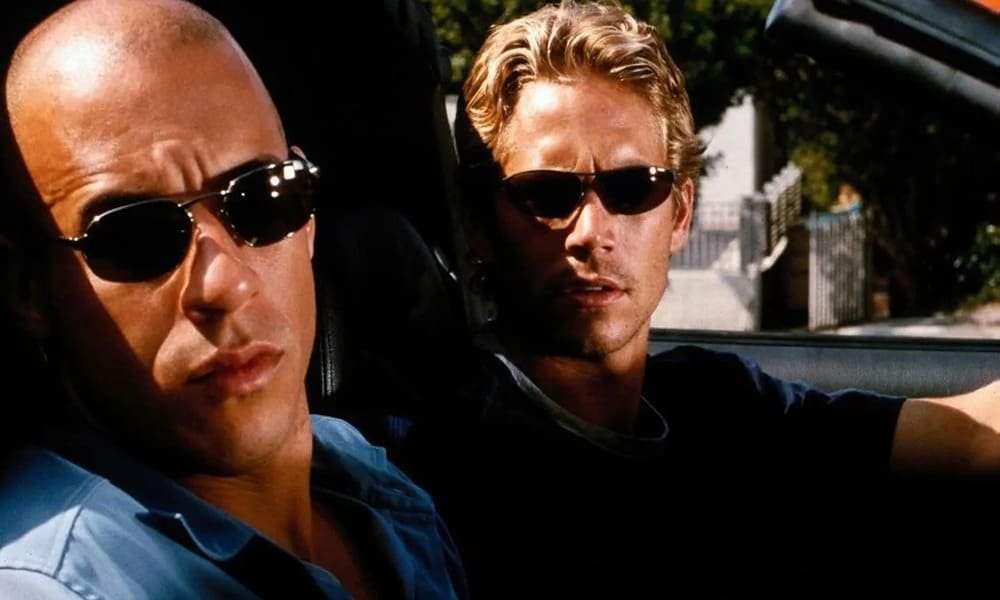
AI could make another Paul Walker appearance technically possible in Fast Forever. The harder question is who has the right to authorize a new performance.
Today, posthumous performance no longer serves only to complete a film: it becomes news in itself, a commercial attraction and a promotional tool.
After Val Kilmer was recreated with artificial intelligence for As Deep As the Grave, Ian Holm was brought back into the Alien universe, Harold Ramis was reconstructed for Ghostbusters: Afterlife and Peter Cushing was digitally resurrected in Rogue One, precedents are accumulating in Hollywood quickly enough to make the technical question almost secondary.
Paul Walker had already been brought back to the screen after his death to complete Furious 7, using his brothers Cody and Caleb as body doubles and visual effects to reconstruct his face. Eleven years later, Cody Walker explains that even that probably would no longer be necessary: between AI and years of unused material, Universal would have enough tools to bring Brian O’Conner back in Fast Forever without him.
The film is scheduled for March 17, 2028 and is expected to close a saga that began in 2001 with truck robberies and illegal street racing and has since surpassed $7 billion at the worldwide box office.
Who gets to decide whether Paul Walker returns?
Cody removes himself from the decision and essentially entrusts the boundary between tribute and digital resurrection to Meadow Walker, Paul’s daughter.
In 2015, the production of Furious 7 had already faced a problem that today seems to belong to another technological era. After Walker’s death, Caleb and Cody were used as body doubles, while visual effects made it possible to complete the missing sequences and turn a production impossibility into a narrative solution: Brian O’Conner did not die, he simply left the story. The film was therefore able to end the character’s presence without erasing it.
Even the celebration of the saga’s twenty-fifth anniversary at Cannes had managed to keep Paul Walker inside the memory of the franchise without pretending that he was still available for another scene.
With AI, even death risks becoming a contractual pause
As early as 2025, Vin Diesel had listed the return of Brian O’Conner among the elements imagined for the concluding chapter of the saga: Los Angeles, street racing and, above all, a new reunion between Brian and Dominic Toretto. Diesel has recently described the screenplay for Fast Forever as one of the best he has read in decades, saying it left him deeply emotional.
The question is no longer whether Universal can bring Brian back to the screen, but what kind of new performance that would be. Paul Walker would not be providing a new interpretation: his face, voice, archive and synthesis technologies would be used to construct one in his place. This is where the cinematic character begins to separate from the performer, to the point where it can continue to exist and act without him.
For studios, that means being able to extend the value of a franchise over time; for families, heirs and performers, it means defining how far the exploitation of an artistic identity can go. Fast Forever could become one of the first blockbusters to demonstrate that, with AI, this discussion no longer necessarily ends with the closing credits.