Now Reading: IMAX for sale: will streaming absorb the movie theater?
-
01
IMAX for sale: will streaming absorb the movie theater?

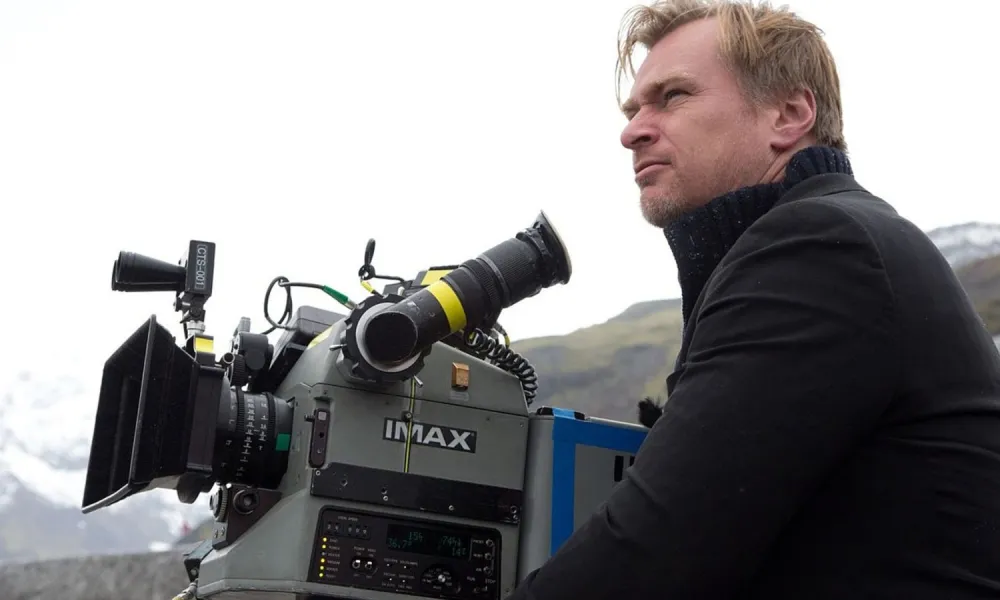
IMAX is considering a possible sale: between streaming, Big Tech and premium cinema, the big screen becomes the last infrastructure to conquer.
IMAX, short for Image MAXimum, is a proprietary ultra-high-resolution cinematic projection system that brings together cameras, shooting formats, projectors, theater geometry, sound and control of the viewing experience. Today, IMAX counts 1,865 systems worldwide, distributed across 91 countries and territories.
The news, first reported by The Wall Street Journal, concerns preliminary talks with potential buyers in the entertainment world, with no certainty that any deal will actually happen. But the mere possibility is enough to open up a huge question: who can buy the big screen today?
IMAX: premium cinema attracts Wall Street
IMAX is one of the last brands still capable of selling the idea of cinema as a physical event.
Not just a film, but a bigger theater, more powerful sound, a more immersive image, a more expensive ticket and an implicit promise: it is truly worth leaving the house.
Among the names mentioned by analysts are Netflix, Apple, private equity firms and other possible players in the entertainment market. The paradox is that IMAX appears buyable precisely while Hollywood is desperately trying to convince audiences that the movie theater still has value in itself.
In recent years, streaming has turned film into content: endlessly available, archivable, domestic, ready to be paused and resumed at will. IMAX works on a different promise: the ritual of going out, the enormous screen, technology as physical experience, anticipation built around an appointment. And in a cinema increasingly reduced to a catalogue, premium theatrical remains one of the few formulas still capable of feeling alive, present and necessary.
If a platform buys IMAX, it also buys the ritual of the theater
If a group such as Apple, Netflix or Amazon were really to enter the race, the meaning would be clear: after bringing cinema into the home, platforms might also want to control its most vivid experience.
For years, people said that streaming would kill the movie theater. Now the premium theater could become an asset to be integrated into streaming strategy: event premieres, original films in giant format, limited releases, hybrid subscriptions, exclusive experiences, perhaps even sports or immersive content.
IMAX expects a record $1.4 billion in global box office from its locations in 2026. This is the figure that explains everything: while traditional theaters struggle to regain centrality, the event format continues to produce what Hollywood and Wall Street want to see — readable numbers, steerable demand, monetizable value.
The cultural question before the financial one
The IMAX case comes at a moment when Hollywood seems to be dismantled piece by piece: infrastructures, archives, studios, platforms, television networks, libraries and franchises are all being reassigned.
Paramount Skydance is trying to close its acquisition of Warner Bros. Discovery; Comcast has already separated much of its cable network business into Versant; Lionsgate and Starz have once again become two autonomous companies; while Disney has completed its control of Hulu and is pushing ESPN beyond the pay-TV enclosure, turning sports, streaming and parks into a single monetization system.
Meanwhile, Netflix has already tried to get its hands on Warner’s studio and streaming assets; Amazon MGM is promising at least fifteen theatrical releases a year; Apple is using cinema and Formula 1 as a premium lever; YouTube, Netflix and Amazon are occupying advertising upfronts and sports rights for the NBA, NFL and WWE, becoming the new emotional infrastructure on which to build subscriptions, data and advertising.
The old linear channels, sports rights, historic catalogues, studios, premium theaters and event formats remain the last assets to isolate, refinance, merge or sell. IMAX may be the most symbolic piece left on the table of this dismantling.
After surviving streaming, does the big screen now risk becoming its spearhead?