Now Reading: Nolan, IMAX and the politics of the luxury theater
-
01
Nolan, IMAX and the politics of the luxury theater


Christopher Nolan turns The Odyssey into a political case:IMAX, AI, the DGA, the Academy and the future of movie theaters inside a new hierarchy of event cinema
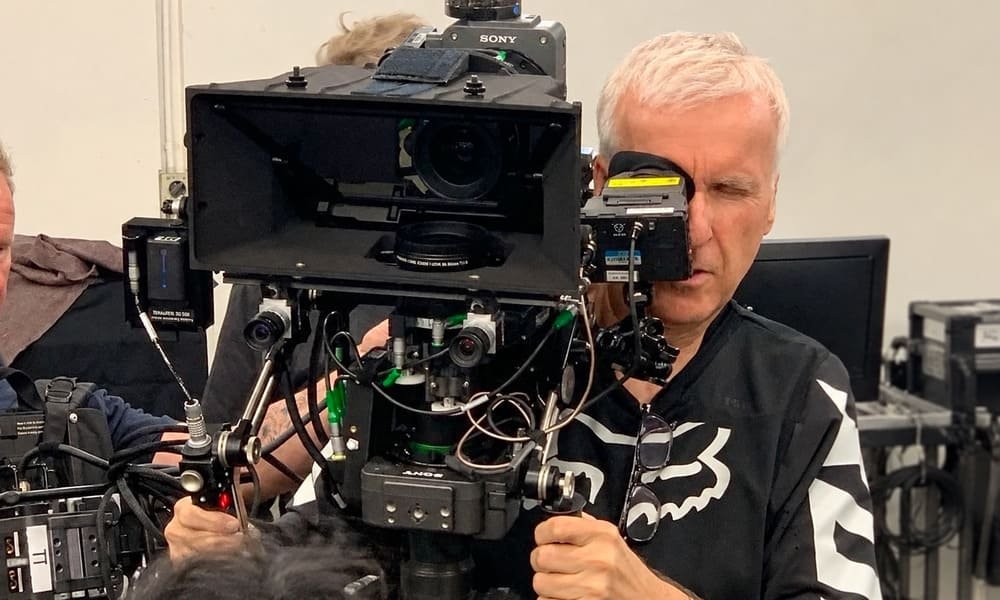
Christopher Nolan is fighting artificial intelligence with a camera. Not just any camera: a huge, noisy, expensive, almost unmanageable IMAX camera. A technology that makes cinema so heavy, physical, localized and difficult to copy that it becomes a declaration of war against replaceability.
Nolan is also now president of the Directors Guild of America and leads the DGA’s committee on artificial intelligence. For this reason, The Odyssey, shot entirely in IMAX, should also be read as a political gesture. It is the film with which one of the most powerful directors in the world responds to the idea that the image can become a synthetic, cheap, generatable, compressible product.
Big Tech promises audiences without blockbusters, AI promises images without sets, streaming promises cinema without theaters. Nolan responds with a film that needs heavy machines, crews, actors, film stock, noise, logistics, oceans, special theaters and premium tickets.
IMAX as an analog fortress, the theater as a premium ritual
The central point for the DGA is to prevent creative work from being delegated to a generative system treated as invisible labor. The Odyssey seems built exactly against that logic: an ancient poem, enormous sets, physical actors, authentic costumes, shoots in different countries, film stock, IMAX cameras adapted even for dialogue scenes. Everything pushes in the opposite direction from AI’s promise of efficiency and optimization.
In short, the line is that cinema, in order to exist as cinema, must still occupy space. It must have weight. It must cost. It must require people. But here a contradiction emerges: Nolan defends the theater, while IMAX creates a hierarchical theater. Not all screenings are worth the same, not all viewers will have access to the same experience, not all cinemas will be able to offer the “right” format.
To have a superior and technically certified experience, to see the true cinematic masterpiece, access is required to a physical platform that remains scarcely accessible.
In other words, preferably a luxury theater, an Oscar-worthy theater.
It is no coincidence that, precisely now, the Academy -after definitively closing the door on the idea of an Oscar for AI actors – has created the Academy Marquee Theater List, a global recognition dedicated to truly “exceptional” movie theaters. In 2027, for the institution’s centennial, 50 cinemas will be selected: 25 in the United States and 25 in the rest of the world, all deemed worthy of this new form of consecration.
Even Disney has launched Infinity Vision, a premium certification for theaters with large screens, laser projection and advanced sound: a real race to certify the experience. The theater is no longer the natural background of cinema, but an asset to be certified, classified and displayed. It is hardly surprising, then, that IMAX is trying to understand who the highest bidder might be, because when a technology becomes the symbol of the theater’s survival, it is at the very least a strategic asset.
This creates an intrinsic ambiguity for Nolan: a director who uses IMAX to defend cinema from digital dematerialization, while that very defense makes IMAX more attractive to the entities that have transformed every cultural form into infrastructure, subscription, ecosystem and controlled access; platforms that have the power to create audiences, measure them, retain them, monetize them and, when necessary, bring them back into theaters too.
What remains to be understood, then, is which theater will prove it still deserves cinema, and above all, who will own it.