Now Reading: George Miller and AI: Will Lived Experience Become Optional?
-
01
George Miller and AI: Will Lived Experience Become Optional?

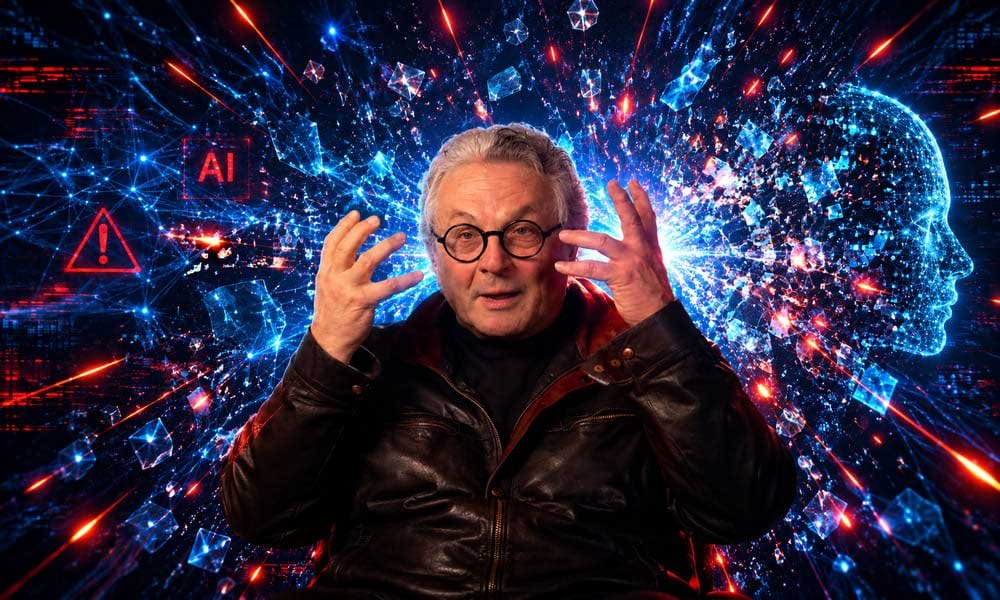
George Miller says AI can imitate human experience without living it. The harder question is whether the film industry will still consider lived experience worth paying for.
George Miller and AI raise a less reassuring question than whether machines can make movies: will lived experience remain a necessary part of creation, or become an expensive intermediate step between raw material and the finished result?
The Mad Max director, speaking in Sydney at the launch of Tropfest 2027, identified an obvious limit of artificial intelligence: it can imitate human experience, but it cannot live it. He did not turn that observation into a comforting declaration of human superiority. On the contrary, Miller sees AI as a tool capable of lowering costs, widening access to production and putting resources once reserved for a few into many more hands.
Cinema has always been an art of simulation: deaths reversed after the cut, romances manufactured in the edit, impossible worlds made credible by framing and performance. AI can now appropriate that repertoire, reproducing forms and emotional codes without needing the experience from which they originally emerged. Humanity keeps its sentimental archive. What remains uncertain is how much that archive matters to the person approving the budget.
Furiosa: two actresses, one face built through AI
Miller and AI already have an almost pioneering precedent. In 2024, Furiosa used machine-learning techniques to blend features of Anya Taylor-Joy with those of Alyla Browne, who played the younger Furiosa, while preserving Browne’s performance. Taylor-Joy later described the proportion of her facial traits as increasing as the character approached adulthood.
The result still depended on actors and technicians. That collaboration is precisely what Miller has previously described as difficult to reproduce in its specificity. A character can inherit a recognizable face, but a performance grows out of encounters: actors reacting to one another, directors changing their minds, writers rewriting, crews solving practical problems that were not part of the original plan.
How much room will cinema leave for experience?
When Miller calls AI an egalitarian tool, the promise concerns access. A filmmaker with a story but no financing can now produce images that once required institutional permission and substantial capital. The difference between a film made and a film that remains in someone’s head is not philosophical to the person trying to make it.
But the same democratization contains a second possibility. If a system can reproduce the signs of grief without grieving, the signs of desire without desiring and the surface of memory without remembering, the industry may discover that experience is artistically precious but economically optional.
Miller still insists on what remains essential in the artist. Yet his own examples point to a network rather than an isolated individual: performers answering one another, directors redirecting a scene, writers altering the material, technicians discovering solutions. The humanity of a performance is partly produced by the fact that everyone involved can change it.
So when Miller says AI is not intuitive, the most interesting limit may not be what the machine cannot do today. It may be what the industry eventually decides it no longer needs people to do. The open question is how much humanity cinema will allow into its budgets and its stories when it can preserve the appearance of emotion while renegotiating who produces it.