Now Reading: AI and Cinema in 2026: Who Owns the Moving Image?
-
01
AI and Cinema in 2026: Who Owns the Moving Image?

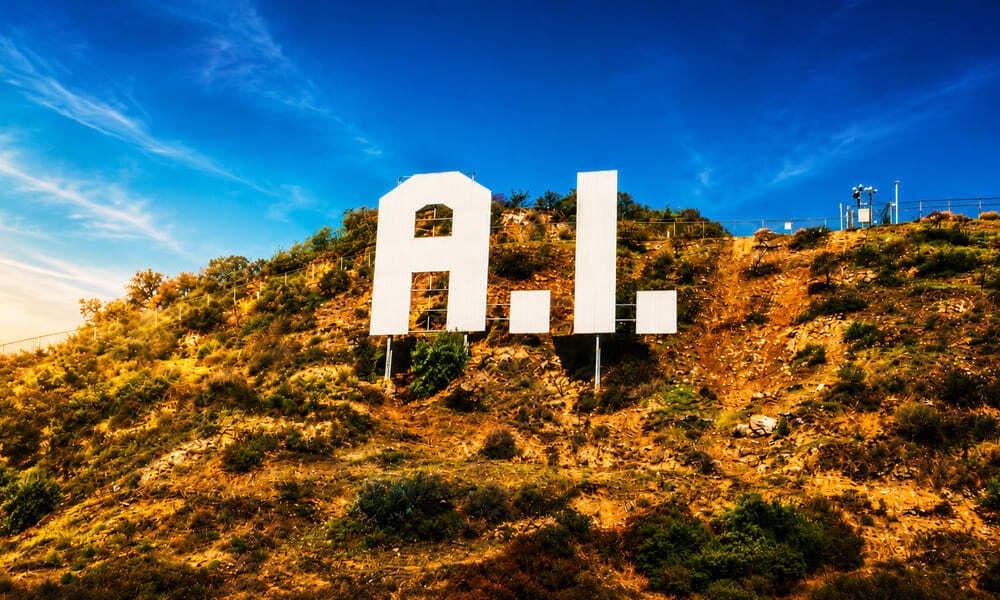
AI and cinema in 2026 is now a struggle over authorship, synthetic performers, labor, production systems and who controls the moving image.
AI and cinema in 2026 is no longer a debate about whether a machine can generate a convincing image. That question has already become too small. The real issue is what happens to cinema when the elements that once arrived together – face, voice, performance, style, labor, set, camera and authorship – can be separated, reproduced and licensed one by one.
Over the past year, Mise N Abyme has followed this shift from several directions: the people shaping Hollywood’s AI agenda, experiments at festivals, directors defending creative control, synthetic performers, independent filmmakers using generative tools to bypass traditional production structures, and unions trying to decide where assistance ends and replacement begins.
AI is moving from the image to the production system
The most useful lesson of 2026 is that generative cinema is splitting into two very different paths. At the Tribeca Festival, projects built almost entirely through prompting existed alongside films in which AI was inserted into a much more conventional artistic pipeline. Our analysis of AI at Tribeca showed why the second model may be more important: designers, animators and directors use models as specialized tools inside a process that still begins with a human visual idea.
This distinction matters because the industrial promise of AI is not simply to create strange images. It is to reorganize production. A model can become concept artist, previs tool, compositor, translator, restoration assistant or synthetic camera. The more these functions enter the workflow, the less useful it becomes to ask whether a finished frame is “AI-generated.” The better question is which decisions were delegated, and who still had the power to reject the result.
The actor is becoming a bundle of rights
Cinema has always transformed performers through lenses, makeup, dubbing, editing and visual effects. AI changes the scale because likeness can now survive the performance that produced it. A face, a voice or a recognizable behavioral pattern can become reusable material.
That is why the argument about synthetic actors is ultimately contractual. Peter Jackson’s defense of motion capture in the debate around Gollum and AI is useful precisely because it separates technology from authorship: Andy Serkis was not replaced by an effect; his performance passed through one. The problem begins when the passage through technology becomes a way to detach the result from the performer.
Authorship is becoming the right to say no
Steven Spielberg’s position is revealing. In our piece on Spielberg and AI, the boundary is not drawn around software itself but around the final creative decision. AI can assist; it should not occupy the empty chair at the writers’ table.
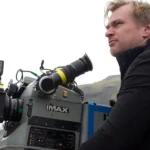
Christopher Nolan reaches the same anxiety from the opposite direction. His commitment to large-format photography and practical production can be read as an attempt to make the cinematic image physically resistant to infinite reproducibility. Yet the future is unlikely to divide neatly between analogue purity and synthetic cinema. It will be full of hybrids: de-aging without generated scenes, virtual production mixed with practical sets, human performances extended by machine-learning systems, and independent films that could not exist at their intended scale without generative tools.
AI can democratize cinema and concentrate it at the same time
The most radical promise is economic. Robert Gaudette’s victory at the Runway AI Film Festival showed what happens when a filmmaker can create a finished short without a traditional crew, performers or physical production infrastructure. Our article on Gaudette and the disappearing set treated that not as a novelty but as a change in the minimum viable structure of filmmaking.
That can lower barriers. It can also move power upward. A creator who needs fewer producers may need more access to models, cloud infrastructure, proprietary datasets and platform rules. Cinema becomes cheaper at one level while becoming dependent on companies that control the tools at another.
The real conflict is over control, not authenticity
The film industry’s AI debate is therefore not a clean war between human cinema and artificial cinema. Hollywood is already training, licensing and integrating these systems while also negotiating compensation, consent and job protection. The question raised by AI and creative labor is the same one that runs through the entire subject: who benefits when a previously expensive creative action becomes cheap enough to automate?
In 2026, the most important line is no longer between a real image and a synthetic one. It runs between those who can decide how a tool is used and those whose work, identity or style becomes material for somebody else’s system. Cinema will survive AI easily. The harder question is which version of cinema – and under whose terms.