Now Reading: Paramount-Warner: Antitrust Clears the Merger by Regulating the Result
-
01
Paramount-Warner: Antitrust Clears the Merger by Regulating the Result

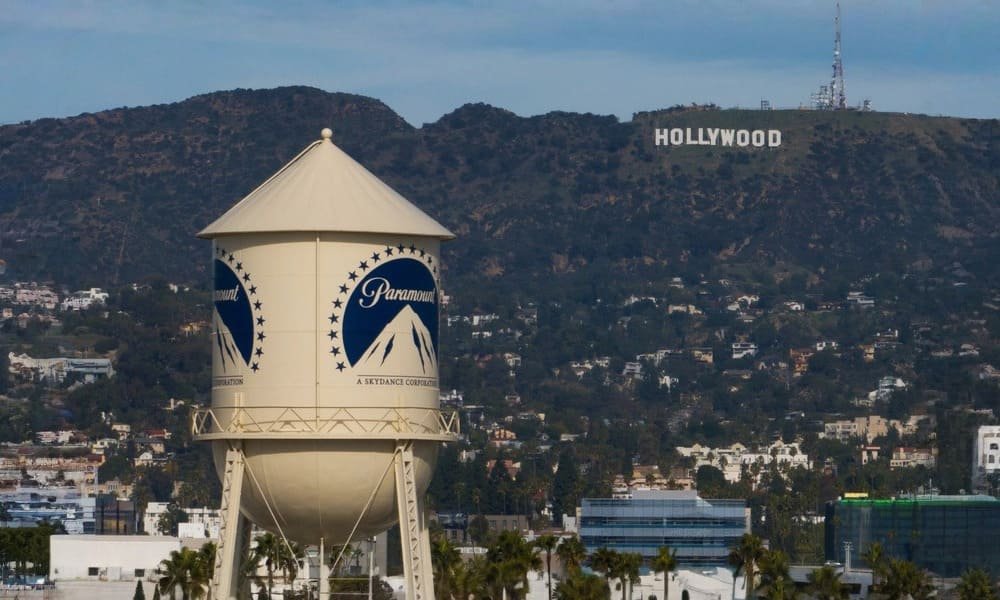
The Paramount-Warner deal turns antitrust into a contract: fewer competitors, but quotas, investment floors and penalties meant to imitate competition.
Paramount and Warner were already in the antitrust crosshairs in 1948. In 2026 they are allowed to merge, provided they simulate competition by contract.
In 1948, Paramount and Warner were already together before American antitrust authorities, among the eight studios involved in the case that would reshape Hollywood. The five major groups integrated production, distribution and theatrical exhibition, while the Supreme Court also confirmed the existence of anticompetitive practices in the film market.
The response was structural: separate distribution from exhibition and prohibit practices capable of turning control of the supply chain into control of the market.
Seventy-eight years later, Paramount and Warner are again together at the center of American antitrust scrutiny, but the method has practically reversed. The agreement reached with California and eleven other states gives the green light to the creation of the new group, intervening in the rules governing how it will be allowed to exercise its market power.
Antitrust: the new non-non-compete clause
To settle the antitrust case, Paramount commits to distributing at least 30 films a year in the first two years and 32 in the following three, increasing production spending in the United States by at least $300 million a year and maintaining a share of independent productions and high-budget titles.
And this time the counter also has a price: a $30 million penalty for every missing film, with at least four independent productions a year and one-fifth of the slate reserved for blockbusters.
Paramount and Warner will no longer have to compete with each other to decide which projects to finance, which talent to hire, which dates to occupy and which risks to take; in their place there will be a single group, which the state nevertheless asks to reproduce by contract some of the effects that competition used to produce.
The market ends where supervision begins
The problem becomes clearer when looking at the concentration these obligations are supposed to compensate for. According to the states’ lawsuit, Paramount and Warner are two of the five major U.S. distributors and together would account for roughly 27% of wide releases and more than 30% of expected blockbusters; after the merger, three distributors would control 75% of wide releases.
The comparison with 1948, then, is not simply a historical coincidence: it shows that what has changed is not only Hollywood, but the very idea of antitrust. Back then the structure of the market was modified; in 2026 concentration is accepted and an attempt is made to reconstruct some of its competitive effects from the outside through minimum production requirements, investment, quotas and penalties. And oversight does not stop at cinema: the agreement also introduces mechanisms intended to protect the editorial independence of CNN and CBS, the two major news networks that would end up under the same group.
Counting the films produced will be easy. Measuring what disappears along with competition will be much harder: how many projects would have emerged from competition between two separate studios, which filmmakers might have found room at one but not the other, which risks Warner would have taken that Paramount would have rejected, or vice versa.
The Paramount decrees were abolished in 2020 because they were considered unsuited to an industry transformed by streaming and the arrival of new competitors; just six years later, however, concentration is once again raising the same problem in a new form.
No longer two studios competing, but one studio large enough to have to prove, with numbers, that it still resembles a market.