Now Reading: Tarantino Is Building Authorship That Can Survive His Retirement From Directing
-
01
Tarantino Is Building Authorship That Can Survive His Retirement From Directing

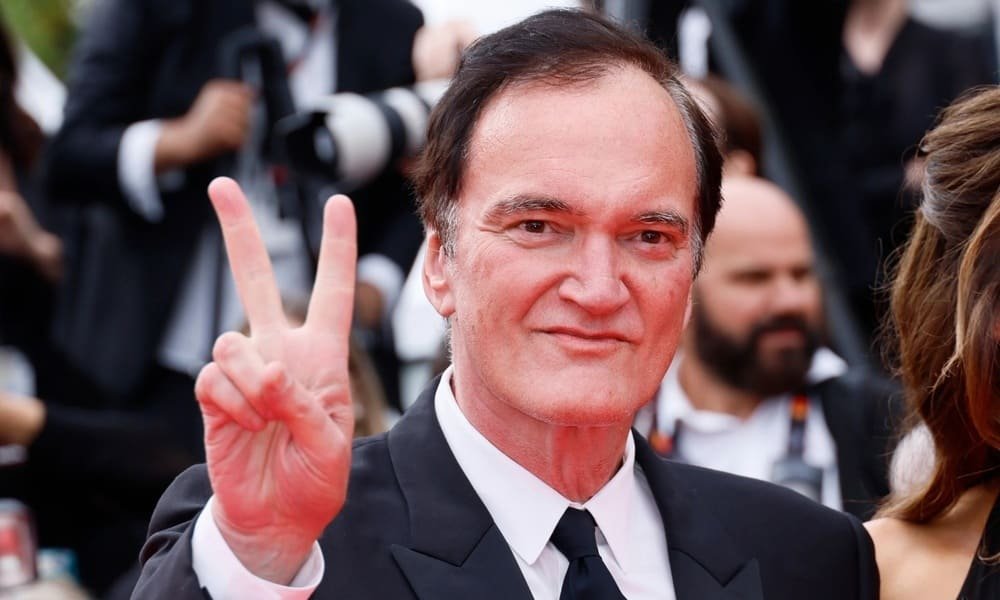
With a Cliff Booth novel and a David Fincher film from his screenplay, Quentin Tarantino is separating authorship from the obligation to direct every version himself.
Quentin Tarantino will return to Cliff Booth with a new novel, while in cinemas the character played by Brad Pitt will be directed by David Fincher.
The Adventures of Cliff Booth will be published on December 8, 2026 by Harper, which describes the book as his “creative vision” in novel form. It will be the literary counterpart to the new story centered on the stuntman introduced in Once Upon a Time in… Hollywood, while the connected film, The Further Mis-Adventures of Cliff Booth, is being directed by David Fincher from a screenplay by Tarantino himself. Netflix will release it exclusively in IMAX theaters from November 25 for two weeks, before its streaming debut on December 23.
Tarantino seems to have found a way to separate his authorship from the obligation to exercise it always through directing.
Brad Pitt returns to the role that won him the Oscar
The new film is set in 1977, eight years after the events of its predecessor. Alongside Pitt will be, among others, Elizabeth Debicki, Scott Caan, Carla Gugino, Yahya Abdul-Mateen II and Peter Weller.
Fincher is also reuniting with several regular collaborators, including cinematographer Erik Messerschmidt and editor Kirk Baxter. But the project’s peculiarity lies not only in Cliff Booth’s return: for once, Tarantino is consciously entrusting another director with the task of turning into cinema a story that still bears his signature.
The young Tarantino watched Natural Born Killers pass through Oliver Stone’s hands until he could no longer recognize his own screenplay in it. The mature Tarantino, by contrast, seems to have stopped demanding that another director faithfully return what he wrote. He has simply built a system in which no single version can exhaust his work.
How to make the tenth and final film unnecessary
It is no small detail that all of this is happening while Tarantino continues to speak of his tenth film as his last. His theory has been known for years: better to stop a filmography before the filmography begins to outlive its own necessity.
Literature is no longer a side activity for Tarantino, who had already transformed Once Upon a Time in… Hollywood into a novel, changing its balance, timing and biographies; he then published Cinema Speculation. Now the page becomes something different: a territory in which the work can continue without asking its author to get behind a camera again.
The rights question also makes the design less romantic and more concrete. For Once Upon a Time in… Hollywood, Tarantino negotiated exceptional terms with Sony, including the eventual return of the underlying copyright; when the Fincher project emerged at Netflix, the structure of the deal suggested that Tarantino retained particularly strong control over the work’s future as well.
Perhaps Tarantino is no longer looking for the perfect moment to stop: he is preparing a cinema in which the end of his directing career no longer coincides with the end of his authorship.