Now Reading: Musk, Gibney and the HBO Max Problem: Distribution Becomes Part of the Documentary
-
01
Musk, Gibney and the HBO Max Problem: Distribution Becomes Part of the Documentary
Musk, Gibney and the HBO Max Problem: Distribution Becomes Part of the Documentary

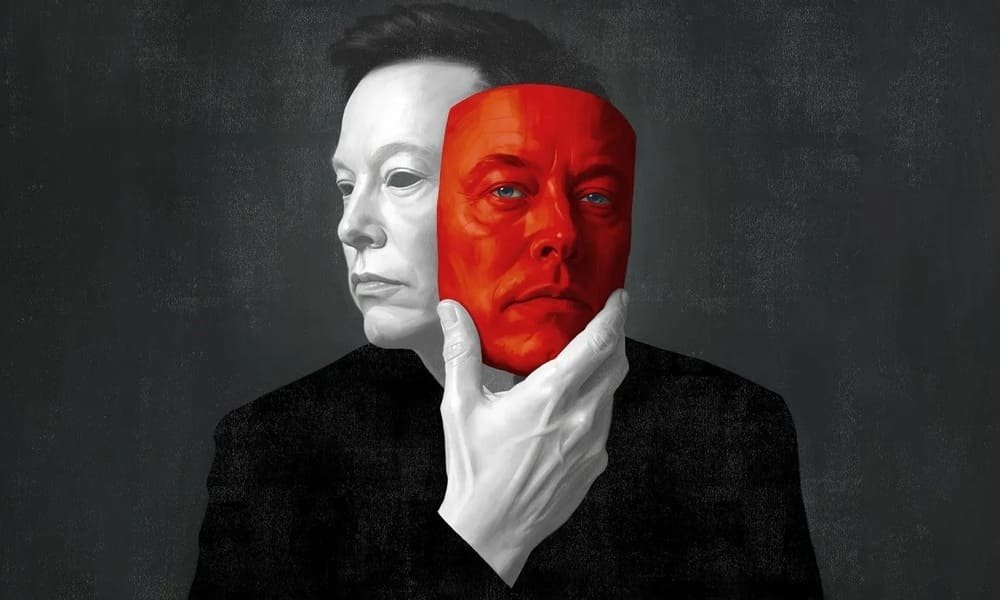
Alex Gibney’s Musk documentary faces legal pressure while HBO’s ownership may change, turning the film’s subject—concentrated power—into a distribution problem.
Alex Gibney fears HBO Max may not be able to show Musk as planned, while the platform faces a possible change of ownership leading directly to the Ellison family.
At the Toronto International Film Festival, Alex Gibney said he had tried to contact Elon Musk after the production received a threat of legal action. No response. More interestingly, the director admitted to having a “major concern” about whether HBO Max will actually be able to bring the documentary to the public as planned.
It is the almost inevitable continuation of the story that began before the Venice premiere. Musk’s lawyer, Alex Spiro, disputes the film’s suggestion of a Starlink role in the 2024 presidential election without proving it. It is the issue that had already emerged in the preceding days: Musk certain of Trump’s victory, the “ten thousand lasers in space,” and Gibney trying to understand whether behind that certainty there was merely theater or something leading directly to Starlink.
The legal warning follows the film all the way to the distributor
Spiro also puts those financing, publishing and distributing the documentary on notice. Among the potential recipients of the problem are HBO, Bleecker Street and Universal. He also asks that footage, interviews, communications with sources and materials used for fact-checking be preserved, because litigation would now be reasonably foreseeable.
The legal argument is especially interesting for a film. According to Spiro, in fact, it would not be necessary to write “Musk manipulated the election” on screen in order to make a defamatory assertion: editing, the sequence of information and omissions capable of leading the viewer to that conclusion might be enough.
Jigsaw Productions rejected the accusation, defending the film as a fact-based investigation protected by the First Amendment. But a legal warning has one advantage over a ruling: it arrives first. It does not need to win a lawsuit in order to immediately increase risk, costs and nervousness for whoever will have to distribute the product.
HBO could change owners before Musk arrives
HBO acquired the U.S. television and streaming rights to Musk while the film was still in production. The theatrical version will be released in the United States by Bleecker Street on October 16; HBO is expected to receive an extended version in 2027. Except that, in the meantime, HBO may no longer belong to the same Warner Bros. Discovery.
The Paramount-Warner acquisition is currently blocked by an antitrust lawsuit brought by California together with eleven other states and the Writers Guild of America, which fears further market concentration and an even more powerful buyer facing writers and producers. If the acquisition goes through, HBO will be controlled by David Ellison: and here the documentary encounters a character it already knows.
His father Larry Ellison, Oracle founder and principal financial backer of the Paramount-Warner operation, appears in the film through messages connected to the purchase of Twitter: he was willing to put roughly $2 billion into Musk’s deal. Larry Ellison has also personally guaranteed tens of billions for the mega-acquisition led by his son.
David Zaslav’s HBO is already discussing the schedule with Musk
There is currently no evidence that HBO intends to cancel Musk, alter it or hide it. The producers, moreover, retained the paid-VOD rights, a small emergency exit in case one of the main doors should close.
But the short circuit remains remarkable. Gibney made almost four hours of documentary to describe what happens when wealth, technology, information and politics end up too close to one another. Now he has to wait for a $111 billion merger to establish who will control the platform meant to broadcast it.
Gibney wanted to describe how small the world can become when power concentrates: HBO risks giving him the final scene without his needing to shoot it.