Now Reading: After Amazon Studios, Roy Price Tries to Reinvent the Pilot
-
01
After Amazon Studios, Roy Price Tries to Reinvent the Pilot

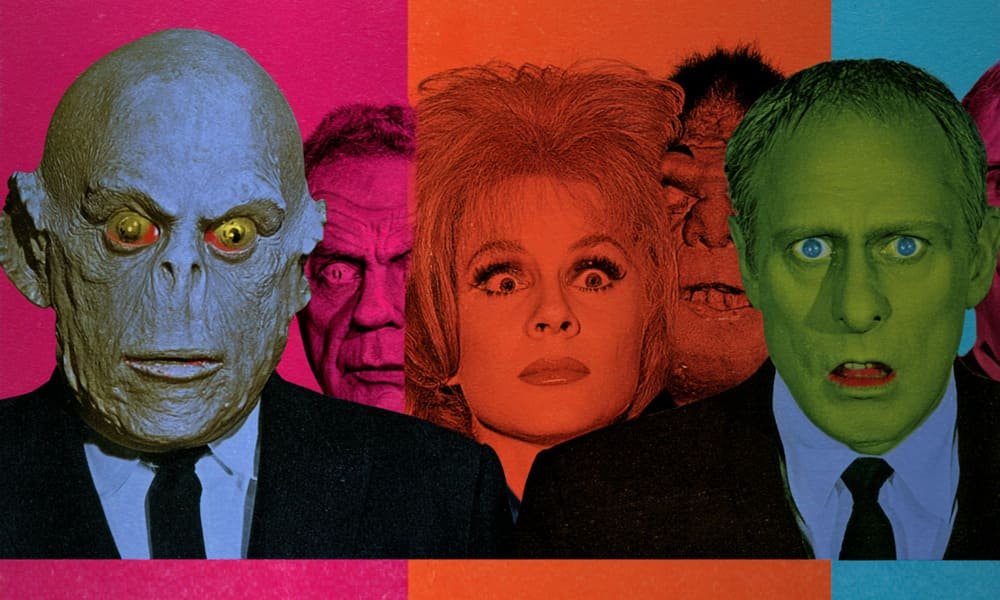
Roy Price’s N1BW turns 60–120 second microseries into a public development system where every episode can function as a pilot, market test and production decision.
Roy Price, the former head of Amazon Studios who helped transform Amazon from a digital distributor into a television and film producer, has launched N1BW, a platform that aims to combine studio, network and public laboratory for 60-to-120-second microseries.
The most interesting idea, however, is not the vertical format or AI, but the fact that Price is returning to a question he had already asked the public more than a decade ago: which stories really deserve to become series?
The full name, The Number One Best Website, already sounds like a review written by the owner, but behind the self-promotion there is a recognizable industrial experiment. N1BW, launched on August 24, presents itself as “the network studio of the future”: a place where a creator can pitch a story, find writers and filmmakers, produce it and distribute it without necessarily passing through the traditional sequence of agents, producers and development executives.
According to Page Six, creators can retain the film and television rights to their intellectual properties and directly share in the revenue generated on the platform.
Roy Price brings Amazon Studios’ old experiment into the AI era
When Price ran Amazon Studios, the company had built part of its editorial identity precisely around the idea of making development public. In 2014 Amazon put ten pilot episodes online for free, asking viewers to watch them, vote on them and leave feedback that could help determine which ones would be turned into series. Projects such as Transparent, Bosch and Mozart in the Jungle emerged from that season.
It was still a rudimentary form of data-driven development: Amazon financed the pilot, showed it to the public and observed the response before committing to a full season. N1BW compresses that same logic almost to the point of erasing the distinction between pilot, episode and market test. In the project Price described on his Price Point, episodes normally last one or two minutes, must quickly push the viewer toward the next one and can move from concept to around twenty installments within a matter of weeks.
The change from Amazon’s pilot model is therefore above all economic. In the traditional model, the studio invested before discovering whether the audience was interested. Here, the public can begin measuring interest while production is still underway, and generative tools make it far cheaper to turn an idea into something concrete enough to be watched, voted on and either abandoned or developed.
From Amazon to microdramas: the pilot does not disappear, it fragments
This is what makes N1BW more interesting than simply another competitor to ReelShort or DramaBox. The television pilot is not eliminated: it is distributed across the entire series. Every episode becomes a test, every cliffhanger measures the desire to continue, and every new segment can provide information about audience interest before the project absorbs the cost of a longer production.
The economic terrain, after all, is now large enough to make the experiment credible. Sensor Tower estimated more than 850 million downloads of short-drama apps in the first quarter of 2026 alone, while Omdia forecasts approximately $14 billion in global revenue for the sector in 2026. In the United States, time spent on these applications on smartphones has already reached levels capable of competing with those of the major streaming services.
Price, however, is trying to add a studio logic to that market. Revenue is divided among the different creative roles, while the original creator retains the film and television rights to the intellectual property. AI is not mandatory, but it is clearly one of the elements that allow the system to imagine rapid, distributed productions cheap enough to be tested before anyone knows whether an audience really exists.
Amazon asked which series to produce; N1BW tries to find out earlier
No upfront compensation is planned: participants work in exchange for a share of any future revenue.
The promise of democratizing access to production therefore coexists with a shift of risk from the studio toward the people creating the content. In the old Amazon Studios model, the company financed the pilot and then questioned the audience; in Price’s new experiment, part of the cost of discovery is absorbed directly by the production community.
Price is not a random founder who arrived on the wave of microdramas: he is one of the executives who had already tried to turn audience behavior into a development tool when Amazon was still building its audiovisual identity.
Today AI lowers the cost of the prototype, microdrama shortens the test, and the “network studio of the future” measures almost in real time how much an idea can be transformed into audience and revenue, and a user into a permanent collaborator in development.