Now Reading: No-AI Film Fest: Sean Baker on the Front Line
-
01
No-AI Film Fest: Sean Baker on the Front Line

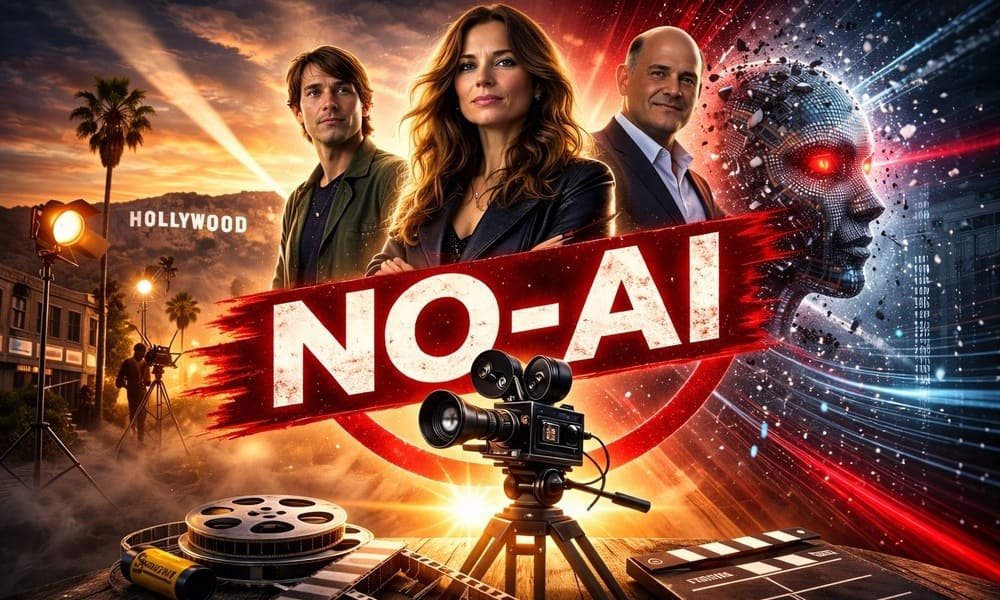
Sean Baker and Matthew Weiner take centre stage at the No-AI Credo 23 Film Festival, the event defending handcrafted cinema and human creativity against generative AI.
Sean Baker and Matthew Weiner take centre stage at the No-AI Credo 23 Film Festival, the event defending handcrafted cinema and human creativity against generative AI.
The debate over the use of artificial intelligence in cinema enters a new phase thanks to Justine Bateman, who has announced the second edition of the No-AI Credo 23 Film Festival, taking place in Hollywood from 27 March. Prominent guests include Sean Baker, the filmmaker behind the award-winning Anora, and Matthew Weiner. The event’s aim is clear: to reaffirm the value of human creativity in an industry increasingly drawn to the shortcuts offered by generative AI.
Baker, coming off a period of enormous international visibility, will introduce a screening of his film Starlet (2012) and speak with the audience about how to build authentic stories without resorting to artificial intelligence tools. Alongside him, Weiner and producer Cassian Elwes will draw on their experience to demonstrate that concrete alternatives to creative automation exist.
According to Bateman, the festival does not intend to stop at symbolic protest, but to create a genuine grassroots movement offering skills, examples and inspiration to new filmmakers: “I love it when people who really know a subject want to talk about it. That way, the message becomes: as a filmmaker, you have no reason to use AI. We’ll show you how to do it without.”
Credo 23 and the rejection of generative AI: a movement for handcrafted cinema
The No-AI Credo 23 Film Festival emerged from the Credo 23 organisation, founded by Bateman during the writers’ and actors’ strikes, when AI was at the centre of the confrontation between creatives and major studios. The Credo 23 label certifies that a work was made without the use of generative artificial intelligence, becoming a symbol of cultural resistance.
The festival is supported by sponsors such as Kodak, the Teamsters and other organisations with an interest in preserving human labour and physical productions. All the selected films share a strong commitment to craft, built on deliberate stylistic choices and a direct relationship between artist and work. Profits from the event will be redistributed to filmmakers, reinforcing the idea of a community that supports its members rather than competing in a market dominated by technology.
The future of NO-AI cinema according to Justine Bateman
Bateman explains that her main concern is generational renewal: where will new filmmakers emerge if festivals and platforms favour projects “trained” or assisted by AI? According to the director, many fresh and innovative works are ignored because they do not align with the dominant industrial or technological logic. The No-AI Credo 23 Film Festival aims to provide the missing space: a safe place for those who truly experiment.
At a time when AI-generated videos featuring celebrities’ faces go viral and major companies strike deals with technology developers, Bateman calls for moderation: “Technology is one component; it must not become everything.” Her message is simple but radical: to stay alive, Hollywood must continue to be driven by human beings.