Now Reading: Venice Biennale: The EU Cuts Funding While Loznitsa Points to Russian Gas
-
01
Venice Biennale: The EU Cuts Funding While Loznitsa Points to Russian Gas

The EU revoked €2 million from the Venice Biennale over Russia’s return, while Ukrainian filmmaker Sergei Loznitsa argues that Europe’s continuing Russian gas imports reveal a larger contradiction.
The European Union is cutting €2 million in funding to the Venice Biennale over the return of the Russian pavilion, but Sergei Loznitsa points to a much larger valve that remains open: gas.
The Ukrainian director, who arrived at the Venice Film Festival with the documentary Imperium, has no intention of visiting Moscow’s pavilion.
But he considers Brussels’ decision little more than a “kindergarten punishment”: highly visible, highly symbolic and decidedly less demanding than an embargo capable of truly affecting economic relations with Russia.
The issue, in short, is not deciding whether the pavilion should have been there. It is understanding why, among all the valves available, Europe began with the Biennale’s.
Russia at the Biennale: Brussels cuts €2 million
The affair began with Russia’s return to the 61st Venice Art Biennale, after the absence that followed the invasion of Ukraine. The project The Tree Is Rooted in the Sky was open only during the inaugural days in May and was then closed to the public: the recorded performances, however, remain visible from outside the pavilion.
A presence discreet enough to require looking through the windows, yet intrusive enough to trigger protests, resignations and an institutional clash. Pussy Riot demonstrated in front of the pavilion alongside other activists; the Biennale’s international jury had already resigned after controversies over the participation of countries involved in wars and accusations of international crimes.
The European Commission had warned the Biennale that Russian participation could conflict with the terms of the funding. In July came the decision: to revoke a multi-year contribution worth €2 million. The official reasoning is that events supported by European taxpayers must protect democracy, pluralism and freedom of expression, values Brussels considers incompatible with the current Russian regime.
The Biennale announced an appeal, because according to the Venetian institution that money also funded activities by Biennale College Cinema and the Venice Production Bridge, sectors that have practically nothing to do with the Russian pavilion at the art exhibition.
Loznitsa and Russian gas: the valve Europe is closing more slowly
Loznitsa instead shifts his gaze a few thousand kilometers farther east. According to 2026 data from ACER, the European Union Agency for the Cooperation of Energy Regulators, Russian gas still accounts for roughly 12% of European demand. Between January and May, pipeline imports increased by 7% compared with the same period in 2025, while LNG imports rose by 11%.
After the new European restrictions came into force, between March 18 and May 31, 2026, imports of Russian LNG increased by 17% year over year. A gradual European ban exists, but it proceeds according to a transition schedule and with long-term contracts still active in several countries. Russia out of the display window, then, but still inside the energy bill.
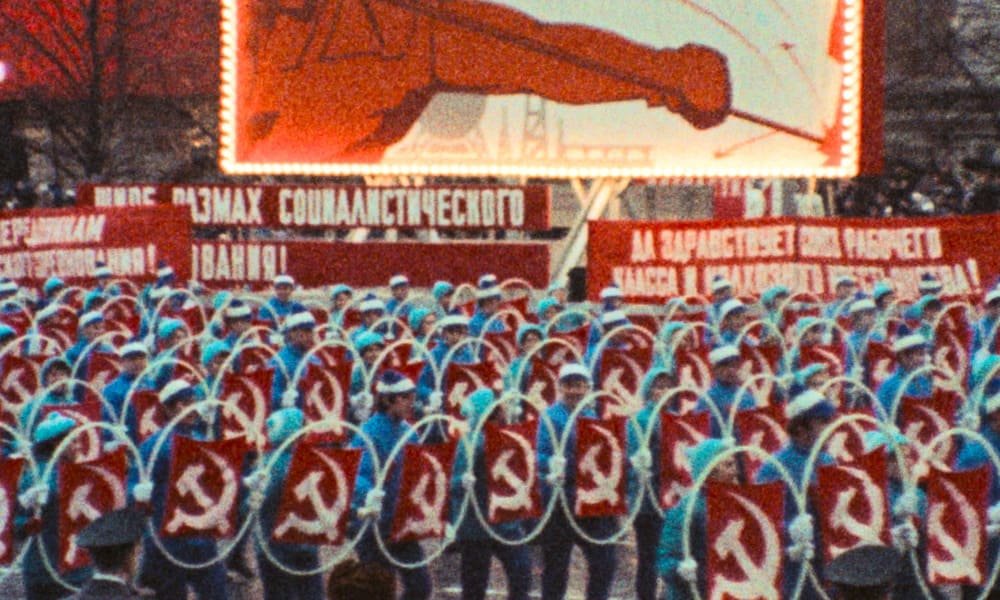
Loznitsa has chronicled the Maidan uprising, openly criticized Moscow and, with Imperium, uses 175 minutes of Soviet archival material to dismantle the propaganda image of a culturally uniform empire. If even one of the clearest critics of Russian imperialism judges the sanction as little more than theatrical, Brussels ends up sending Moscow an almost reassuring message, drawing the safe and purely symbolic perimeter of the confrontation.
Europe can decide that institutional Russian culture does not deserve its money, but if it wants to turn that choice into a demonstration of geopolitical resolve, it should also reckon with the money that continues to travel in the opposite direction.