Now Reading: Chernobyl 40 Years Later: The Disaster That Never Ends
-
01
Chernobyl 40 Years Later: The Disaster That Never Ends
Chernobyl 40 Years Later: The Disaster That Never Ends

Chernobyl turns 40: technical data, Soviet lies, health effects, environmental contamination, and new risks from the war in Ukraine.
Chernobyl turns forty on April 26, 2026. It does not wear those years well, and it could hardly be otherwise. Some anniversaries are not candles on a cake: they are Geiger counters of memory. They measure how much truth is left, how much has been buried, how much has been told badly, and how much, quite simply, still frightens us.
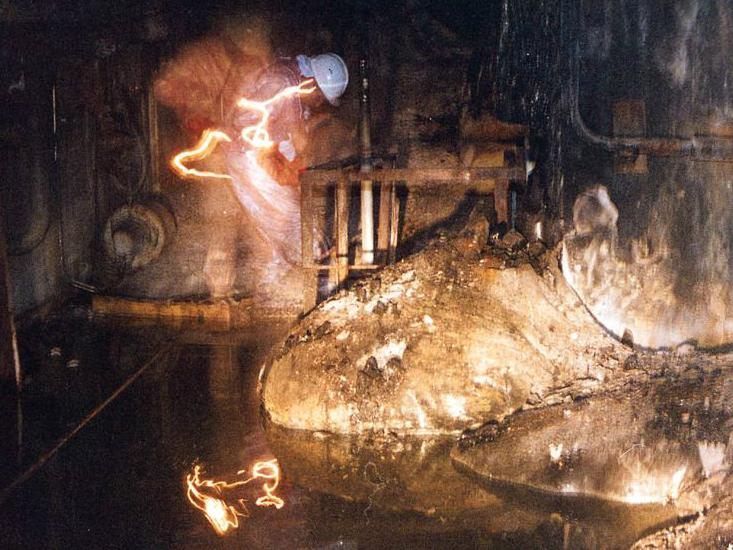
On April 26, 1986, at 1:23 in the morning, reactor number 4 of the Chernobyl nuclear power plant exploded during a safety test. Safety: the most comic word, if it were not tragic. Two explosions, a fire, radioactive material released into the atmosphere, an entire city — Pripyat — turned into the scenery of the aftermath. First the technicians, then the firefighters, then the liquidators, then the evacuees, then the rest of Europe looking at the clouds and realizing that even the wind can become a press release.
The first truth of Chernobyl is this: the disaster was not only technical. It was political, bureaucratic, military, linguistic. A reactor explodes, but before that, a system explodes: one built not to admit error. And when a system cannot say “we were wrong,” sooner or later it forces reality to speak in its place.
Chernobyl 40 Years Later: the Reactor, the Lie and Time
Forty years later, Chernobyl remains one of the great defining scenes of the twentieth century: technology promising absolute control and instead revealing its own fragility; the state promising protection and instead protecting itself first; science used as an instrument of power until physics presents the bill.
According to UNSCEAR, among the workers present at the plant during the first hours of the disaster, 134 developed acute radiation syndrome; 28 died within the first three months. The International Atomic Energy Agency notes that the exclusion zone is still a particular place today: not a post-apocalyptic fairy tale for abandonment tourism, but a territory where contamination, monitoring, partial returns, scientific studies and a memory that refuses to be archived all coexist.
The point is not only how many people died immediately. The point is that Chernobyl produced a different category of damage: long damage. The kind that does not fit neatly into headlines, does not end with a press conference, cannot be closed with an official commemoration. Iodine-131, for example, has a short half-life, about eight days, but it hit the thyroid hard, especially among younger people exposed through contaminated food. Cesium-137 and strontium-90 have much longer timelines, around thirty years. After forty years they have decreased, yes. But decreasing does not mean disappearing.
Then there are radionuclides with even more vertiginous timelines, such as plutonium-239, whose half-life is measured in tens of thousands of years. Careful: this does not mean the entire zone will remain at the same level of danger for twenty-four thousand years. It means something more serious and less convenient: contamination does not obey the human calendar. We think in anniversaries. Radioactivity thinks in decay.
Nature Will Remember It for Us
The Chernobyl exclusion zone has also become an ecological paradox. Where human beings left, animals, forests and traces of wildlife returned. Wolves, Przewalski’s horses, birds, insects, trees. Nature does not “forgive,” a word that is far too convenient. Nature occupies space. It does not moralize, does not hold trials, does not write editorials. It grows.
And this is where Chernobyl becomes almost unbearable: because life returns, but it absolves no one. The fact that a forest grows over a human error does not mean that the error has been erased. It only means that the biological world has times, strategies and stubbornness that do not coincide with our public rituals.
It is a useful lesson for understanding the technological present as well. Every time a complex system is sold as infallible, every time an infrastructure is described as neutral, every time power says “trust us, we have everything under control,” Chernobyl should flash in the background. Because total control is often a set design. Behind it there are maintenance, incentives, hierarchies, fear of losing face, skipped protocols, diluted responsibilities.
The same mechanism can be seen today in major digital and political infrastructures: opaque systems, technical decisions that become social decisions, power hiding behind the word “operation.” This is the core of the theme explored in our in-depth piece on power, technology and control: when a structure is too complex for citizens to understand, trust becomes mandatory. And mandatory trust is usually already a problem.
The New Sarcophagus and the War: the Past Is Not Closed
Chernobyl does not belong only to the past. The New Safe Confinement, the huge structure built to cover the old sarcophagus of reactor 4, was supposed to be the symbol of rational management after the disaster. A gigantic arch, costing billions, designed to contain radioactive materials and allow safer dismantling work.
But in 2022, war arrived there too. Russian forces occupied the Chernobyl area during the early stages of the invasion of Ukraine. In 2025, according to reconstructions reported by international agencies, a drone struck the confinement structure, reopening the most uncomfortable question: what happens when the radioactive past meets the military present?
The answer is simple and terrible: the risk changes shape, but it does not disappear. A decommissioned nuclear plant is not a monument. It is a fragile infrastructure. It needs power, technicians, maintenance, monitoring, protection. Nuclear safety does not exist in a vacuum: it lives inside politics, inside war, inside the quality of institutions.
That is why Chernobyl also speaks to our age of cybersecurity, networks, data, critical infrastructures and vulnerable systems. The tools change, but the question remains the same: who controls what we depend on? And how much do we really know about the risks we are asked to accept? In this sense, the parallel with cybersecurity is not decorative: every complex system, when it fails, also fails on the level of trust.
Chernobyl and Manipulated Memory
Chernobyl has also become a cultural archive. Books, documentaries, photographs, video games, television series. The HBO and Sky miniseries Chernobyl brought the disaster back into the contemporary imagination precisely because it understood the point: the real monster was not only the reactor. It was the lie.
An administrative lie, repeated, normalized, protected by stamps and uniforms. A lie that does not simply state the false: it forces everyone to behave as if the false were true. This is where Chernobyl speaks to our informational present, to organized doubt, to alternative versions, to the difficulty of establishing a shared reality. It is no coincidence that today we often speak of digital gaslighting: information environments in which the very perception of reality is distorted.
At Chernobyl, something similar happened, but in analog and state form: physical reality screamed, power whispered. Dosimeters showed absurd values, authorities minimized. Particles traveled, words stood still. And when words stand still while reality moves, reality arrives anyway. Only later. And at a higher cost.
Forty Years Later, the Lesson Is Still Uncomfortable
The lesson of Chernobyl is not “nuclear yes” or “nuclear no,” a formula too small for such a large disaster. The lesson is that no technology is separate from the system that governs it. A plant can be designed by engineers, but it is managed by human organizations. And human organizations have ambitions, fears, careers, interests, hierarchies, silences.
Technology never fails alone. It fails inside a context. It fails when those who know stay silent. When those who decide do not listen. When those who must supervise depend on those who must be supervised. When political prestige matters more than safety. When truth becomes an operational nuisance.
Forty years later, Chernobyl remains there: half wound, half laboratory, half warning. Yes, those are three halves. But Chernobyl is exactly that: broken mathematics. A place where human time is not enough, public memory grows tired, and matter continues to do its job.
The problem is not only that a machine can explode. The problem is that a system can build around that explosion a dam of lies, procedures, reassurances and silences. Because the reactor, sooner or later, shuts down. The lie, instead, can stay switched on for decades.
And perhaps the most disturbing point is precisely this: that somewhere, among concrete, forests, archives and closed rooms, the ghost of someone may know the truth and still decide not to tell it.