Now Reading: Cinema and AI: Hollywood’s Outsourced Dream Factory
-
01
Cinema and AI: Hollywood’s Outsourced Dream Factory

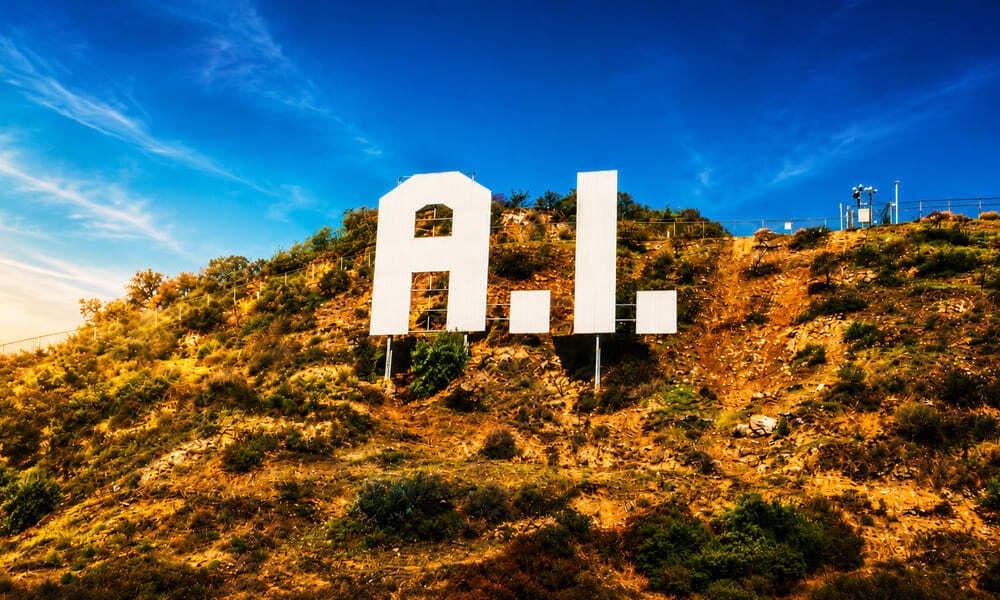
Festivals, tools and independent creators are building their own supply chain around AI cinema, while the old industry protects control, rents and slow decision-making.
Spring 2026 ended with artificial intelligence at the center of the table.
At the 79th Festival de Cannes, AI ran through conversations, panels, industrial fears and parallel experiments, confirming how deeply the subject has now entered the sector’s main debate. Around the Croisette, initiatives such as the World AI Film Festival showed a generative scene still uneven, yet already capable of attracting attention, controversy and professional curiosity.
In the same period, the new SAG-AFTRA agreement with studios and streamers turned AI into ordinary contract matter. Protections on digital replicas, synthetic identities and the use of performances have not ended the conflict, but they have made it administrable: the clearest sign that the old industry can no longer treat AI as an external accident, but must negotiate it, regulate it, integrate it and try to control its effects on creative labor.
AI is also entering a supply chain already weakened: production moves where costs are lower, where tax incentives are more aggressive, where bureaucracy weighs less and where crews can be organized with greater flexibility. Hollywood risks being reduced to the bureaucratic and symbolic headquarters of its own brand: a “dream factory” now outsourced.
AI festivals are making selections, not doing PR
This summer, the geography of the phenomenon is expanding: AI cinema is no longer arriving as a side provocation, but as a system in formation and a pressure point on traditional cinema.
It does not guarantee quality, it does not replace talent or vision, and it does not turn anyone who can generate images into an auteur. It does, however, reduce the weight of some barriers that the old industry spent decades turning into filters, rents and decision-making power. While part of the audiovisual sector is trying to escape its structural dependence on studios, commissions, budgets, permits, marketing departments and overly slow production chains, a concrete possibility has opened for independent creators to emerge.
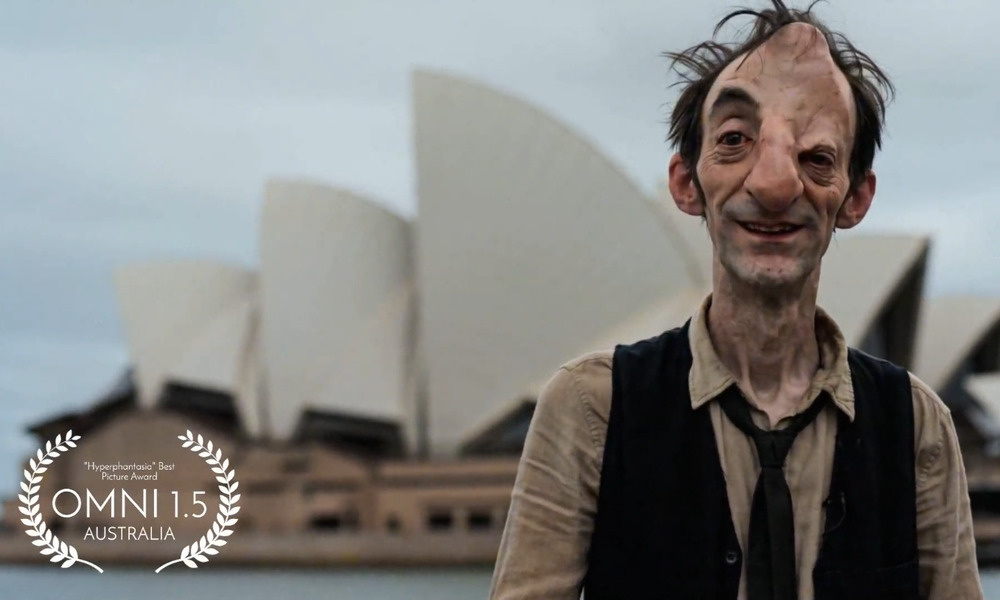
OMNI International AI Film Festival is preparing Hyperphantasia in Sydney, an event dedicated to generative cinema, with Alex Proyas on the jury; the Runway AI Film Festival 2026 has brought auteur shorts such as A Face Only A Mother Could Love by Robert Gaudette to the center of the scene; AI Film Fest Monaco has built an event in Monte Carlo dedicated to AI filmmaking and rapid production; Tribeca has welcomed longer and more structured AI experiments such as Dreams of Violets by Ash Koosha.
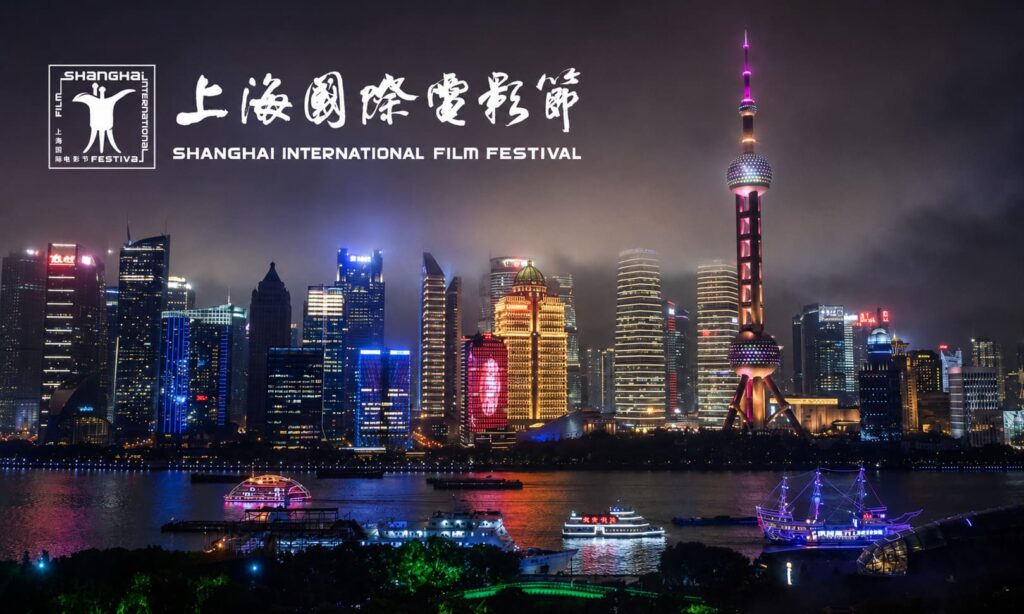
The Shanghai Film Festival, with its labs on AI, micro-drama, iPhone filmmaking and virtual reality, confirms that audiovisual production is moving toward lighter tools, faster processes and less stable boundaries between cinema, digital content, immersive experience and short-form seriality.
In July, the AI for Good Film Festival will bring generative cinema into the more institutional context of social impact and technological governance during the Geneva summit. In August, smaller events such as London AI Shorts and the AI International Film Festival confirm an increasingly clear dynamic: the scene is no longer growing around a single center, but through independent nodes, calls, screenings, communities and platforms competing to define the first criteria of AI cinema.
Hollywood must protect labor relations, intellectual property, reputation, contracts, stars, catalogs and production apparatuses built on scarcity and control. Its crisis runs through reduced production, corporate concentration, economic uncertainty and an inability to make decisions outside the frameworks that made it powerful.
AI festivals are occupying the space left open by this caution: they can select, make mistakes, correct course, give awards, create archives and bring new names to the surface.
A24, Google and the platforms: who controls the new auteur workflow
Meanwhile, the industrial supply chain is moving fast.
The most explicit signal came in March from Netflix with the acquisition of InterPositive, the company founded by Ben Affleck to develop AI tools applied to production and post-production. A few months later, the Fox-Roku agreement completed the picture on the opposite side of the chain: direct access to smart TVs, advertising data and the gradual disintermediation of traditional networks.
Today, on one side, AI enters auteur cinema through cautious and culturally protected agreements, such as the partnership between Google DeepMind and A24; on the other, it accelerates faster and more measurable formats, such as the microdramas of StoReel Canvas and the conversational directing promised by OpenArt Director. In both cases, AI is no longer being sold only as an image generator, but as a production infrastructure.
The A24 case is significant because it involves a brand built on cultural selection, indie taste, sophisticated horror and a trust-based relationship with a young cinephile audience. Its communication therefore insists on research, development, storyboarding, prototyping and tools in the service of filmmakers.
YouTube sums up this shift well, both technologically and culturally: it is no longer merely a promotional archive, but a parallel supply chain that produces languages, tests imaginaries, selects directors, aggregates communities and brings those talents back into theaters, as shown by the box-office results of Backrooms and Obsession. The agreement that will bring the Oscars to YouTube from 2029 signals that even Hollywood’s highest ceremony must now pass through the platform that guarantees audience, legitimacy and consecrating power.
The independent creator can therefore gain speed and autonomy from the traditional supply chain, but can also become dependent on proprietary AI platforms, credits, policies, closed models and commercial conditions decided elsewhere. Part of the power that once belonged to the studios has moved to technology companies, replacing old gates with new ones, less visible and harder to negotiate.
The critical spirit that matters more than nostalgia
The space between creative decision and production is shrinking; the time between intuition, testing and publication is contracting. For an independent creator, this means quickly reaching the visual proof of an idea. For a system used to developing projects for years before deciding whether to kill them in a meeting, this speed is a trauma.
AI cinema still shows obvious limits today: many works are visually polished and narratively weak, many characters seem designed to generate immediate empathy, and many visual worlds reveal the same aesthetic kinship. Ease of production can multiply average content instead of truly increasing invention, but every new technical phase produces a great deal of useless material.
The question running across the field concerns the future room for maneuver of authorship.
The old industry will use AI more and more, but will try to do so without exposing it too much: inside workflows, post-production, marketing, localization, asset management and catalog protection. It will continue to preserve capital, IP, stars, theaters and global relationships, trying to absorb the technology without reopening too much conflict over labor, rights and creative control.
Independent authorship can move in the opposite direction: declare the tools, show their use, turn the process into part of the work. Generation, selection, rejection, editing and the search for visual coherence become reading criteria, not steps to be hidden.
The practices that will truly gain auteur value, the languages that will become legible, the names that will emerge and the works that will survive the initial noise will be decided above all by festivals, because they remain a physical and human space of evaluation, different from the self-selection of platforms.