Now Reading: Musk: Gibney Says DOGE Could Become an Engine for Voter Control
-
01
Musk: Gibney Says DOGE Could Become an Engine for Voter Control

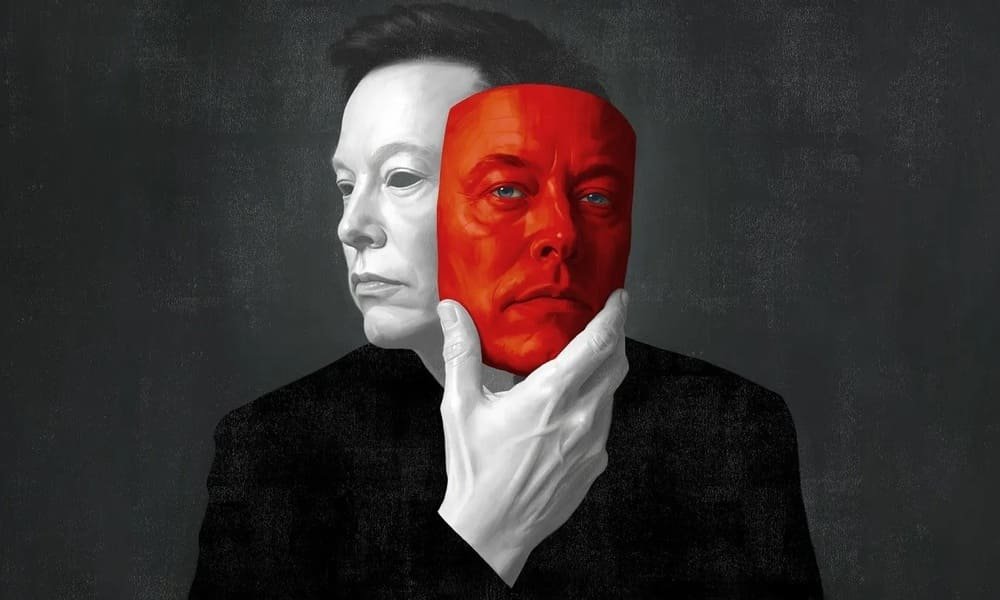
Alex Gibney’s four-hour Musk documentary links DOGE’s access to federal data with a warning: AI could turn administrative information into a system for political influence.
Elon Musk appeared surprisingly certain about the outcome of the U.S. presidential election before the votes had been counted. Soon afterward he entered the Trump administration, while the men at DOGE gained access to the tax, health, social-security and banking data of millions of citizens.
The new documentary by Alex Gibney connects the two facts and makes a very specific accusation: collecting that information could be used to influence future elections through artificial intelligence.
Musk runs for 225 minutes plus a ten-minute intermission and will screen out of competition at the Venice Film Festival. Gibney began working on it in 2022, before Elon Musk bought Twitter and transformed it into X, financed Donald Trump and moved from influencing the government to working inside it. During production, the biographical film became a political investigation.
Musk’s certainty about the vote and ten thousand lasers in space
The most explosive testimony comes from Ashley St. Clair, a conservative activist and the mother of one of Musk’s children. She says that in the autumn of 2024 the billionaire displayed a level of certainty about the election result that she had never seen in him before. Ahead of the vote, he allegedly told her about the imminent activation of an unspecified “anomaly in the Matrix.” The messages shown in the documentary also include a sentence from Musk: “I have ten thousand lasers in space.”
Gibney asks whether he was referring to Starlink. St. Clair replies that she does not know where else Musk might have space lasers. It is suggestive material, perhaps disturbing, or perhaps simply the habitual language of a man who talks about politics as though it were a video game whose hardware he owns. The documentary, however, places it next to a less interpretable fact: Musk invested roughly $288 million in the 2024 Republican campaign, becoming the largest individual donor of the entire election cycle.
Once elected, Trump put him in charge of the Department of Government Efficiency. Musk worked there for 130 days as a special government employee; his team moved through the Treasury, the Social Security Administration, the Department of Education and the Office of Personnel Management, requesting access normally reserved for authorized and vetted personnel. At the OPM, some career officials were even locked out of systems containing addresses, salaries, evaluations and Social Security numbers of federal employees.
From public data to private artificial intelligence
In the film, Nobel Prize winner Geoffrey Hinton makes explicit the connection on which Gibney builds the accusation. To influence elections with artificial intelligence, one must know in detail the people one is trying to persuade; DOGE’s activity, Hinton argues, resembled what would be required to build such a capability.
In June 2025, the Supreme Court allowed DOGE broad access to the Social Security Administration’s records, suspending restrictions imposed by a federal judge. Those records include banking, tax, medical and immigration data and serve more than seventy million beneficiaries. DOGE staffers used a customized version of Grok to analyze government data and pushed for its adoption at the Department of Homeland Security, where the system had not yet been approved. Grok belongs to xAI, which in turn belongs to Musk.
The official mandate, however, concerned waste, not voters, and on that front the results are less heroic than the chainsaw propaganda.
In August 2026, the Government Accountability Office examined the $110 billion in savings displayed by DOGE on its Wall of Receipts. For 96 percent of the savings attributed to federal grants, there was not enough information to verify the calculation method; 108 leases were already being terminated before DOGE existed; and a Defense Department IT contract presented as the source of $1.7 billion in savings had neither been canceled nor reduced.
The agency created to measure everyone else’s inefficiency did not respond to federal auditors’ requests for documentation.
Elon Musk: an unprecedented concentration of power
Musk remains an openly accusatory film.
Gibney portrays its subject as a contemporary reincarnation of the confidence man, the con artist who wins over the victim by selling trust before anything else. But the documentary’s most delicate point concerns something far more concrete than Musk’s personality: the amount of economic, technological and political power concentrated in the hands of a single private individual.
The tone of the confrontation, after all, had been established before the documentary was even finished. In March 2023, when the project was publicly announced, Musk commented on Twitter that it would be “probably a hit piece,” probably a work constructed to tear him down.
Gibney replied directly: “How would you know?”