Now Reading: Paper Tiger: The American Dream Sinks into the Mud
-
01
Paper Tiger: The American Dream Sinks into the Mud

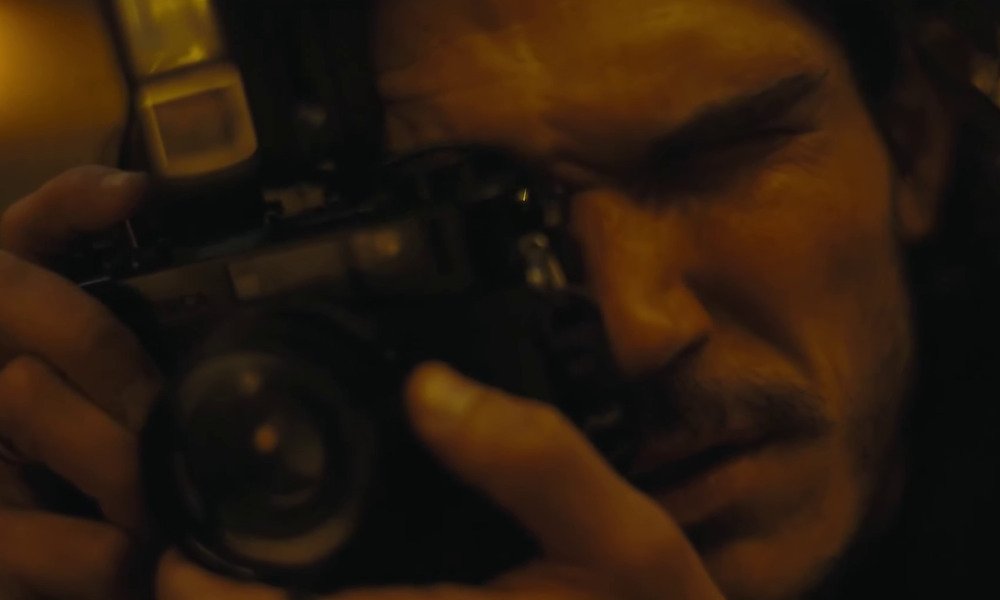
The trailer for Paper Tiger brings Adam Driver, Miles Teller and Scarlett Johansson to 1986 New York, caught between the Russian mob, family and ambition.
The trailer for Paper Tiger brings Adam Driver, Miles Teller and Scarlett Johansson to 1986 New York, caught between the Russian mob, family and ambition.
In James Gray’s cinema, family is almost never a safe haven: in Little Odessa, it was two brothers divided by crime; in We Own the Night, two men standing on opposite sides of the law. This time, they are Gary and Irwin Pearl, played by Adam Driver and Miles Teller.
The first trailer for Paper Tiger takes James Gray back to 1980s New York, where all it takes is one seemingly profitable deal for the American dream to start smelling like stagnant water.
Two Brothers, a Toxic Canal and a Deal That Looks Too Clean
It is 1986, between Queens and Brooklyn. Irwin is an engineer, a father of two struggling with expenses and family stability; Gary is his opposite: a former NYPD officer, polished, self-assured and comfortable in circles where money moves easily. He is the one who pulls his brother into a deal involving the cleanup and redevelopment of a contaminated waterway, surrounded by Russian criminal interests.
The reference is the Gowanus Canal in Brooklyn, and Gray turns pollution into more than a backdrop: toxic substances in the water, dirty money in the deal, and compromises that eventually seep into the family itself. It is no coincidence that Film at Lincoln Center described the movie as a portrait of “pollution in all forms” — environmental, social and moral. Even Gary carries that contradiction within him: when he was a cop, he was nicknamed “Mr. Clean” because he refused bribes. Now he believes he can move through a corrupt system without being contaminated by it.
The choice of 1986 is equally deliberate. Gray has linked the film to Reagan-era America, a country in which capitalism begins to take on an almost religious dimension. Paper Tiger, however, reduces that historical transformation to a domestic scale: capital does not arrive from Wall Street, but as an offer made by one brother to another.
A “paper tiger” looks powerful but may turn out to be fragile: perhaps that describes the men in the film, perhaps the economic security they are chasing. Speaking at Locarno, Gray observed that contemporary cinema increasingly gives men less room to be tender and vulnerable. Here, instead, he builds a crime drama around men terrified above all by the possibility that they may fail to protect the people they love.
It Was Supposed to Be Armageddon Time 2, Then the Film Changed Shape
After Armageddon Time, Gray had imagined a kind of autobiographical continuation, with Jeremy Strong and Anne Hathaway once again playing characters inspired by his parents and the story also addressing his mother’s illness. But as he wrote, he gradually moved away from his own biography.
Then Hathaway and Strong left the project because of other commitments, and Scarlett Johansson and Miles Teller came aboard. The casting change finally freed Gray from the idea of making an Armageddon Time 2: when the new actors asked him for details about his real parents to help shape Irwin and Hester, the director stopped them. By then, the characters had to exist on their own.
The autobiography nevertheless remains beneath the surface. Gray has connected the story to his father’s legal troubles, his mother’s illness and the rapid disintegration of his own family unit; the relationship between the two brothers also retains something of his personal experience.
Paper Tiger screened in competition at Cannes, where it received a lengthy standing ovation and positive, though not unanimous, reviews. Its next stop will be even more symbolic: the film will open the 64th New York Film Festival on September 25, returning to the city from which almost all of Gray’s cinema continues to begin.
Neon will release the film starting November 13, 2026.