Now Reading: James Cameron Buys Outsyders to Make AI 3D an Industrial Pipeline
-
01
James Cameron Buys Outsyders to Make AI 3D an Industrial Pipeline

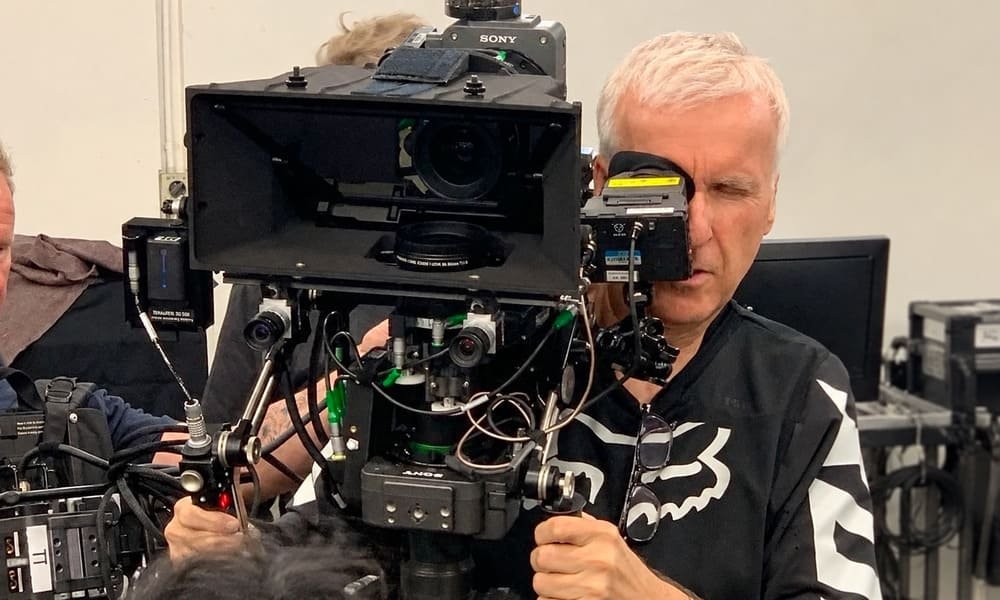
Lightstorm Vision’s acquisition of Outsyders joins native stereoscopic capture with AI-assisted conversion, aiming to make 3D faster, cheaper and scalable.
James Cameron folds Outsyders into Lightstorm Vision: AI, stereoscopic conversion and native capture merge into a faster and less expensive 3D pipeline.
Lightstorm Vision, the company founded by James Cameron to develop stereoscopic technologies, has acquired Outsyders, a company specializing in AI-assisted 3D post-production.
The goal is to integrate into a single infrastructure the native stereoscopic capture developed by Lightstorm and Outsyders’ conversion and processing tools, extending the system both to new productions and to the 3D transformation of catalogs originally made in 2D.
The acquisition comes after nearly two years of collaboration between the two companies and after their joint work on Billie Eilish – Hit Me Hard and Soft: The Tour (Live in 3D), co-directed by Cameron and Billie Eilish. In that production, Outsyders’ technology was used to maintain visual continuity between images captured directly in stereoscopy and sequences converted into 3D afterward, one of the central problems in workflows that combine different techniques.
How the Outsyders AI 3D technology acquired by James Cameron works
Founded by Paul Becker, Jared Sandrew and Chris Harvey and launched in April 2024, Outsyders developed a stereoscopic post-production platform that uses real and synthetic data to progressively improve its models. The system allows relatively small groups of specialized artists and technicians to manage large volumes of images while reducing time and costs compared with traditional conversion processes.
The most significant step, however, concerns integration with Lightstorm Vision’s technologies. Footage captured through the company’s native stereoscopic systems produces depth data that can be used as a reference, or ground truth, for training Outsyders’ models. Every new production can therefore provide information with which to refine the stereoscopic reconstruction of subsequent productions.
Lightstorm aims to build a pipeline in which capture, shooting metadata, AI processing and post-production can exchange information within the same system. Cameron described the operation as a union between the world of conversion and that of native photographic 3D.
Lightstorm targets AI conversion of film catalogs
Despite the company’s young age, the technology has already been used on several major productions. Outsyders worked on the IMAX 3D version of Blue Angels, on Tron: Ares, on Moana and on the conversion of Lilo & Stitch. In the latter case, according to data released by the company, much of the 2D film was converted to stereoscopy over roughly eight weeks.
The group also handled stereoscopic processing for Doug Liman’s Asteroid, an 8K, high-frame-rate production developed for Samsung and Google, and at the time of the acquisition said it had more than five feature films in production.
Lightstorm explicitly lists among the platform’s objectives the stereoscopic conversion of existing film and television catalogs. The acquisition of Outsyders therefore suggests an ambition larger than simply refining 3D: turning stereoscopy from a specialist, expensive process tied to major blockbusters into a scalable industrial process.
If the integration of native capture, depth data and AI-assisted conversion really succeeds in reducing time and costs, the result may not simply be better 3D, but far more 3D to produce, distribute and recover from archives.