Now Reading: AI at the 2026 Rome Film Fest: Actors, Producers and Institutions Discuss How to Protect Artistic Identity
-
01
AI at the 2026 Rome Film Fest: Actors, Producers and Institutions Discuss How to Protect Artistic Identity
AI at the 2026 Rome Film Fest: Actors, Producers and Institutions Discuss How to Protect Artistic Identity

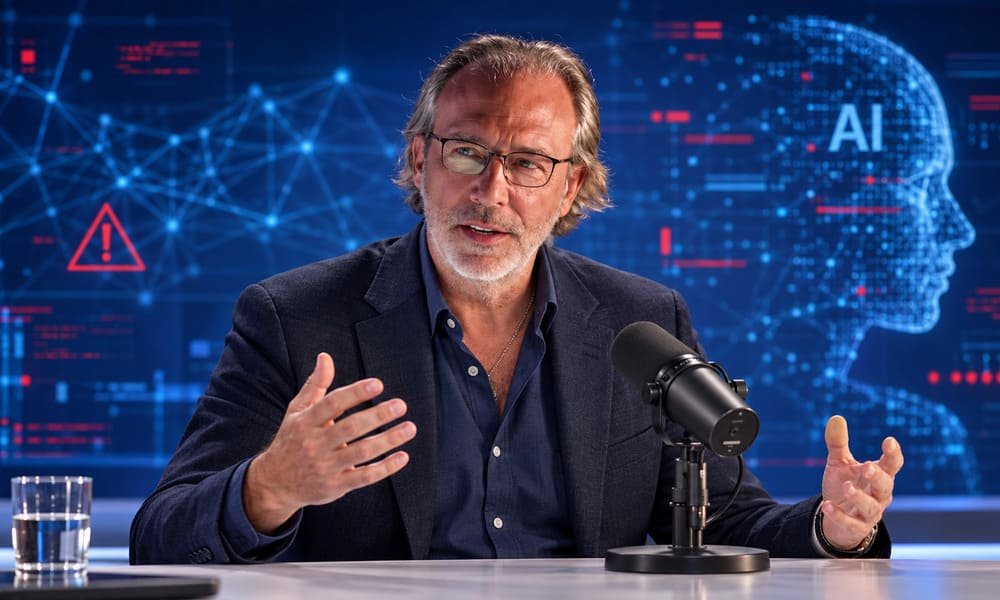
At the Rome Film Fest, actors, producers and institutions discuss voices, faces and artificial intelligence. The problem is not just who does the copying, but what gets signed.
At the Rome Film Fest, actors, producers and institutions discuss voices, faces and artificial intelligence. The problem is not just who does the copying, but what gets signed.
At the 2026 Rome Film Fest, the AI issue arrived under a title that already sounds like an inventory of assets: My Voice, My Face, My Algorithm.
The event, organized by NUOVO IMAIE, brought actors, producers, lawyers and institutions into the same program to discuss digital replicas, biometric data and related rights. Participants included Gian Marco Tognazzi, Luca Ward and Andrea Miccichè, figures from ANICA, APA and AGCOM, and representatives of the government and Parliament.
The event’s synopsis asks two very concrete questions: how do you write a contract today that prevents the unauthorized exploitation of a voice, body and face? And who gets paid if AI generates a performance based on a real actor? The most interesting passage, however, comes immediately afterward: protecting one’s “biological and expressive trademark.”
It is an effective expression, partly because it already contains the little short circuit the industry is trying to manage. A face is still a person, of course. But as soon as it enters a contract, it begins to look very much like an asset.
Luca Ward and artificial intelligence at the 2026 Rome Film Fest
Luca Ward knows the problem well. In February, the actor and voice actor had filed his vocal timbre as a sound trademark to strengthen protection against unauthorized replicas. At the time, Ward had been more explicit:
“Unfortunately, the institutions do not protect us.”
Eight months later, Ward found himself at the same table as those institutions to discuss precisely that protection: a fairly accurate snapshot of the moment.
Because protections do now exist, but they operate on different levels. Italy’s first national collective agreement for film and audiovisual actors, applied since 2024, establishes that, in the absence of explicit agreements, image and voice may be used for the production for which they were recorded, while deeming sampling, extraction and reuse to train artificial intelligence systems unlawful. The dubbing agreement had taken the same path. Today, Ward linked his own initiative to a strategy already tried across the Atlantic:
“With my law firm, which also has offices in the United States, we followed what American actors did some time ago: they stopped working for 11 months.”
The reference to eleven months points to the long dispute involving American video game performers, which began in July 2024 and ended in June 2025, with the protection of voices, faces and digital performances from artificial intelligence among the central issues in the negotiations.
During the event, however, Ward broadened the discussion beyond cinema.
“Do you know there’s a psychologist? A subscription for 20 euros a month. For young people, young people in difficulty. They give them Edgar… now, the difference is substantial, isn’t it? A human being who does that job, a psychotherapist, costs money. For 20 euros you talk to Edgar. And there are lots of subscribers, go and see. They’ve put their children in the hands of a machine. That is frightening.”
The example changes industries, but not really the subject: when a human function becomes expensive enough, someone immediately appears willing to sell a synthetic version by subscription. In dubbing it may be a voice, in acting a face, in psychological support even listening. The machine’s competitive advantage, after all, is impeccable: it does not strike, it does not ask for residuals, and for twenty euros a month it can even pretend to listen.
Undersecretary Lucia Borgonzoni on artificial intelligence
That the problem is not merely theoretical was also pointed out at the same event by Undersecretary for Culture Lucia Borgonzoni. In the report by Cinecittà News, she returns to concerns raised as early as 2024 by actors’ agents over contracts allowing uses of their image far beyond a single work. The government’s stated position is clear:
“Copyright in the cultural world cannot be treated in the same way as AI in other professions. Creativity must be given completely different development times. This is a fundamental issue, on which the future ahead of us depends, including the future of the audiovisual sector. Until the end of this parliamentary term, the fixed point in Culture Ministry decrees will be the protection of artists’ human creativity; I will do everything possible. AI is fine as a special effect, but the money must go to artists, screenwriters and voice actors. Protecting human creativity will be the line followed by every decree. All of this while chasing changes that are moving incredibly fast.”
The rules introduced by the Ministry for access to tax credits establish that systems designed to create an actor’s digital replicas may not be trained without that actor’s consent and that, when consent is given, compensation must be commensurate with what the actor would have received for performing the work in person. Artists must also be informed about the scope and purposes of the use of their image, voice and text, while these materials may not be transferred to third parties to train generative models intended for the market. The Ministry of Culture had already formalized these criteria in 2025.
The distinction seems almost obvious: if a digital actor is created for a film, paying the biological one just once is not enough. Yet the very need to write that into a rule reveals how much the object of the contract has changed. A production no longer purchases only days of work and a recorded performance: it can obtain a voice, face and movements in a form technically capable of producing further performances. The fee pays the actor who came to the set; the clause, if left broad enough, can also take home the one who will never have to return.
At this point, the line would seem fairly solid: no replica without consent, information about its uses and compensation when the digital double works in the actor’s place. But Hollywood has already discovered the next chapter.
Consent can become a casting clause
After the 2023 strike, SAG-AFTRA secured informed consent and compensation for the creation and use of digital replicas. A historic achievement. In its official FAQs, however, the union also answers a less celebratory question: can a producer decide not to hire an actor who refuses to be scanned? Yes.
Consent remains consent, but it enters a negotiation in which one party awards the job and the other would like to get it. This is also why California intervened through legislation, making certain overly broad digital-replica clauses unenforceable when the performer is not adequately represented. A formula capable of spanning every present and future medium and, preferably, the entire universe is no longer enough. The intended use of the digital double must be explained.
That detail shifts the issue. The risk is not just that someone might secretly steal a voice. It is that the voice might be acquired in broad daylight, with a valid signature, to be reused far more often than the body that produced it.
Protecting a voice also means putting a price on it
The law, too, is trying to catch up with the distinction.
Since August 2, 2026, the European AI Act has imposed transparency obligations on deepfakes and various types of synthetic content. In Italy, Law 132 of 2025 also introduced, through Article 612-quater of the Criminal Code, an offense covering the non-consensual dissemination, when it causes unjust harm, of AI-falsified images, videos or voices capable of misleading people about their authenticity.
These are important tools against abuse. But they do not really answer the question raised by the panel: who gets paid when the use is authorized?
This is where related rights, created to remunerate a human performance that is recorded and then exploited, meet a more ambiguous object: a performance that may sound like Luca Ward without having been spoken by Luca Ward at that moment; a face acting in a scene its biological owner never filmed; a performer who can keep working even when absent from the set.
Perhaps technological replacement will not arrive in the theatrical form people expect, with the algorithm throwing the actor out the door. It might enter more politely through the contracts office, request a signature, pay a fee and leave everyone formally in place.
Except that, by then, the body will still belong to the actor. Control over its availability, rather less so.