Now Reading: Relax, McConaughey: AI Cannot Replace You
-
01
Relax, McConaughey: AI Cannot Replace You

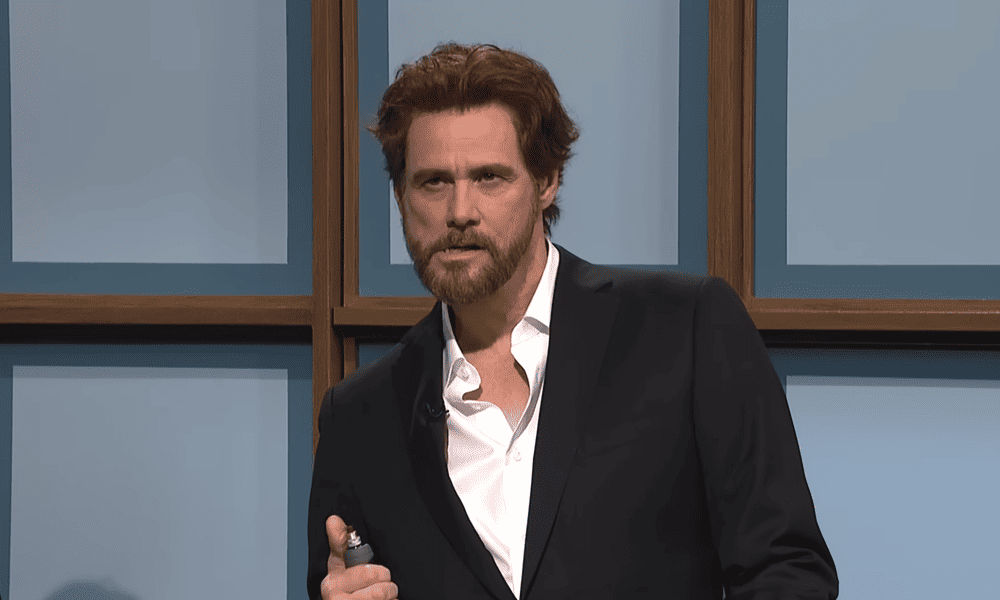
AI will hit Hollywood like a meteorite: inevitable, destructive and always “arriving within two years.” The latest to prophesy it was Matthew McConaughey.
AI will hit Hollywood like a meteorite: inevitable, destructive and always “arriving within two years.” The latest to prophesy it was Matthew McConaughey.
With the profound cosmic serenity that characterises him, Matthew McConaughey argues that AI “will definitely infiltrate cinema” and that we may soon see Oscar categories such as “Best AI Film” and “Best AI Actor.”
Screenwriter Rhett Reese, of Deadpool and Zombieland, likewise declared, after watching the now-famous fight between Tom Cruise and Brad Pitt created with Seedance 2.0: “Very soon, one person will be able to sit down at a computer and create a film indistinguishable from those coming out of Hollywood today. And if that person has Christopher Nolan’s talent and taste, and someone like that will come along quickly, it will be something extraordinary.”
But could this disaster-trailer narrative be the real problem?
The problem of persistence and the magic of fifteen seconds
One of the most obvious technical limitations of current generative AI models is the difficulty of maintaining the persistence of a face’s distinctive features.
Even when models “recognise” the identity of a famous actor, small details such as the distance between the eyes, the shape of the nose or facial asymmetries tend to vary from one image to the next. This happens because the models work by extracting images from diffuse noise through trainable approximations.
The generated faces remain plausible but unstable variations, and until this problem is solved, the illusion of a persistent visual identity will remain confined to brief, fast-moving scenes that cannot be fully planned and rely on rapid editing.
The very few productions that have openly used generative AI, such as the docuseries On This Day… 1776, in production and distribution during 2026 and directed by Darren Aronofsky, have been received as a disturbing experiment edited with surgical precision.
AI’s real threat is making us forget why cinema exists
The fact remains that new languages are being codified: new ways of consuming content, such as conversational streaming and generative AI microdramas, are ready to displace today’s platforms and their schedules, making room for the emerging creativity of an industry that will speak directly to the imagination of new generations.
James Cameron, 71, despite banning generative AI from his films, has also said that the future of the Avatar franchise will depend on the development of AI tools capable of speeding up production, because he is unwilling to devote another four years to a single title. His position highlights how competitive production timelines have become the first commandment even for Hollywood’s most revered figures.
Do you know what we may never see AI convincingly recreate, even with unlimited access to IP and copyright theft?
The medium’s so-called “preverbal” power: the ability of the camera, in the hands of a skilled filmmaker, to capture an actor’s thoughts at the moment when their personal experience merges with that of the character they are playing.