Now Reading: The State Wants a Stake in AI: The Private Party Is Over
-
01
The State Wants a Stake in AI: The Private Party Is Over

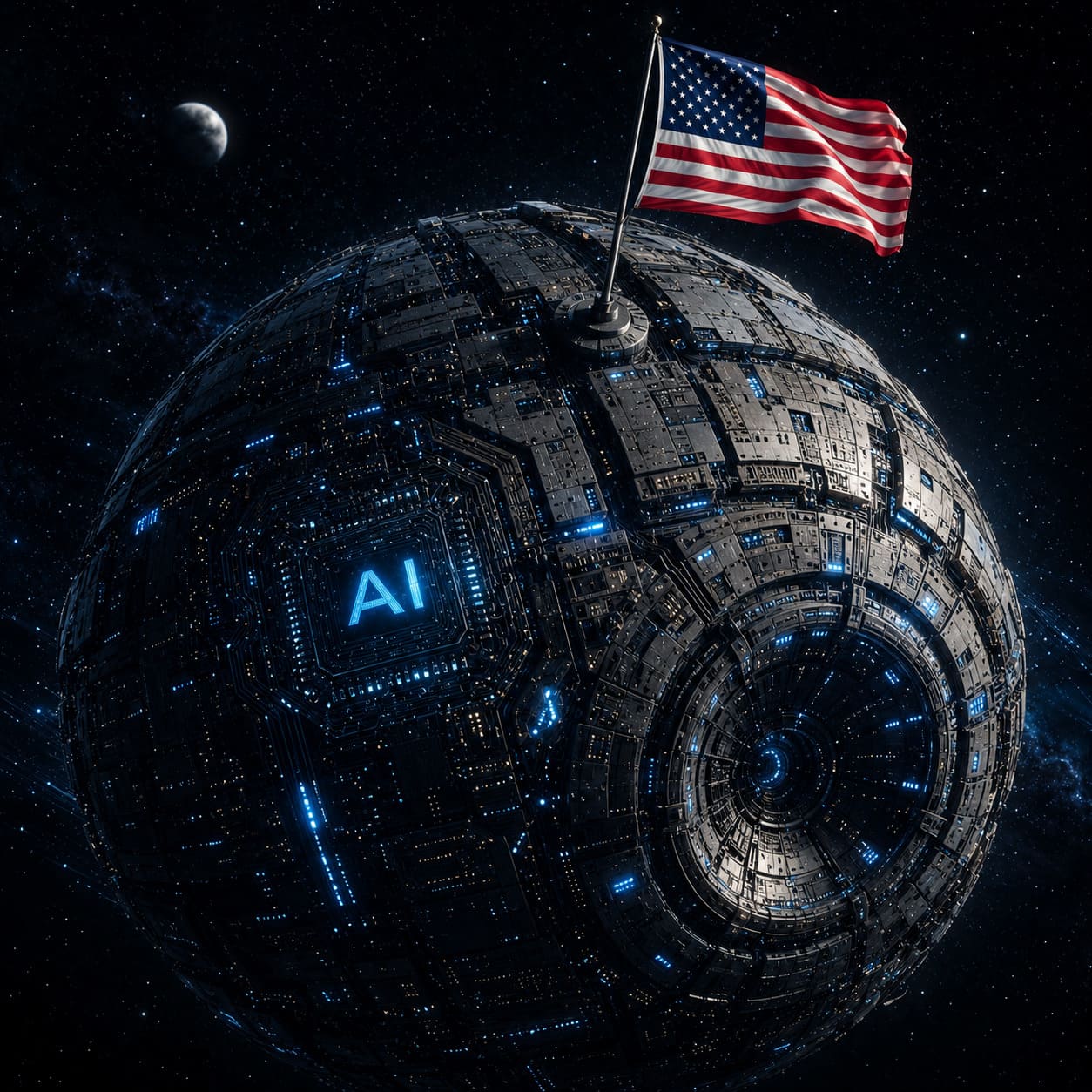
The United States is considering public stakes in major AI companies. Between OpenAI, Anthropic, IPOs and dividends, artificial intelligence is becoming a matter of national power.
According to NOTUS, senior U.S. officials have reportedly begun preliminary discussions with several major artificial intelligence companies about the possibility of the American government taking equity stakes in these firms. This is not an approved law, but an idea circulating at the highest levels of American power: if AI generates enormous wealth, perhaps part of that wealth cannot remain locked inside the balance sheets of the companies that control the models.
OpenAI and Anthropic are moving closer to the stock market. Reuters has reported that OpenAI is preparing to confidentially file paperwork for a U.S. IPO. Anthropic has already filed confidentially for a listing in the United States.
The romantic phase of AI is over: the one made of papers, demos, chatbots that amaze X, and founders talking about the future of humanity in corporate hoodies. Now come banks, prospectuses, valuations, institutional investors and the public market.
When an AI company goes public, it is not just selling software. It is selling a promise of control over growing parts of the economy: labor, code, customer service, research, advertising, security, healthcare, education, defense, creativity and bureaucracy.
If these companies are building the cognitive infrastructure of the next capitalism, should the State remain a spectator?
The AI dividend: populism, redistribution or control?
One of the ideas reportedly being discussed is that companies would voluntarily transfer equity stakes to the government. The returns on that investment could then be used for public purposes, including some form of dividend distributed to American households.
Who cashes in when automation increases productivity, reduces staff, compresses wages and shifts value toward those who own models, chips and data centers?
This question is not emerging only in the United States. In South Korea, Labor Minister Kim Young-hoon has called on major technology groups such as Samsung and SK Hynix to discuss sharing the excess profits generated by the AI boom with suppliers, subcontractors and workers.
The argument therefore concerns the entire supply chain: not only the giant selling chips, but also those providing labor, energy, water, components and territory.
Washington has already started buying the future
The idea of public stakes in AI companies does not come out of nowhere. Washington has already chosen a similar path in quantum computing. In May, Trump reportedly planned a $2 billion investment in nine quantum companies, with the government taking equity stakes in some of them.
It has already happened with chips, rare earths, semiconductors and defense. Now the same reasoning is shifting to AI. Because artificial intelligence is not an app. It is an industrial, military, financial and cultural lever.
A government entering the capital structure of AI companies can say: we want to redistribute public benefits. Fine. It can also say: we want to protect a strategic technology from China. Understandable. But it can also gain privileged access inside the ecosystem that builds the models used by citizens, businesses and institutions.
Companies need the State for energy, chips, licenses, contracts, national security and data centers. The State needs companies in order not to lose the technological race. And when two powers this large embrace, citizens should watch carefully where the hand ends up.
Regulation is sterilized, capital is blessed
At the same time, other signals point in the same direction.
Two members of the U.S. House of Representatives, Lori Trahan and Jay Obernolte, have introduced a bipartisan draft that would prevent American states from regulating the development of AI models, while possibly leaving room to regulate their uses. The tech industry welcomed the idea of a national standard, while Public Citizen criticized it because it would leave out problems such as algorithmic discrimination, fraud, young people’s mental health, companion AI, deepfakes and market concentration.
On one side, local regulation is slowed down; on the other, the possibility of public equity stakes is opened up: in short, less widespread democratic oversight, more vertical agreement between the federal government and companies.
Meanwhile, the White House has signed an executive order on advanced AI and security, asking leading developers to voluntarily cooperate with the government in testing the most powerful models before release. In the official White House text, the language focuses on innovation, cybersecurity, the defense of critical infrastructure and cooperation with the private sector.
The recurring word is “voluntary.” Voluntary tests. Possibly voluntary stakes. Voluntary cooperation. The perfect form of contemporary power: nobody forces anyone, as long as everyone understands where it is convenient to sit.
Altman, Trump and capitalism with a dividend
Sam Altman reportedly discussed the idea with officials in the Trump administration and proposed it directly to Trump in 2025. Altman had already spoken in the past with the American government about possible federal guarantees to stimulate the construction of chip factories in the United States, while not seeking government guarantees for OpenAI’s data centers.
AI today needs private money, but also public or semi-public infrastructure: energy, networks, factories, land, permits, security, diplomatic relations and strategic protection. AI companies present themselves as laboratories of the future, but they grow inside an ecosystem supported by very present political decisions.
Let’s say the market innovates when the State prepares the field, buys its products, protects its supply chains, guarantees energy, opens the doors of national security and, at decisive moments, even enters the capital structure.
Does the market innovate while the State slows things down?
A public stake in AI companies could seem like a good idea. If automation generates collective wealth, part of it returns to citizens.
But three questions matter.
First: who decides the price of this stake? If the State enters before the IPOs, it enters at a moment when valuations are already enormous, but still not very transparent. Anthropic reached a post-money valuation of $965 billion in its latest round. OpenAI had been valued at $852 billion.
Second: what does the citizen actually receive? A symbolic dividend? A tax benefit? Rights to profits? Or just the narrative consolation of taking part in the great AI party while decisions remain in the hands of government, founders, investors and large funds?
Third: who watches the watchdog? If the State becomes a shareholder in the companies it is supposed to regulate, regulation risks turning into protection of the investment. At that point, every criticism of AI can be read as a brake on innovation, damage to public value, an obstacle to national leadership.
The oldest trick of power: calling something general interest when it used to be private interest, without truly changing the distribution of command.
AI is too big to remain a startup affair
The fable of the brilliant startup changing the world on its own is becoming less and less credible.
The political fact is now evident. Artificial intelligence is being treated like electricity, oil, semiconductors and defense. Not like a software category.
And if AI is infrastructure, then ownership must be discussed. If it is ownership, rent must be discussed. If it is rent, redistribution must be discussed. If it is cognitive power, democratic control must be discussed. A strategic asset for a few enormous players.
Big Tech builds the models. Wall Street prepares the listings. The State considers whether to enter the capital structure. Users keep writing prompts. For now, the citizen is invited to the party as a consumer; tomorrow, perhaps, they will receive an elegant receipt so they do not ask too many questions.